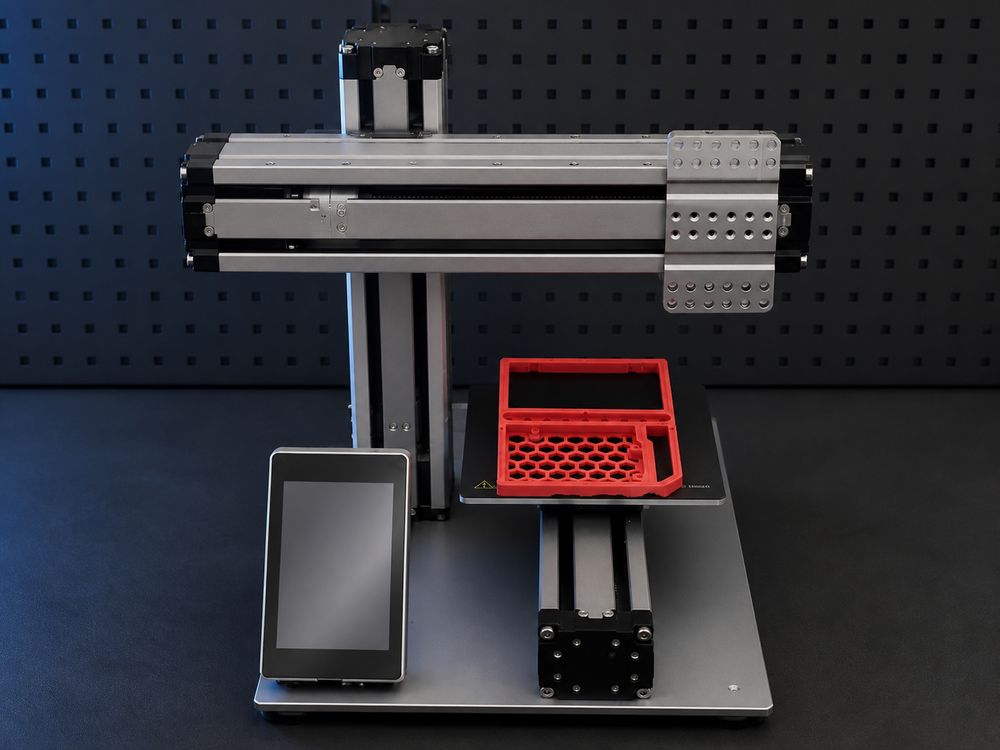
fabrication / rapid prototyping











For twenty-five years, real jobs paid the bills while we kept this alive on the side. Now we're stepping away from those jobs to build it into something bigger.
Epic App Solutions is a two-owner solutions firm with four trusted contractors — not a shop with a storefront. Built in the USA and working nationwide, we build custom applications, AI automation, business systems, interactive experiences, and marketing technology for clients across the country.
“The most dangerous phrase in the language is: We’ve always done it this way.”Grace Hopper
One roof, a lot of storefronts. Pick a door — the rest stays parked until you want it.
These live on the Platforms page — jump straight to the one that sounds like you.
What the crew is building right now — some live, some still on the lift. All real, all ours.
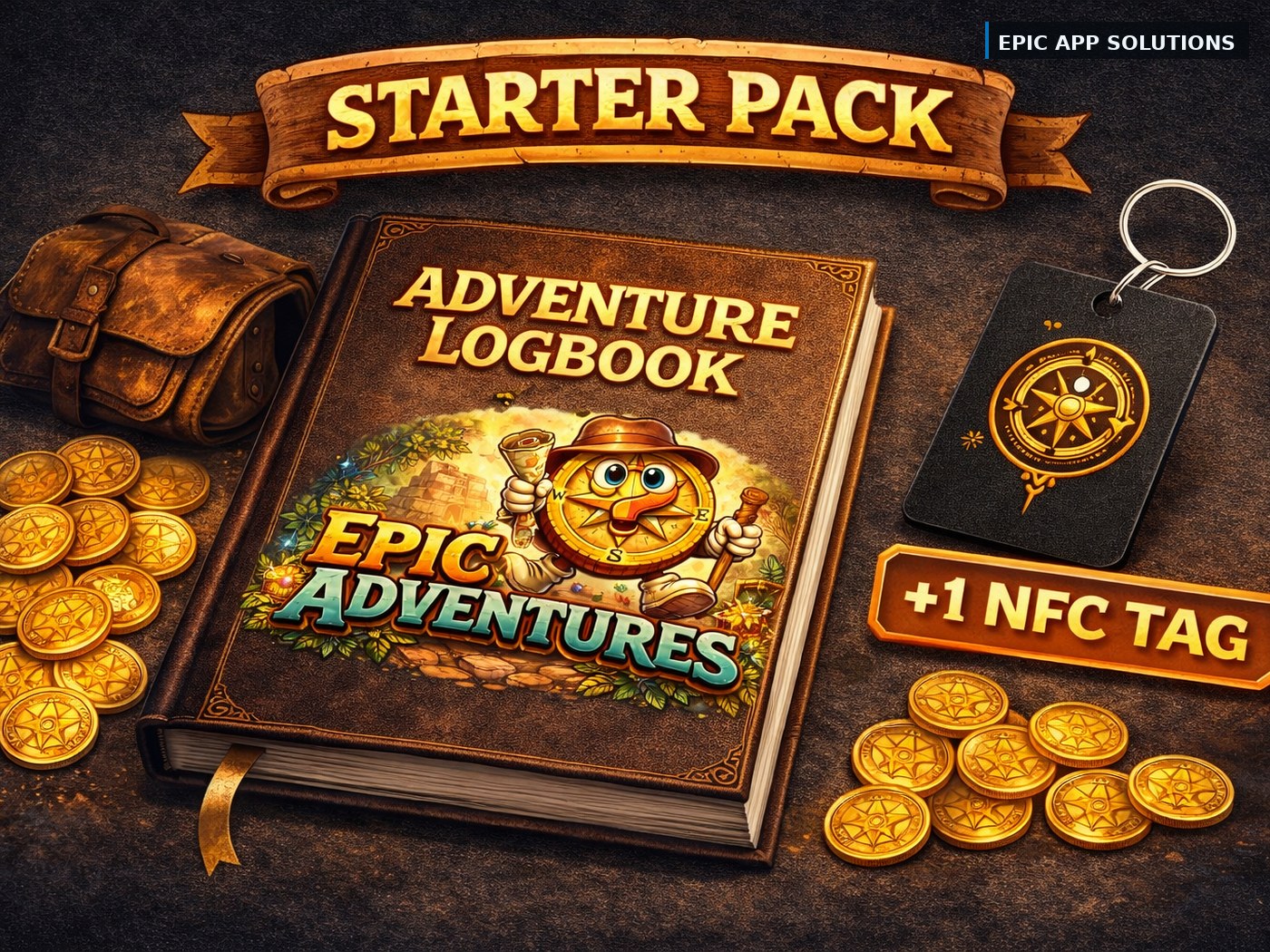 Active buildEpic AdventuresPhysical play for real venues — NFC tags, printed logbooks, coins in your hand.Open the project →
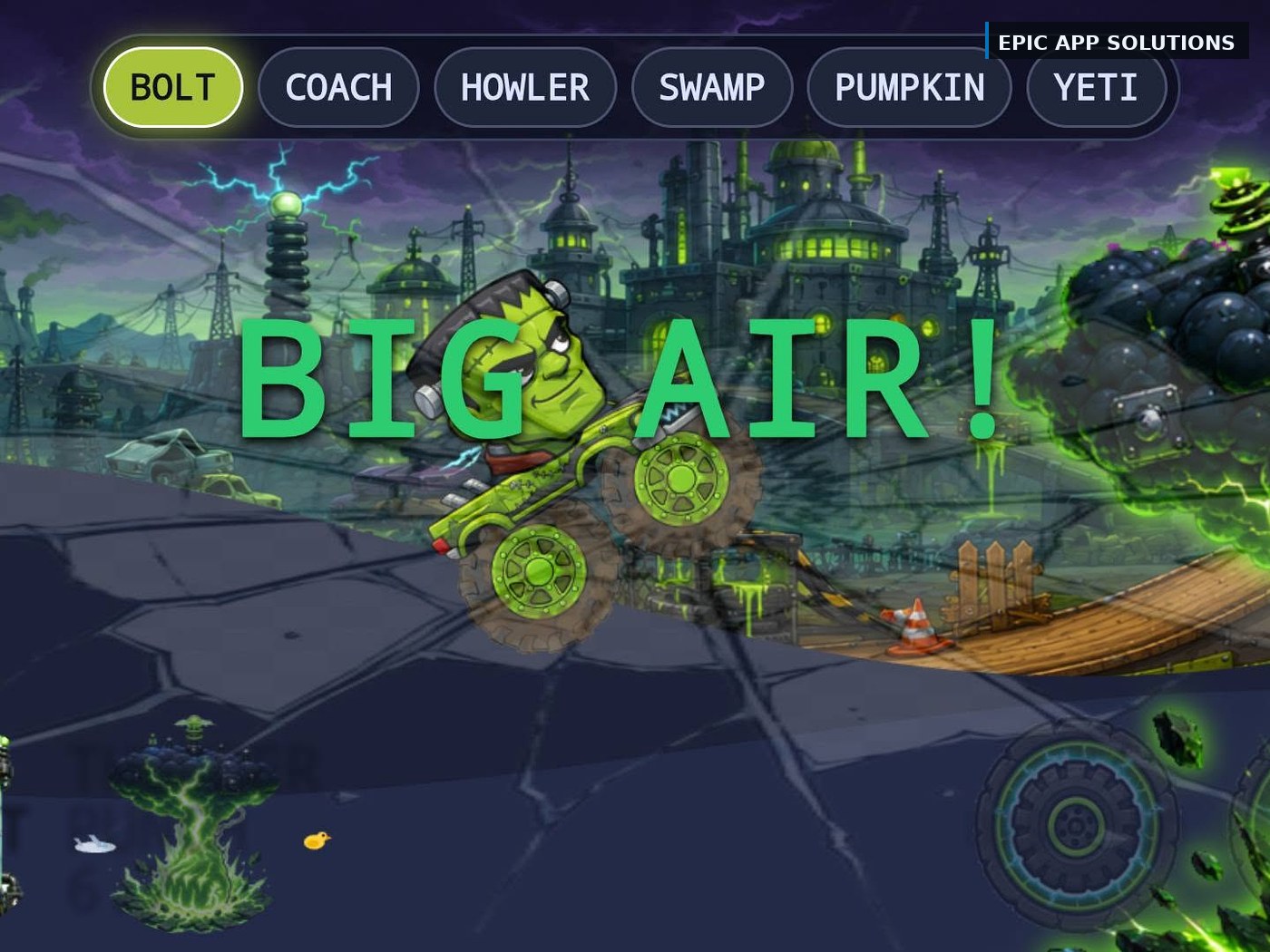 On the benchMonster Mash TrucksMonster trucks with a pulse — Bolt, Coach, Howler, Swamp, Pumpkin, Yeti.In the works →
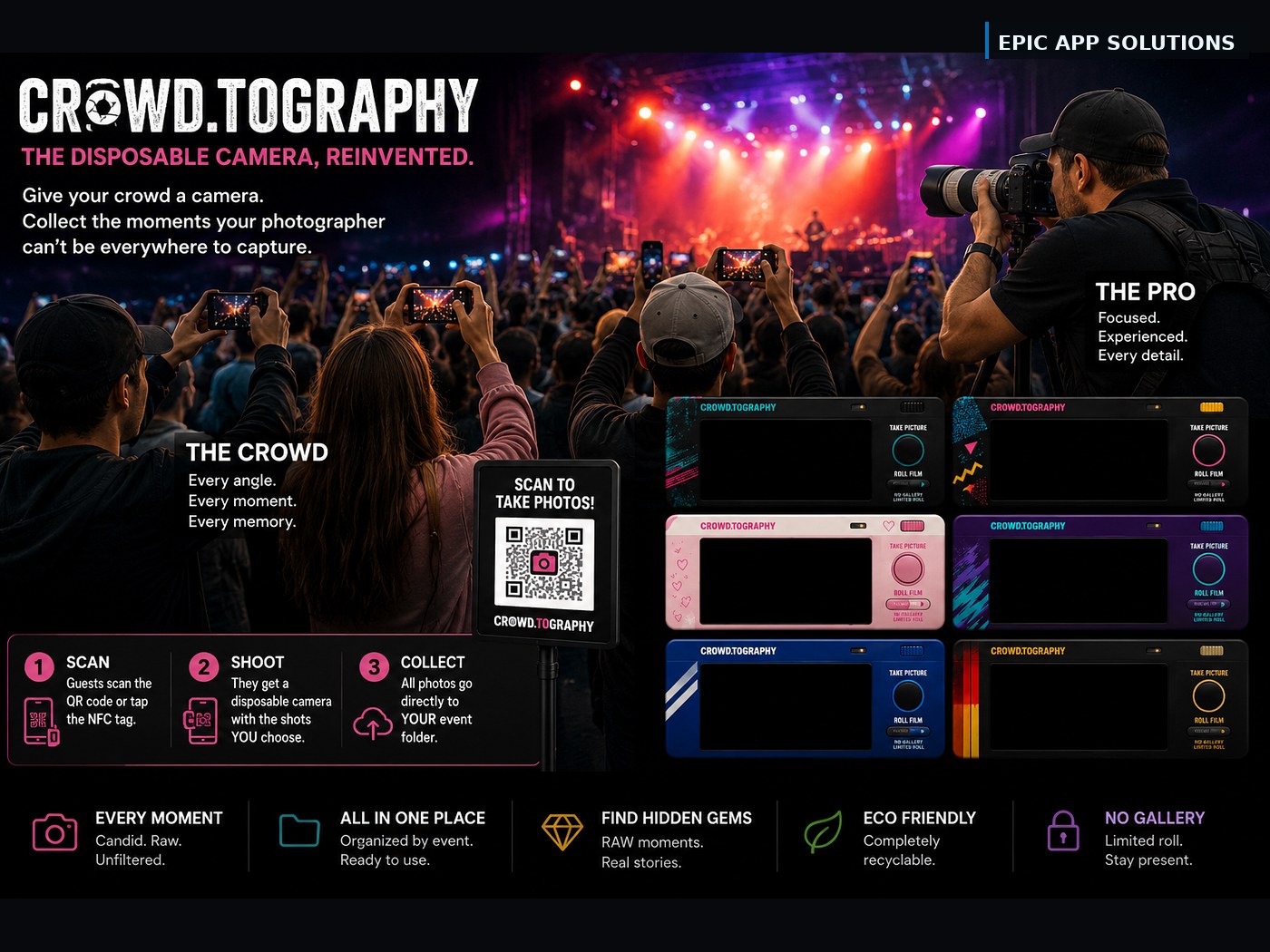 Prototype testedCrowdtographyThe disposable camera, reinvented — scan a tag, take a photo, the crowd gets the album.Open the project →
 On the benchOrge’inz TrailFantasy-western DnD trail run — dice rolls, goblins in cowboy hats, dragons on mesas.In the works →
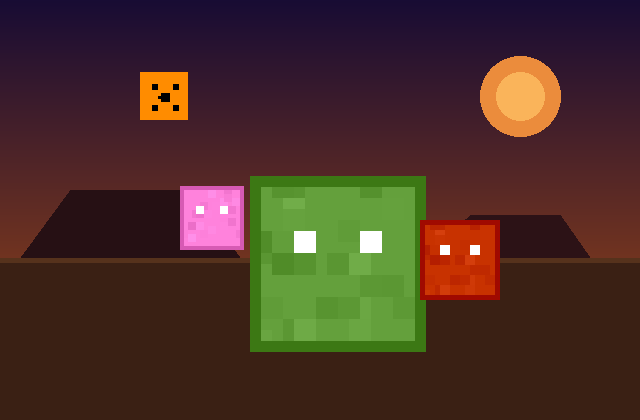
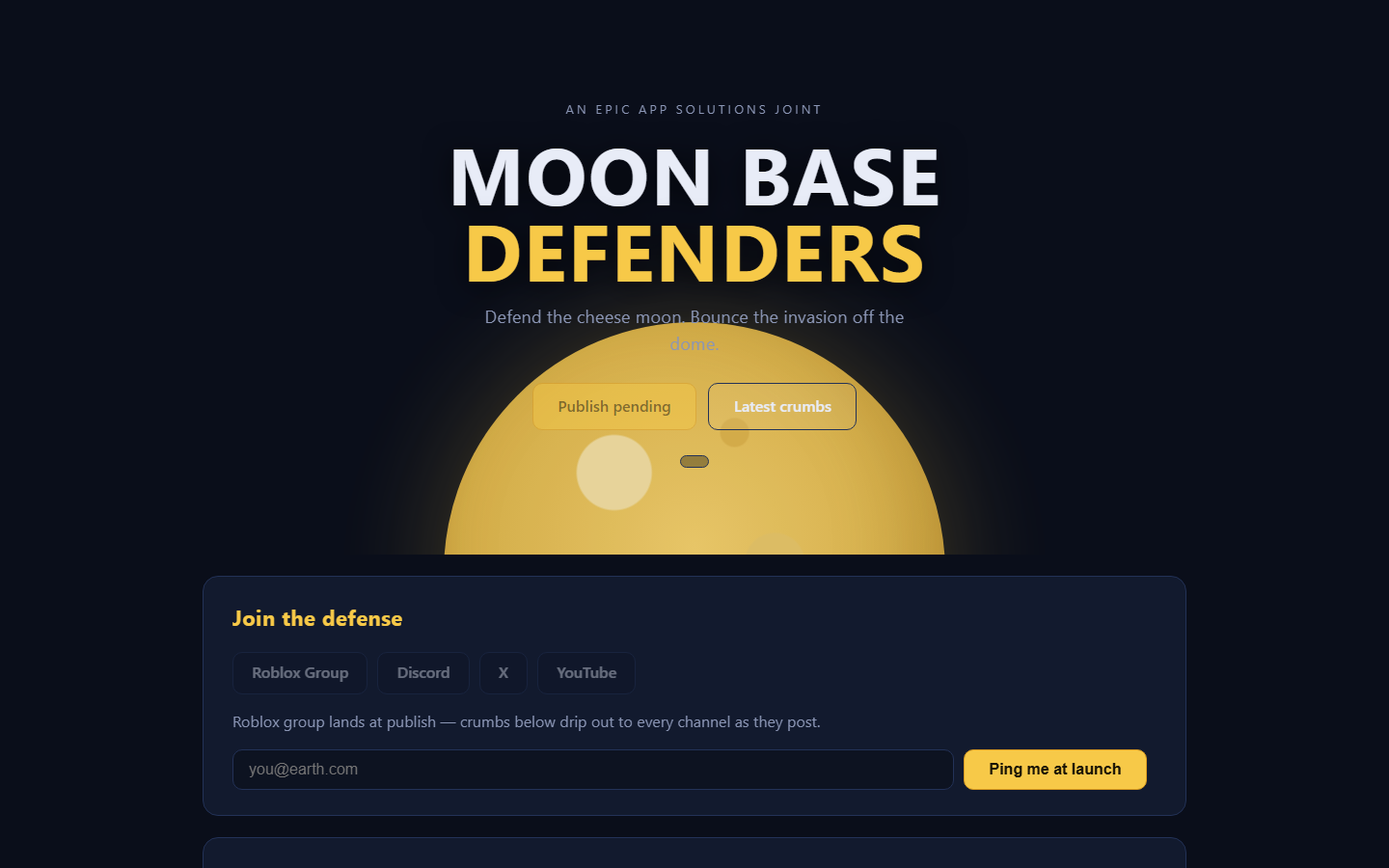 Active buildMoon Base DefendersTower defense under real moonlight — ranger vehicles, snot beams, a screen-time bank kids earn.Open the project →
Built in 48 hours or the build fee is waived. Marketing shops and freelancers: we build it at $500 flat, you charge your client whatever the job is worth. What you charge them is between you and your client — white-labeled, no EAS badge unless you ask for one.
What $500 buys: a website. No database, no mods, nada — your artwork on the starter template, live in 48 hours. Want more than that? We do that too — the build estimator shows where the number moves before you ever call.
White label, plain and simple: we sell you the build at shop rate, you sell it to your client at whatever the job is worth — both sides make money. Your client talks to you, never to us; they never need to know our name. We’re the butcher, you’re the steakhouse.
Are you holding down a local business — or trying to grow one? And are the people you pay for marketing helping you grow, or are you just building them a paycheck?
It is the biggest quiet problem in the industry. A shop pays real money for “marketing” and gets back reports full of impressions while the phone stays quiet. Somebody built what they thought was right, the invoice lands tens of thousands of dollars off, and the business eats it. Send us what you actually got for the money — campaign exports, invoices, ad dashboards, the monthly “report.”
Free read. Straight answer. Receipts go privately to Jade and Tim’s desk — nothing is published, nothing is shared. We read what you sent, you get the honest version, then you decide.
Shopify has been our dropship lane for years — we run a partner workflow on it and we like it that way. Honestly, we love them: the platform is genuinely good at letting you manage the retail side while we work the engineering side — repositories, custom code, the neat stuff that makes it run. Already selling on Shopify, Wix, Aero, or anything else that works? Nothing has to change. We plug in, make it look better, and bolt on the custom tools the theme store doesn’t carry.
Most shops don’t need a new platform — they need their platform to do more. So we don’t ask for the keys. We never need your store login or your shopping account. The work happens in a code repository we build under your name, and our code talks to your store through the front door the platform already gives it.
Shopify, Wix, Aero — already live? Good — we integrate into what exists. No migration, no rebuild, no hostage situation. Your store keeps selling while the work lands. Even better if you call us: our AI can talk to your platform’s AI — they just talk between each other, and it gets done fast.
Tim is the CPU. Jade drives the ship forward. The call gets both.


Ten working builds, each solving a different kind of problem — and every one of them is a product. See one you want running under your name? We build it. Open a card and see the working direction.
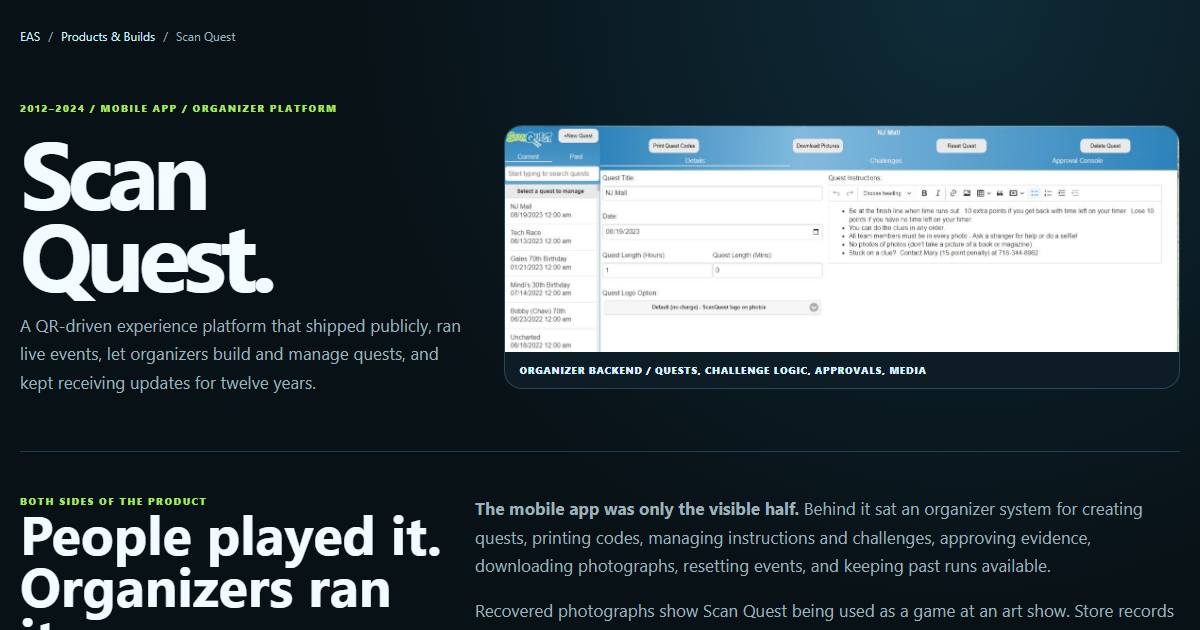 01 // LIVE PLATFORMScan QuestQR-powered games, schools, events, local adventures, and a rebuilt organizer command center.
 02 // MARKET BUILDERFarmers Market PlatformVendor discovery, rotating deals, market maps, schedules, and mobile-first community commerce.
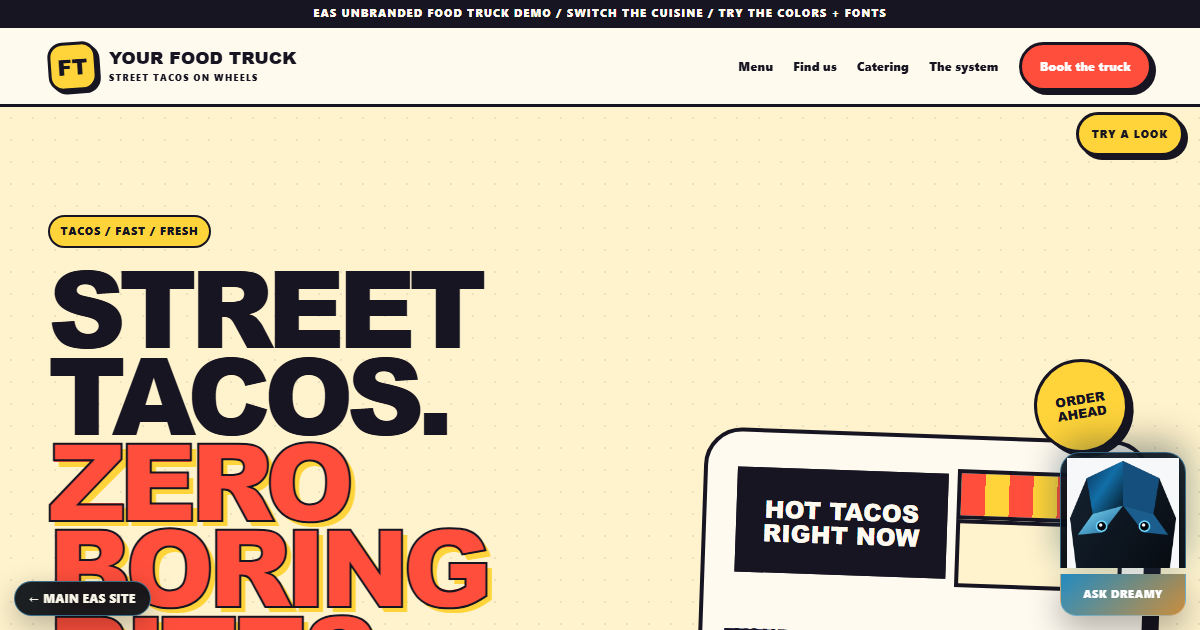 03 // LIVE BUILDERFood Truck KitchenA visual builder for truck branding, menus, ordering, locations, and automatic customer-sharing workflows.
 04 // VENUE SYSTEMCoffeehouse + Event RentalCoffee, tea, barista service, private events, venue rentals, and hospitality in one polished storefront.
 05 // COMMUNITY APPRiverbank Book ExchangeA local book-sharing app prototype with catalog, maps, events, and neighborhood exchange points.
 06 // TRAINING SYSTEMSkjoldr K9Guided dog-training drills, progress records, repeatable skills, and practical habit building.
 07 // LIVE EVENTSQuiet ClubbingWill’s silent-disco event business, USA-wide, Canada, and Italy — we build and support the mobile apps and infrastructure behind it.
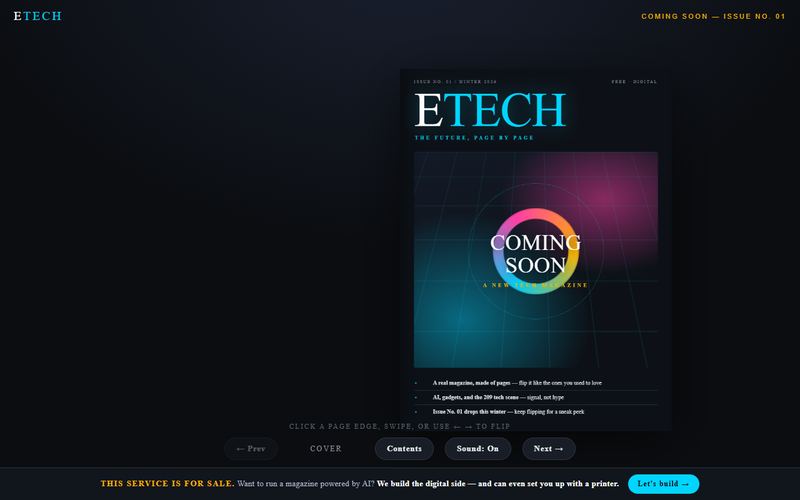 08 // FOR SALEETech MagazineA real page-flip tech magazine, powered by AI. This service is for sale — we build the digital side and can even set you up with a printer.
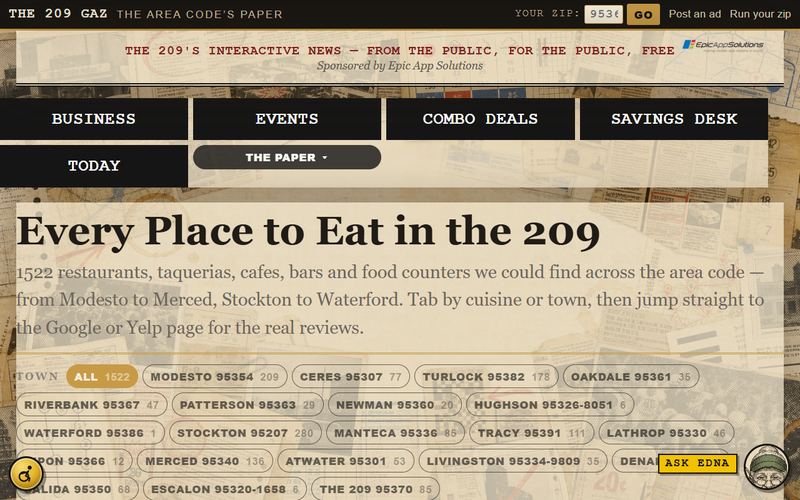 09 // LIVE DIRECTORY209 EatsEvery restaurant, taqueria, cafe and food counter in the area code — 1,500+ places, tabbed by town and cuisine, wired to Google and Yelp reviews.
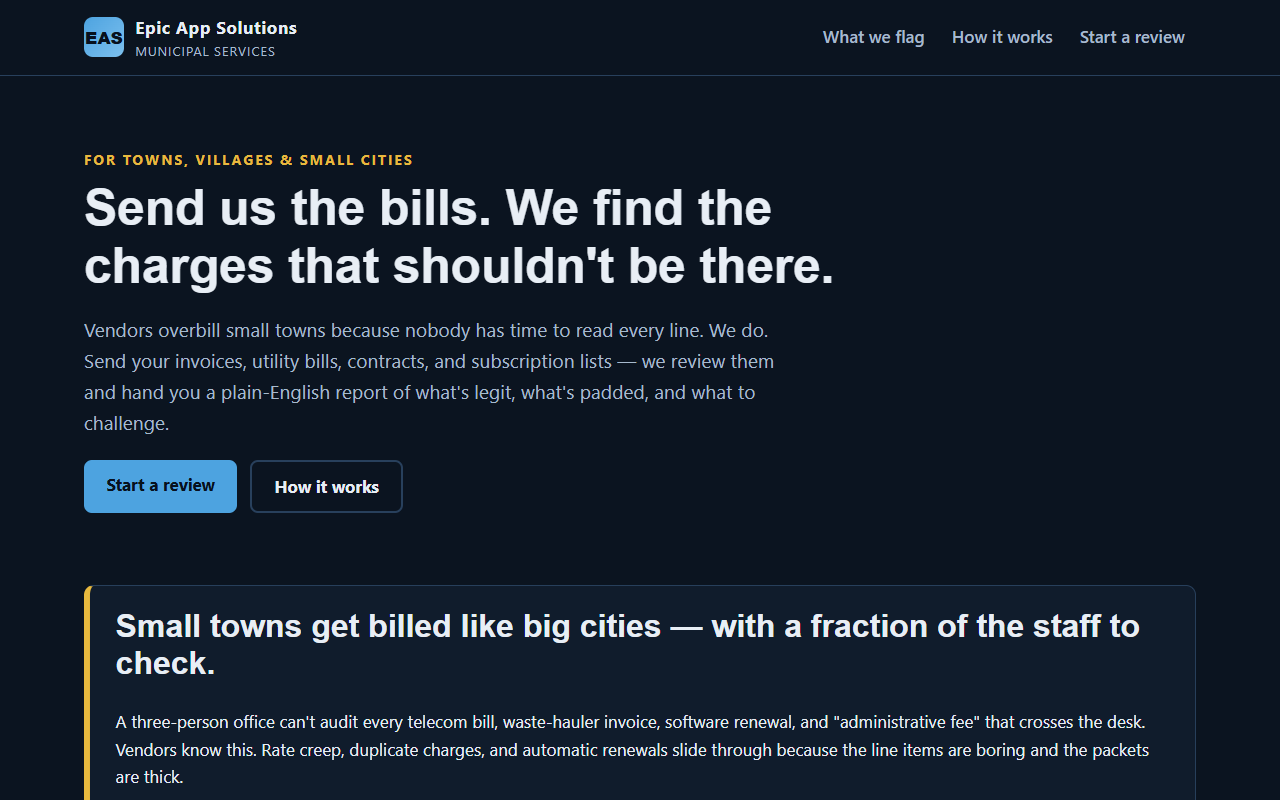 10 // NEW SERVICEMunicipal Bill ReviewSmall towns get overbilled. Send the vendor bills, contracts and renewals — we hand back a plain-English report of what is legit and what is padding.
Every card above is a working product, not a mockup — and every one is for sale. The magazine, the directory, the review desk, the platforms: see one you want under your name and open a case. We build it, you run it.
This is a real walkthrough of a multi-million-dollar cannabis point-of-sale system, filmed mid-visit with the developer building it — not a demo reel, not staged. EAS gets pulled into rooms like this across industries because the work speaks first.
A lot of this arrived as somebody else’s unfinished promise. We get called after the first shop runs out of road — and those are the jobs we like, because they’re the ones that are actually hard. Benches, field work, code. The tools got faster. The habit did not change: get close to the problem and build until it works.
AI did not replace any of this. It made the same people faster. The ones who think it replaces them are the ones who have not sat down and learned it yet.
A scan-and-find platform that ran twelve years and shipped updates the whole way through.
Same idea, rebuilt for real venues and physical play.
An events company that needed software before there was software to buy.
We build and maintain the apps and the infrastructure behind it. The events business is his.
A credential gateway that split who you were across two places on purpose.
Renamed and redeployed on the same principle: hard to get into, and worth nothing to you if you did.
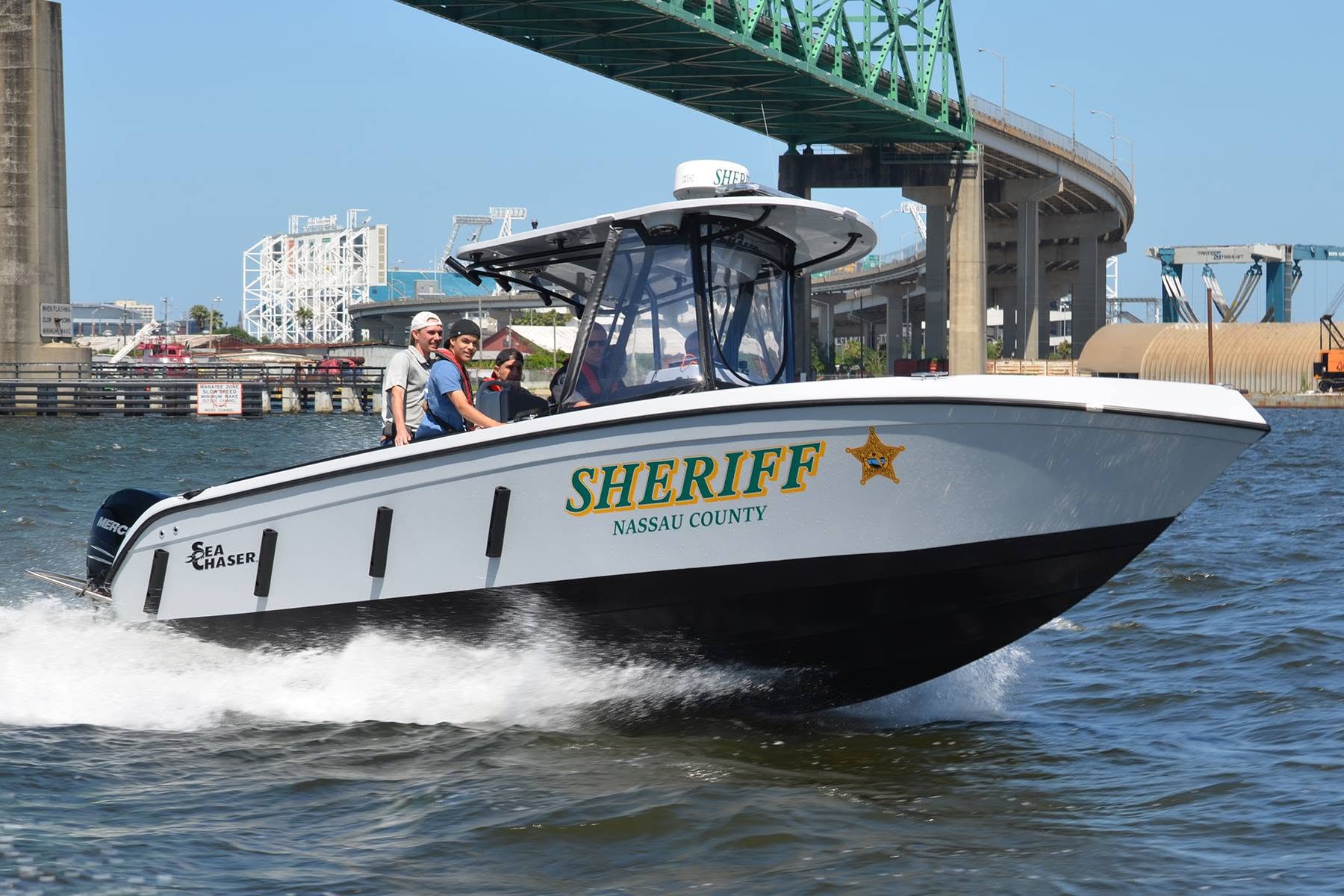
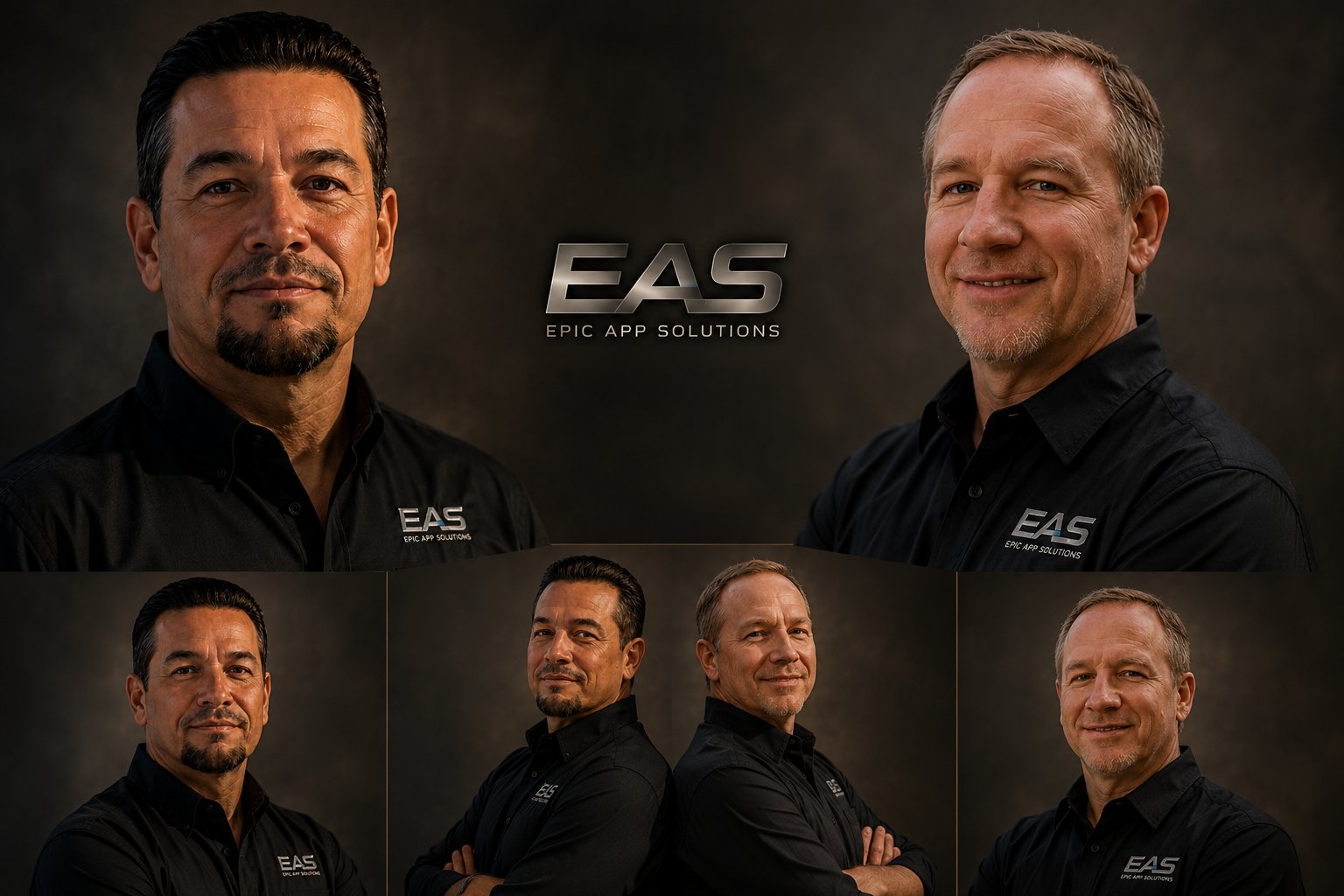
Just Cap and Tim. Same people you'd get on day one.
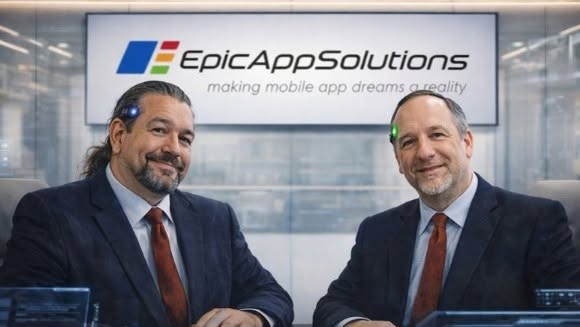
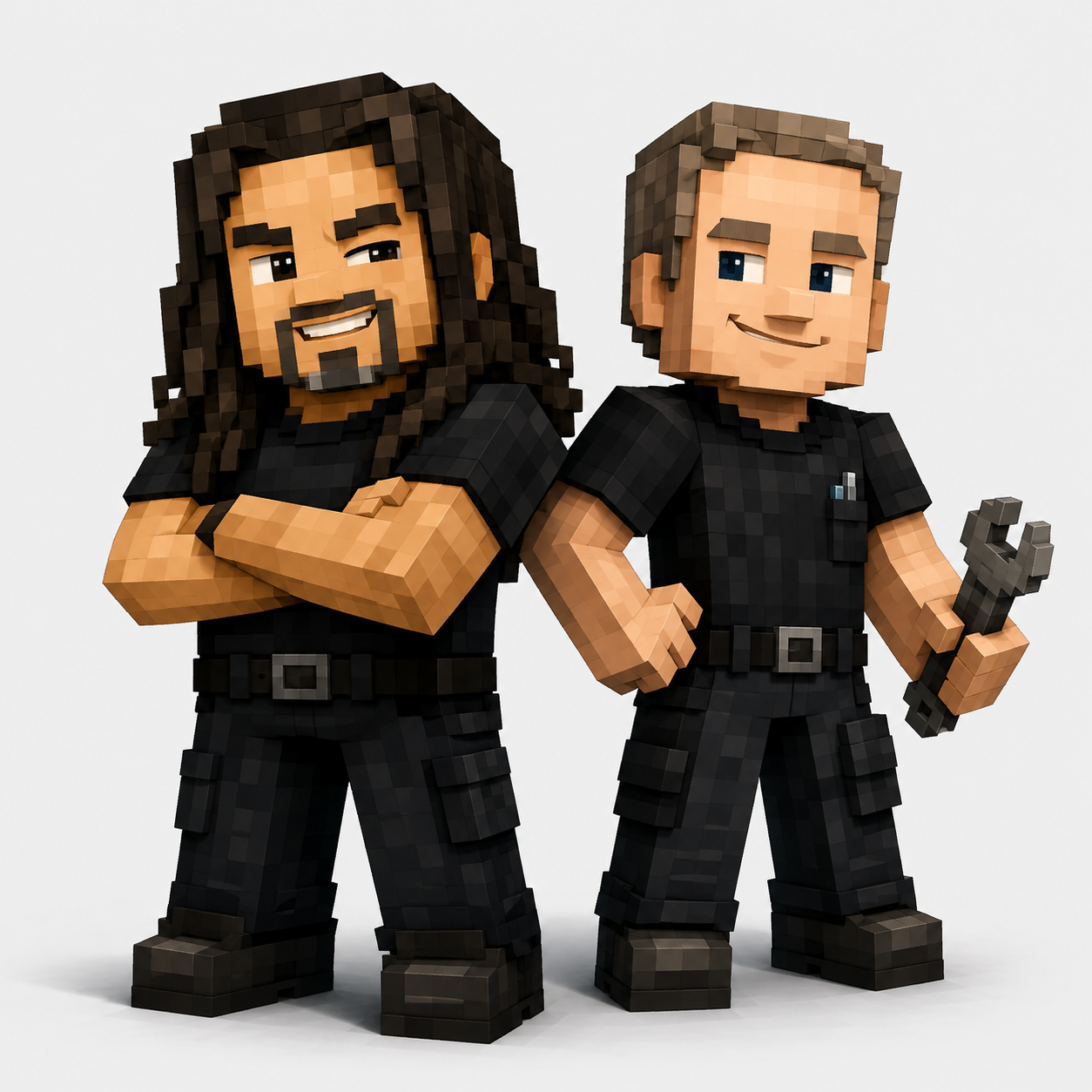
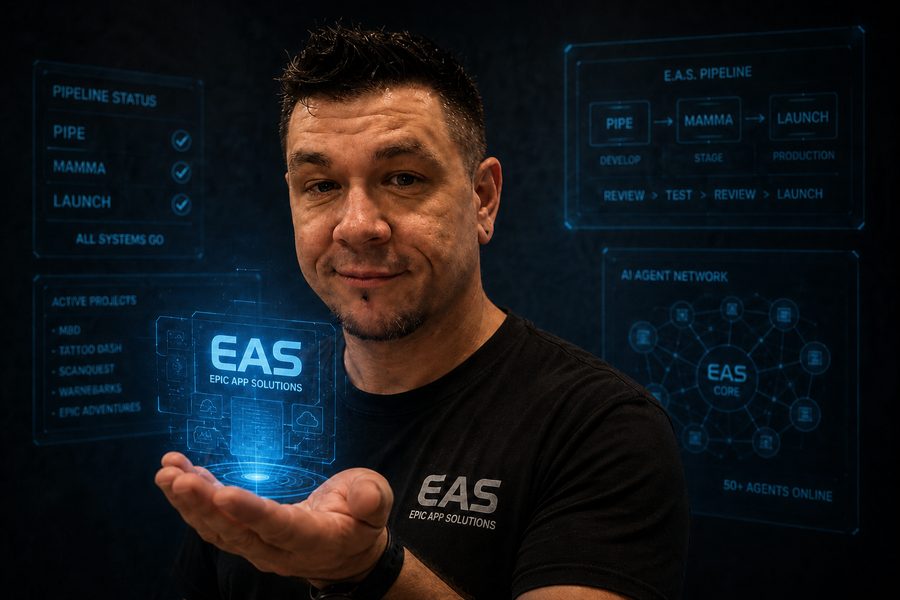
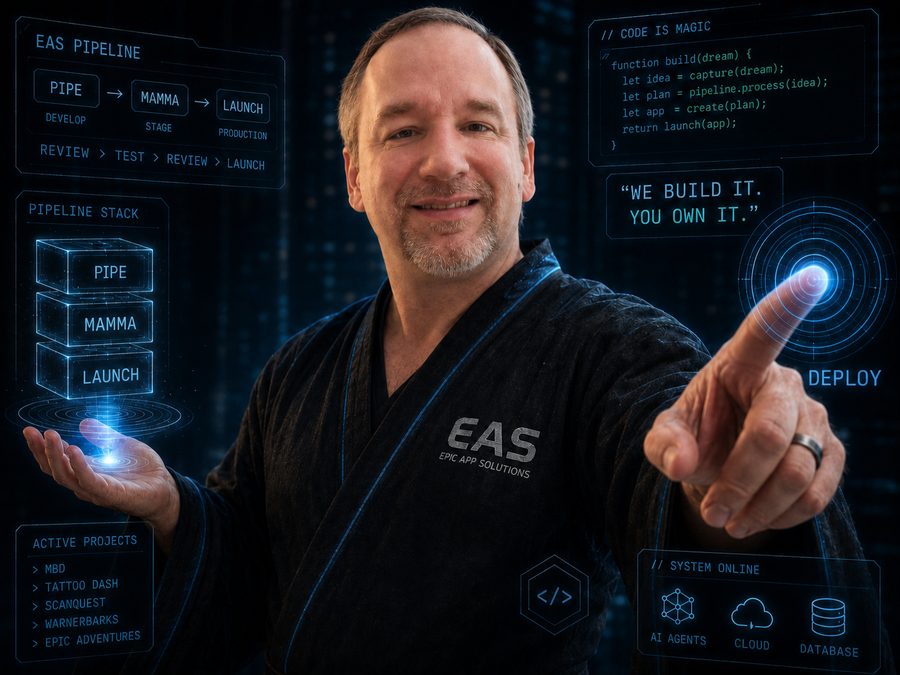
Tim is the CPU—the engineering brain and the architecture. Jade drives the ship forward—product direction, hard decisions, client momentum, and the push from idea to deployed work. When somebody calls EAS, they get both. Investors have called them polymaths — together, the two of them get done what usually takes a team of ten.
Jade “Captain” Chancey — Former CIO. Deception profiling, tactical systems, operational consulting. Certified where the work actually happens — safety, CAD, and instruction. He taught the capstone projects for an IT degree that couldn't launch without them. He runs EAS product, picks the big calls, and stops anything going sideways. Shipping since 2008, and no time for politics.
Grew up in New Mexico. Enlisted in the Navy at seventeen — three years in the fireman program, ’96–’99, for college money, turning eighteen partway through it. Service runs in the family: his mother served in the Air Force too, and two years of middle school, while she was stationed overseas, he lived with an uncle who now flies for Raytheon. His mother's brother was a Navy SEAL. His father served Search and Rescue in the Air Force and was killed in the line of duty. One grandfather was drafted into the Marines, got out, went to college, ran out of money, went back in through an Army commission, and ended up running a Volkswagen plant in Pennsylvania. The other — a Georgia farmer, German by name — had “Schanze” turned into “Chancey” at Ellis Island. Two Chancey families in Georgia trace back to that same crossing; one got the spelling right, one didn't. Family history says a German surname wasn't something you wanted stamped on your papers back then.
College came non-traditional and later — older than most classmates because of the time in service, with credits already banked from CLEP testing on base and an FBLA fraternity chapter along the way. First IT job was in Brooklyn, working for Tim Calabro — his first boss, and twenty-five years later still his partner. Classic yin and yang: Tim's calm and level-headed, Jade isn't.
Tim Calabro — Enterprise mobility, built at scale. BlackBerry Support at Lehman Brothers on the RIM team, Global Technical Support at Bloomberg, mobility infrastructure for the Americas at Nomura, enterprise mobility engineering at Wells Fargo — architecting device management for environments running up to 90,000 devices. Twenty years of device control, application certification and the systems behind them, current on it too: Google Certified Android Enterprise Professional. He owns the real architecture — how it's built, how it scales, and what doesn't break.
“Tim has the complete package that any employer would want… dedicated, hard working, and always ready for a challenge.” — William Petz, who managed Tim directly. “He took on a multifaceted role of leading Support and Provisioning, yet making sure Engineering stayed on top of their game… a great asset to Lehman Brothers.” — Arif Khan, colleague at Lehman Brothers.
Between us the certifications run from safety and CAD through networking, security and mobile. We don't list them like a résumé, because you're not hiring one of us. Ask whether we can build on a specific stack and you get a company answer — the stack we ship on runs down the left of this page.
We pick clients as carefully as they pick us. We're not here to hand-hold, and we're not chasing every dollar. If it gets hard and you can't stay professional, we hand your money back and walk. We've done it.
One of us grew up in Georgia. The other's Jersey. Both of us code, build infrastructure, and actually care if the thing still works next year.
If that sounds like a team you want to work with, great. If not, we just saved us both some time.
Epic App Solutions is founded by Jade Chancey and Tim Calabro. EIN established the same year — the long build starts here, well before "app development" was a household phrase.
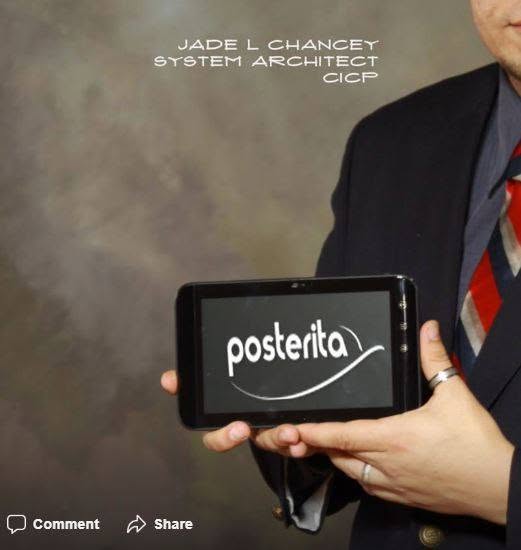
Jade builds and architects an early tablet-based operational system using Posterita technology. The surviving project image credits him directly as System Architect; the exact year is being kept approximate until the original project records are recovered.
Epic App Solutions goes mobile-first. Tim brings the mobile discipline he learned managing BlackBerry Support at Lehman Brothers: customer-service systems, streamlined support processes, device control, and mobile application certification. Day one of the mobile era at EAS means shipping across Android, BlackBerry, and iOS—real platforms, real constraints, and real feedback.
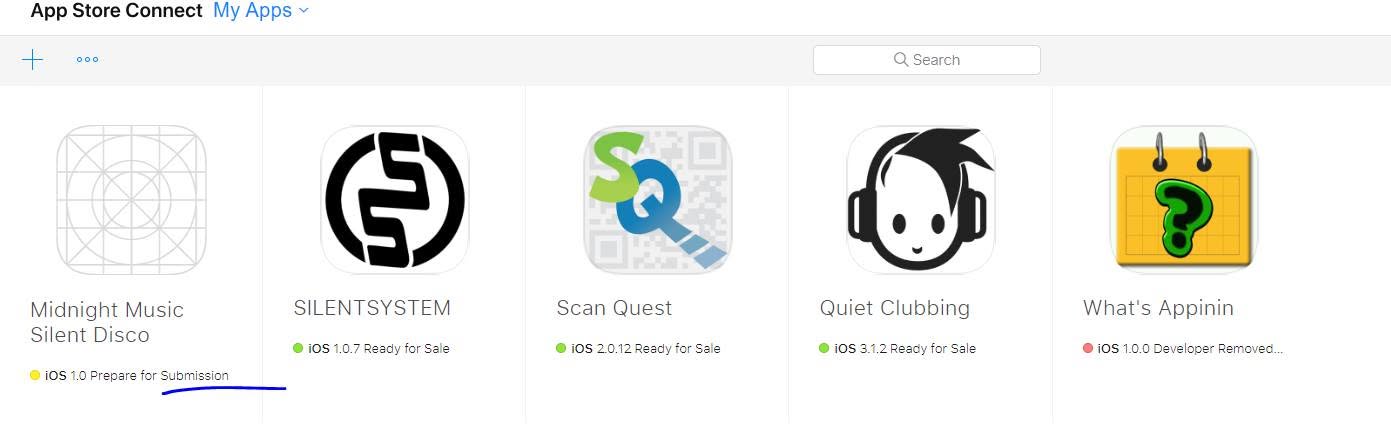
The brands, devices, operating systems, and developer rules kept changing. EAS learned each generation as working technology—from early mobile constraints through native iOS and the modern app ecosystem—instead of tying the company to one tool or one moment.
Over 300 WordPress sites and templates built for clients, ranging from small nonprofits to enterprises. Custom plugins architected around real business workflows — inventory tracking, multi-vendor fulfillment, customer intake pipelines, things that had to work. Tim carries enterprise mobile through Lehman Brothers, Bloomberg, Nomura Securities, and Wells Fargo: from support leadership and certification, to BlackBerry and Good Technology infrastructure for the Americas, to a self-service mobile-device provisioning and management platform built with C# and Microsoft SQL Server. At Wells Fargo he also consults with lines of business building their own apps, leads development of a mobile compliance solution, and evaluates line-of-business applications for certification.
Tim works as a senior pre-sales engineer, building customer proof-of-concept systems on Android, iOS, Wear OS, and Android XR. He helps customers and partners integrate emerging mobile platforms into day-to-day workflows while continuing to own EAS system architecture and engineering.
Will Petz launches Random Events in New York—his company, his logistics, and his event operation. Tim builds the Random Events mobile applications for BlackBerry, Android, and iOS using J2ME, Java, and Objective-C. EAS owns those multi-platform apps and the infrastructure supporting them; Will owns the business, customer relationships, logistics, and physical operation.
Will discovers silent disco on a Caribbean cruise and brings it home. Quiet Events launches in August, later becoming Quiet Clubbing / Silent Disco. Tim expands the application stack by learning MySQL, PHP, and Cordova hybrid development for the Quiet Events apps, then rebuilds Quiet Events 2.0 with Swift and Kotlin. Will owns and operates the event business, rentals, wireless-headphone fleet, logistics, DJ operations, and fulfillment; EAS owns and supports the mobile applications and their app infrastructure.
Scan Quest launches on the App Store, July 19. Our own IP, our own platform. A scavenger hunt and quest engine built for schools, event organizers, and educators. Featured by NYSN, Salt Lake City School District, Fairfield Public Schools, and professional event companies. The app that proved we could build and ship something that outlasted the moment it was born in.
COVID ends Scan Quest's run as a live event product—the first time we lose something to something we can't control. The app itself keeps getting updates for another four years. We're pulling 80-hour weeks at other jobs to keep our own projects alive while the world shuts down. For Will, we build a DJ battle system so his event business can move online. For ourselves, we keep building. The work doesn't stop because the world does.
Scan Quest receives its final major update (v2.0.13, December) after twelve consecutive years live. Twelve years of updates, security patches, new features, and keeping the platform current. A platform built to last, and it did.
Touchless Egg Hunt ships to the App Store and Google Play. A casual scan-and-find game born in COVID times, $1.99 download. Built while keeping bigger projects alive. Proof that small bets and big bets ship on the same timeline, same rigor.
The Dream Machine pipeline stands up. Moon Base Defenders, Crowdtography, and Epic Adventures all in active build. Nudge is in product development. Georgia Skiff gets its early scaffold, drawing on Jade’s established fiberglass and composite fabrication experience and targeting 2030. The tattoo booking and delivery platform is finished and up for sale. Twenty-five years in, and the pipeline is full.
From BlackBerry and J2ME to native mobile, XR, cloud, and the current AI era. The tools changed. The discipline stayed.
BlackBerryJava / J2MEObjective-C / iOSAndroidMySQLPHP CordovaSwiftKotlinC#Wear OSAndroid XR
 GoDaddy VPSLinux
 Cloudflare
EAS has survived browser wars, app-store shifts, hardware changes, platform deaths, framework crazes, and every “this changes everything” moment since the EIN in 2002. This is not a clean timeline. It is the evidence pile.
We don't need a portfolio site. Clients come back because the work is real. Jade Chancey (CEO, Product Architect, Fractional CIO) and Timothy Calabro (President, Lead Software Engineer, System Architect) get paid full rate, every time, and the work is confidential because the clients we work with are real and they protect their IP. That's the deal.
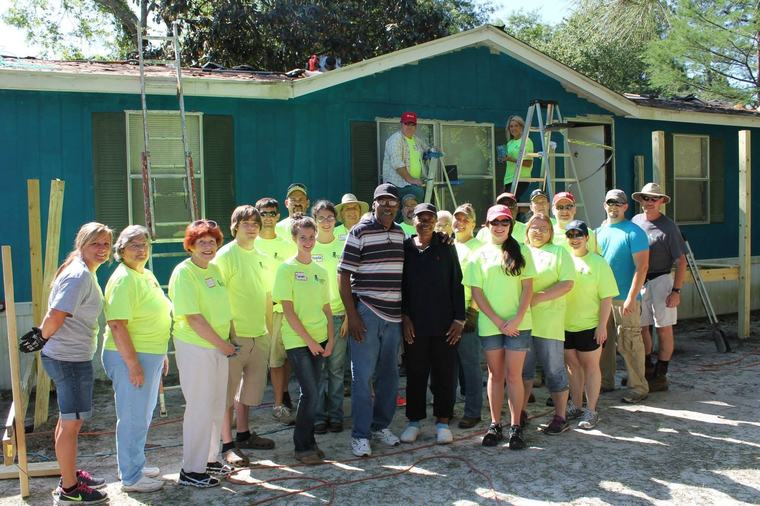
ERP modernization and executive technology leadership within manufacturing organizations.
Executive technology leadership engagements — stabilizing organizations, modernizing infrastructure, implementing ERP, transitioning to permanent leadership.
Technology demonstrations for agricultural organizations and 4-H events — mobile technology, image recognition, field data collection.
Technology consulting for builders, contractors, and property-related businesses throughout North Georgia.
Commercial CCTV and security infrastructure design and deployment.
Vacation rental management technology and operational software.
Ownership and operation of multiple retail businesses, including custom software supporting daily operations.
Video game development, story systems, interactive experiences, commercial entertainment software.
Paperless marketing built as a working system: QR experiences, landing pages, apps, campaigns, storefronts, automation, analytics, and event technology that carry a person from first contact to measurable action.
Two decades of on-site and remote work across New York, Georgia, and New Mexico, with international engagements serving clients in Canada, Italy, and Israel — implementation, consulting, executive leadership, training, project recovery.
We don't publish a client list. Most engagements involve confidential business operations, proprietary software, or executive consulting under NDA. Qualified prospective clients can request references during the proposal process — provided only with the client's permission.
The system does not answer “here you go.” It keeps asking until it knows who the idea serves, what matters, what can fail, and what the smallest honest test looks like.
You open a case — and it can be that simple. “I need a website” is a complete case. We sign the paperwork — C-NDA, NDA, letter of intent — then we talk like partners, not a ticket queue.
We consult to see whether we can actually help, then we’d rather build you a prototype than take your money — and we usually keep prototyping until we know we can build it. Yes — that is really how we work.
A prototype lets the engineer look back and say “no — this won’t work unless…” while there is still time to steer. Commit first and you’ve bitten your nose off. That is not how we develop. Ever.
Marketing firms and businesses — Fortune 500 down to mom & pop. We only take the jobs we’re interested in, and we’re honest about which those are.
We do — and we don’t share our secrets. If you’re uncomfortable not paying up front while we prove the idea can work, this isn’t the place for you.
Cash investors — not interested, at all. The only investors we work with are the ones who work at their own business. Just handing people money to make you money isn’t our style.
Answer eight short questions. Each answer changes the first-pass phone sketch.
Serious about the idea behind the sketch? Bring a letter of intent — it is simpler than it sounds, and it is the gate before any prototype. Already have it laid out? The C-NDA is what lets us start talking right away.
This is a questioned first pass, not a finished product or an automatic approval.
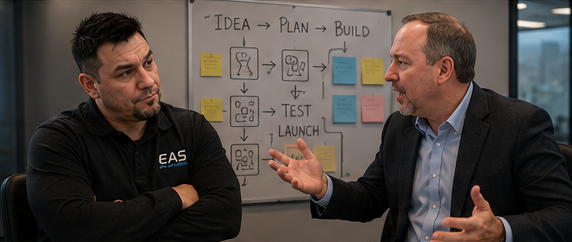
Who is it for? What must work? What can break? The Pipe keeps asking until the target is honest.
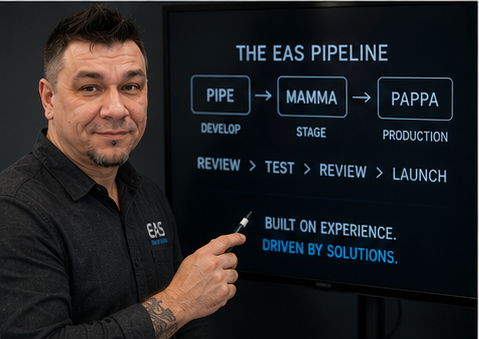
Software, hardware, content, and testing split into visible handoffs instead of disappearing into a black box.
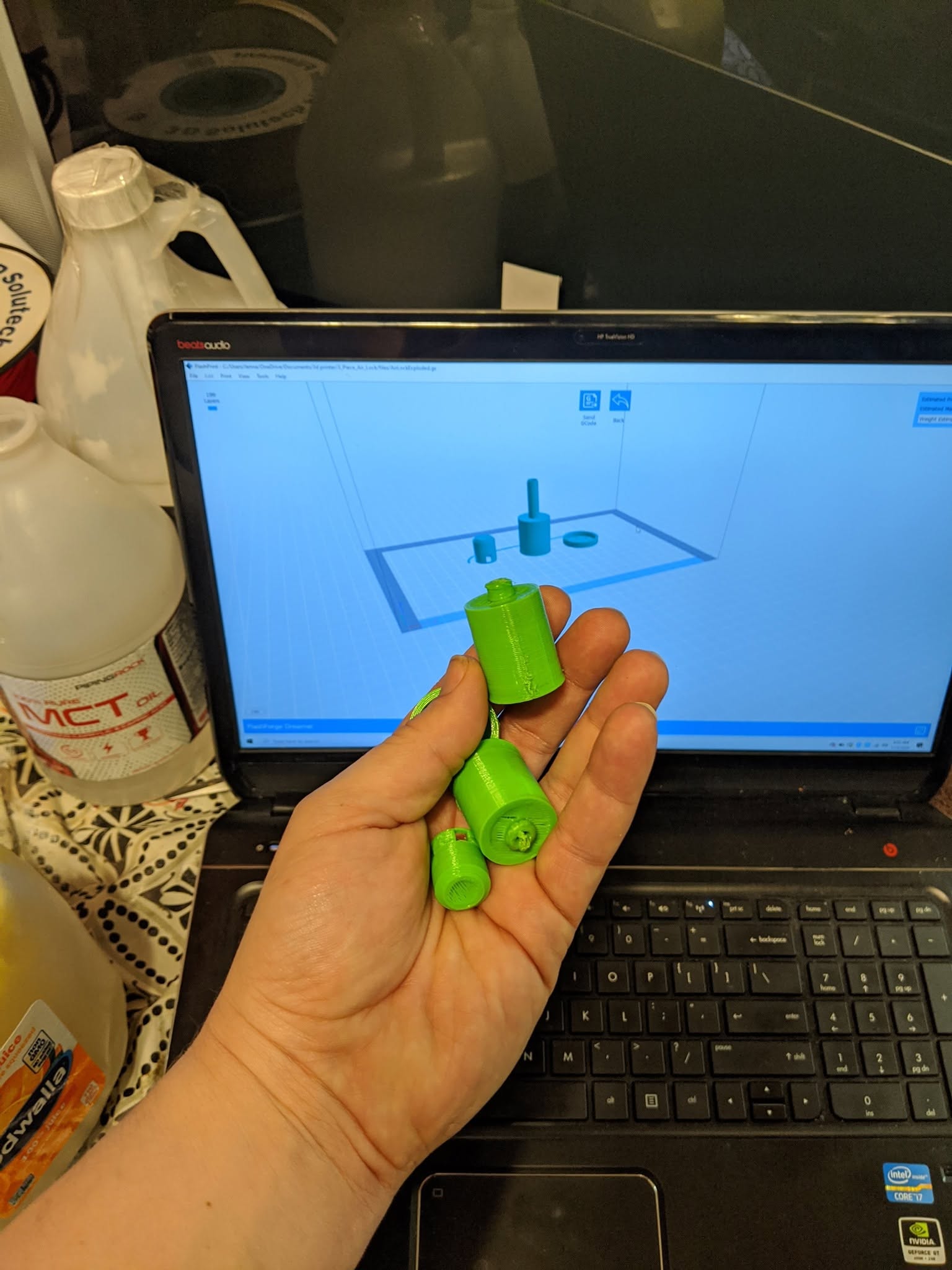
A screen, a part, or a working slice proves the idea before anyone pays to build the whole machine.
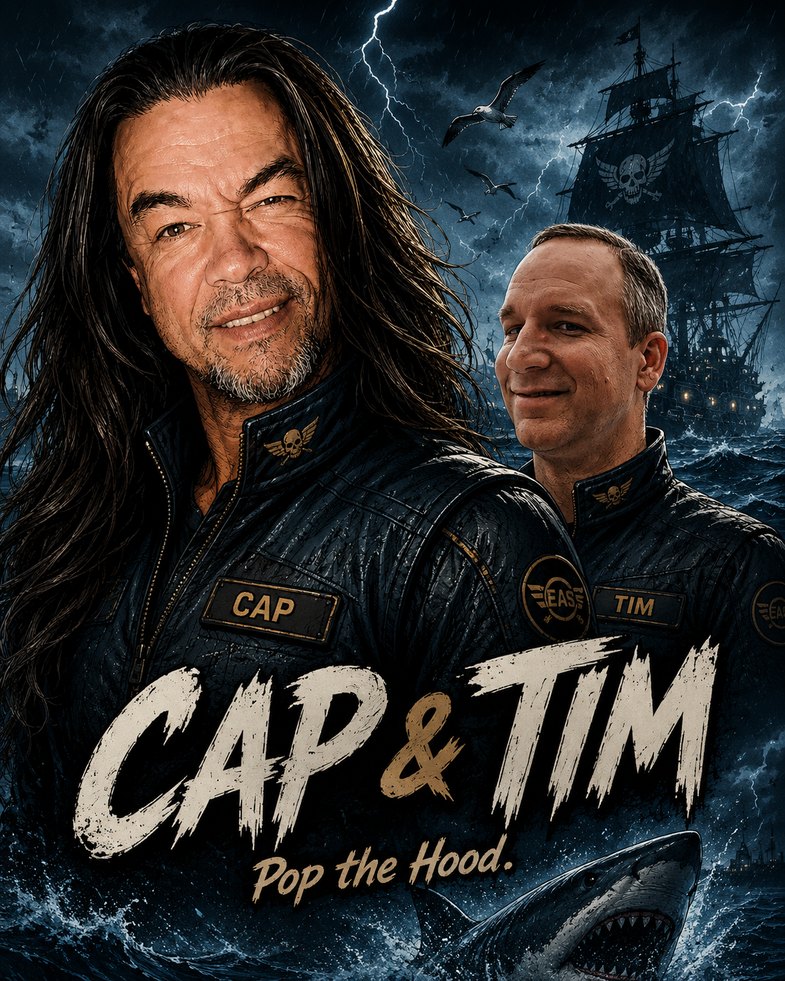
The demo above is the simple version. Below is the real shape of our process. It's built to catch mistakes early and keep a real person in charge of every call.
Before any tool touches your idea, we write down what you're asking, who owns it, and what's at risk. No guessing.
Takes in your question and writes it down honestly. It's tracked until a real person answers it, so nothing gets lost.
Sends your idea to the right project and the right person, with a clear record of why.
Answers questions we've already solved before. Anything new gets passed up the line.
A rough idea becomes a real first draft fast. Then we hunt for weak spots before they turn into costly mistakes.
Turns the plan into real, working code, and owns it start to finish.
Wires the new piece into everything else so it actually works with the rest of the system.
Hunts for contradictions and answers that sound right but aren't true.
Turns raw signals from real-world use into changes people can actually act on.
Not every idea needs a second opinion. When one does, we bring in fresh eyes before it goes further.
Looks at the plan from a different angle and asks how it could be built better.
Compares this idea against other projects to catch a mistake we've already made once.
Watches the whole process for early signs that quality is slipping.
Gives clear direction for art and visual work, so builders aren't guessing.
Any outside expert can weigh in through one clear question. No messy access needed.
We merge the good parts, confirm it actually works, and stop cold if it touches something shared.
Reads the real work, not a summary of it, and checks it against what was promised.
Before anyone touches a shared, live system, an automatic check confirms nothing changed without a record. If it doesn't match, the change stops. No exceptions.
Keeps every project consistent and makes the senior call on close decisions.
Owns the real architecture: how it's built, how it scales, whether it holds up, and what the client needs to know before deciding.
We hand back the evidence, the tradeoffs, and our recommendation. The client decides what ships.
Confirms the architecture holds, names the remaining risks, and gives the team a straight technical readout.
We turn the technical readout into clear options, explain the tradeoffs, and recommend the responsible next move.
You approve it, change the scope, or send it back through the Pipe. Nothing ships on our opinion alone.
Not every idea goes through every step. We take the shortest path that's still responsible. Some names above stand for more than one tool working together. We're showing you the real shape of the process, not a technical blueprint.
Not a slogan. It's the actual system behind everything above.
We run a tiered fleet alongside us, not instead of us: Number One and Codex build, Edge filters, Oracle and Grok challenge, Watch checks health, Forge handles specialist assets, and BOB with Tim hold the technical gate. Nudge and other product agents join only where their lane applies.
That is why it's faster without being careless. We do not open one chatbot and accept the first answer. The Pipe adds project history, produces a working pass, asks a second station where useful, cleans the collisions, and returns shaped options to the people making the call.
The part we built on purpose, not by accident: agents draft, agents flag, agents move fast — but we still make every call that actually matters. Speed's worthless if it costs us the parts of the job that are ours to decide. That's the whole idea behind the name: turn dreams into working software fast, without cutting the people who dreamed them up out of the loop.
This is the same system behind the Sandbox — what it is, why a seat costs money, and how to get in the queue.
Silent Systems is retired. Will’s Quiet Clubbing operation runs on — USA-wide, Canada, and Italy — with mobile apps and app infrastructure we still support. What's left is what's active.
Named stations, signed packets, project routing, review tiers, and human technical gates.
Real teacher feedback loops, not another dashboard nobody opens.
High-function, built for the moment it's actually used.
Over 300 WordPress builds and templates, plus plugins built around how a real business actually runs.
SWOT work drawn from over 25 client engagements, Lehman and private investors included.
Captain, Tim, Chris, LINK, and one guest. Four different conversations rotate through the month—kids, technology, art, and the businesses technology changed.
🎥 Watch the Backstage Reel — a real walkthrough of a multi-million-dollar cannabis point-of-sale system. Not a show episode, just proof we get invited backstage.
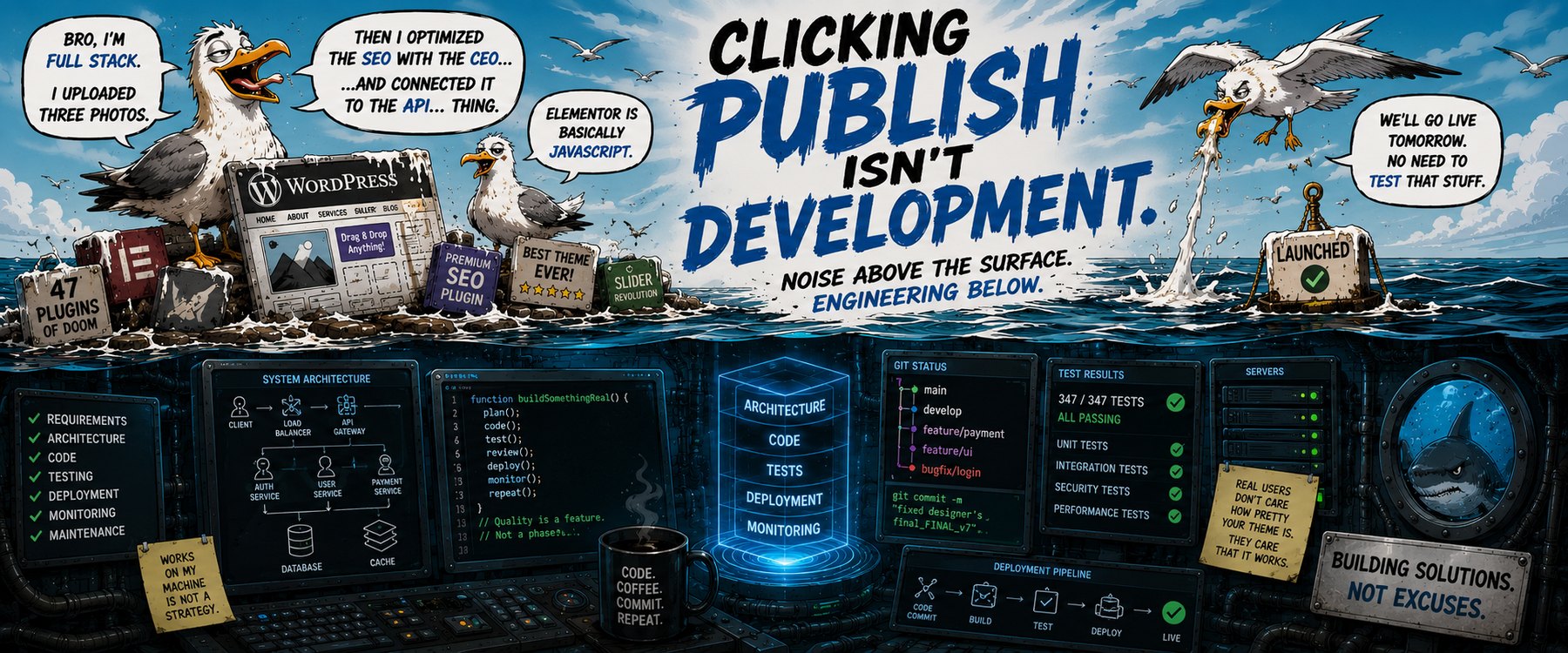
Builders, operators, and technical people talking through the systems, decisions, failures, and fixes behind real work.
Three human partners and one evolving AI meet people whose ideas are still becoming. Chris—Art Lead, Game Master, owner of Epic Adventures, and an EAS partner—teaches LINK creative judgment and art. LINK learns alongside him, shares that learning with the wider team, and helps make the Pipe stronger.
A young tester, builder, gamer, or kid with a channel tells us what adults keep missing.
Real builders take us above the buzzwords and into the systems, decisions, failures, and fixes.
Music, game design, street art, illustration, performance, and every medium between. Art gets the whole room; no tech angle required.
Owners tell the honest story of the technology that changed, rescued, or rebuilt the way their business works.
We use Shopify for merchandise, dropship operations, and fast commerce prototypes. Sometimes the prototype proves the route and moves elsewhere; sometimes it is already the right production home. AI-assisted workflows help us move through catalog, product, and storefront iteration faster without pretending the platform replaces product judgment.
EAS has operated virtual private servers with GoDaddy from the early company years forward. It is part of the real hosting history behind prototypes, websites, business systems, and the long-lived work that had to remain available after launch.
One format each week. Four formats each month. No rehearsed pitch. No pretending the work was clean. Just a real conversation about how people learn, build, create, and survive.
New builds beside the recovered work that got us here. This is a working project index—software, hardware, infrastructure, physical fabrication, and the field knowledge around each build.
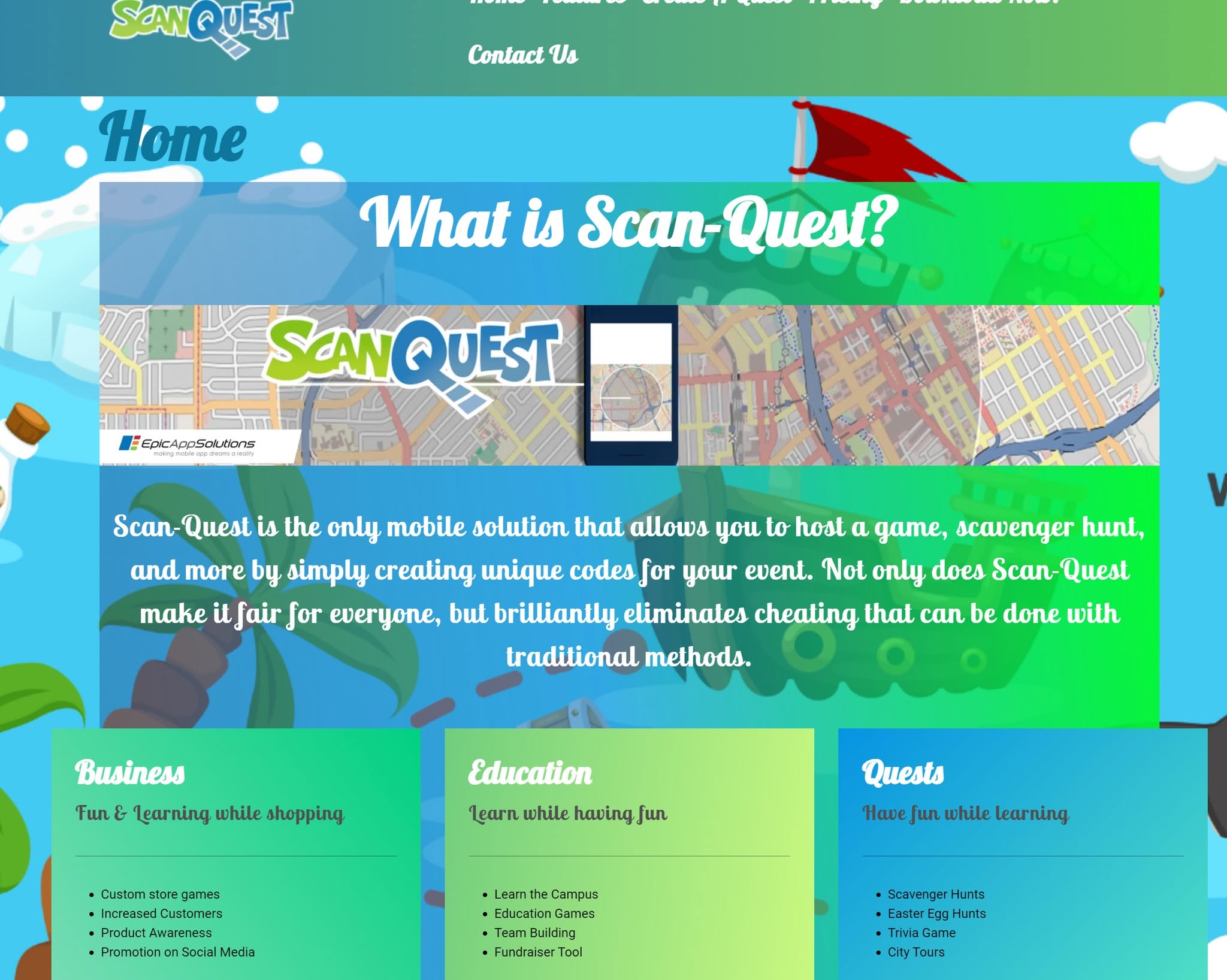
QR-driven experiences, event logic, public pricing, and a product people could actually use.
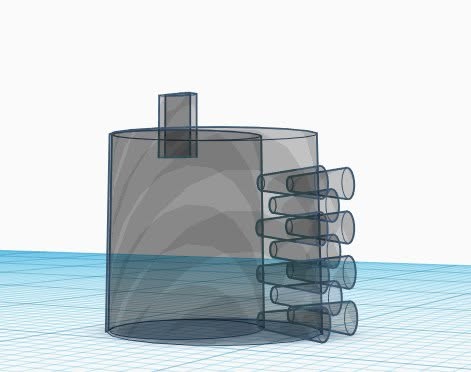
A .38-caliber paintball or pepper-ball concept worked out before fabrication.
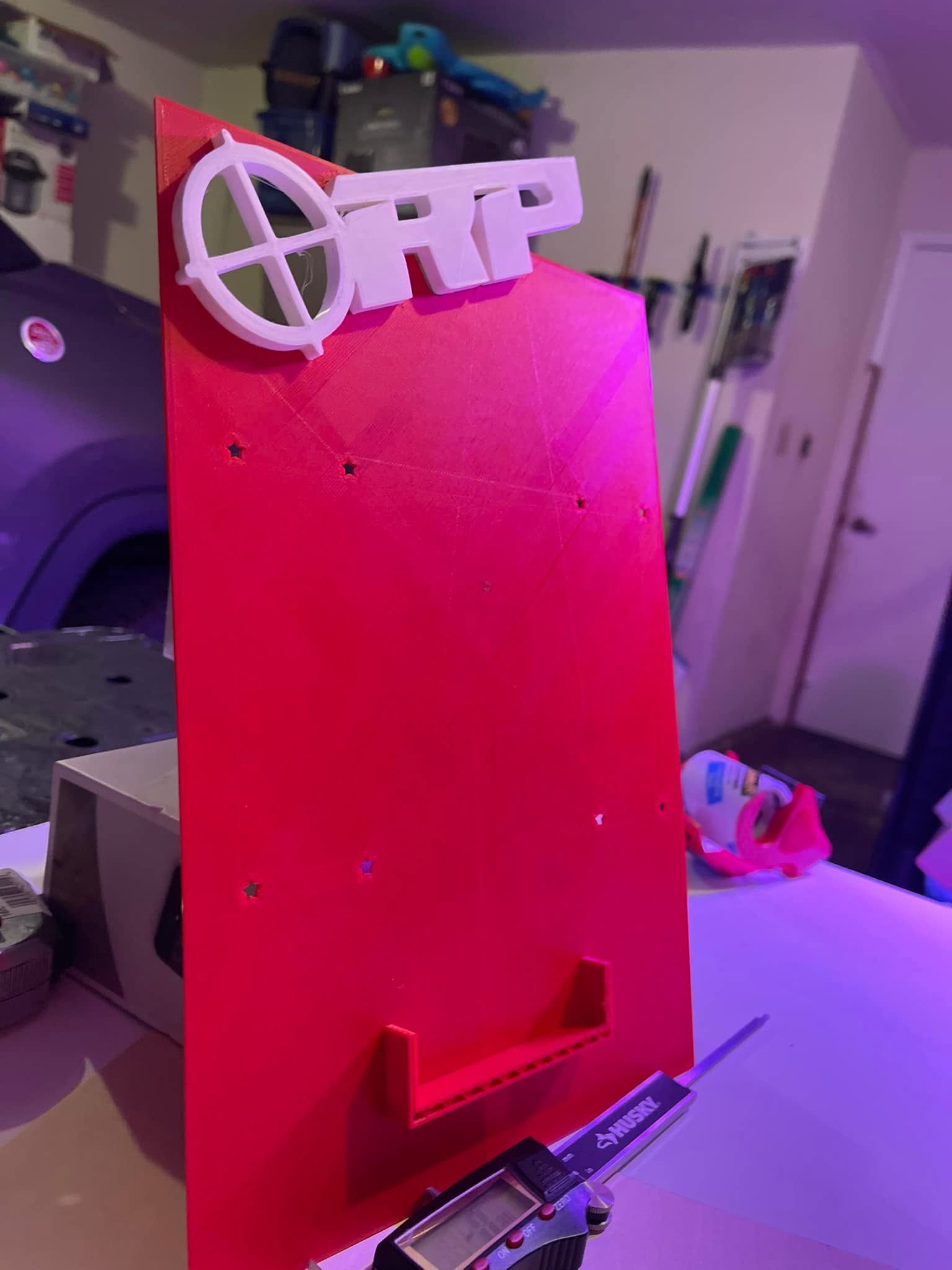
Dimensions, mounts, materials, and finish turned the idea into something that could be handled and tested.
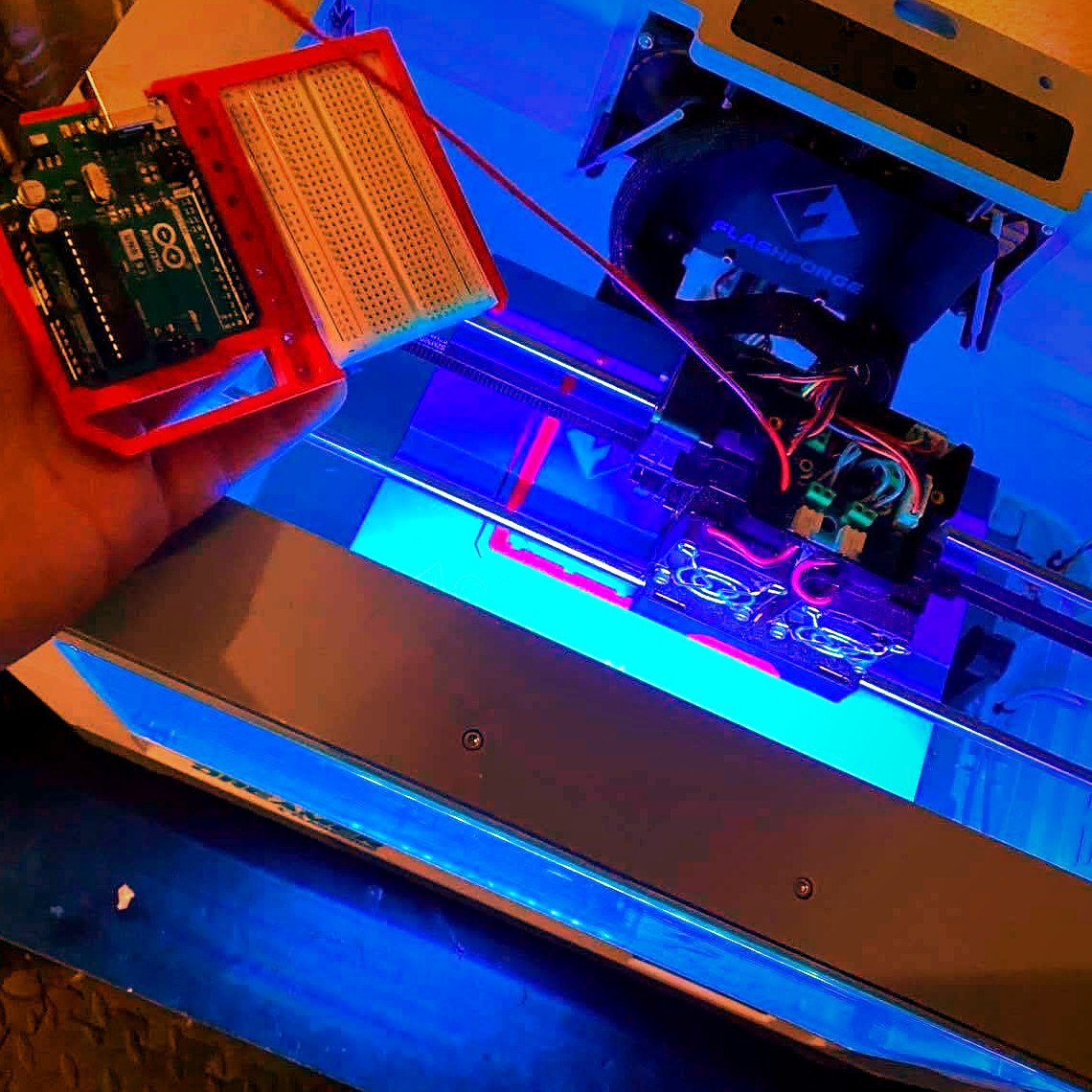
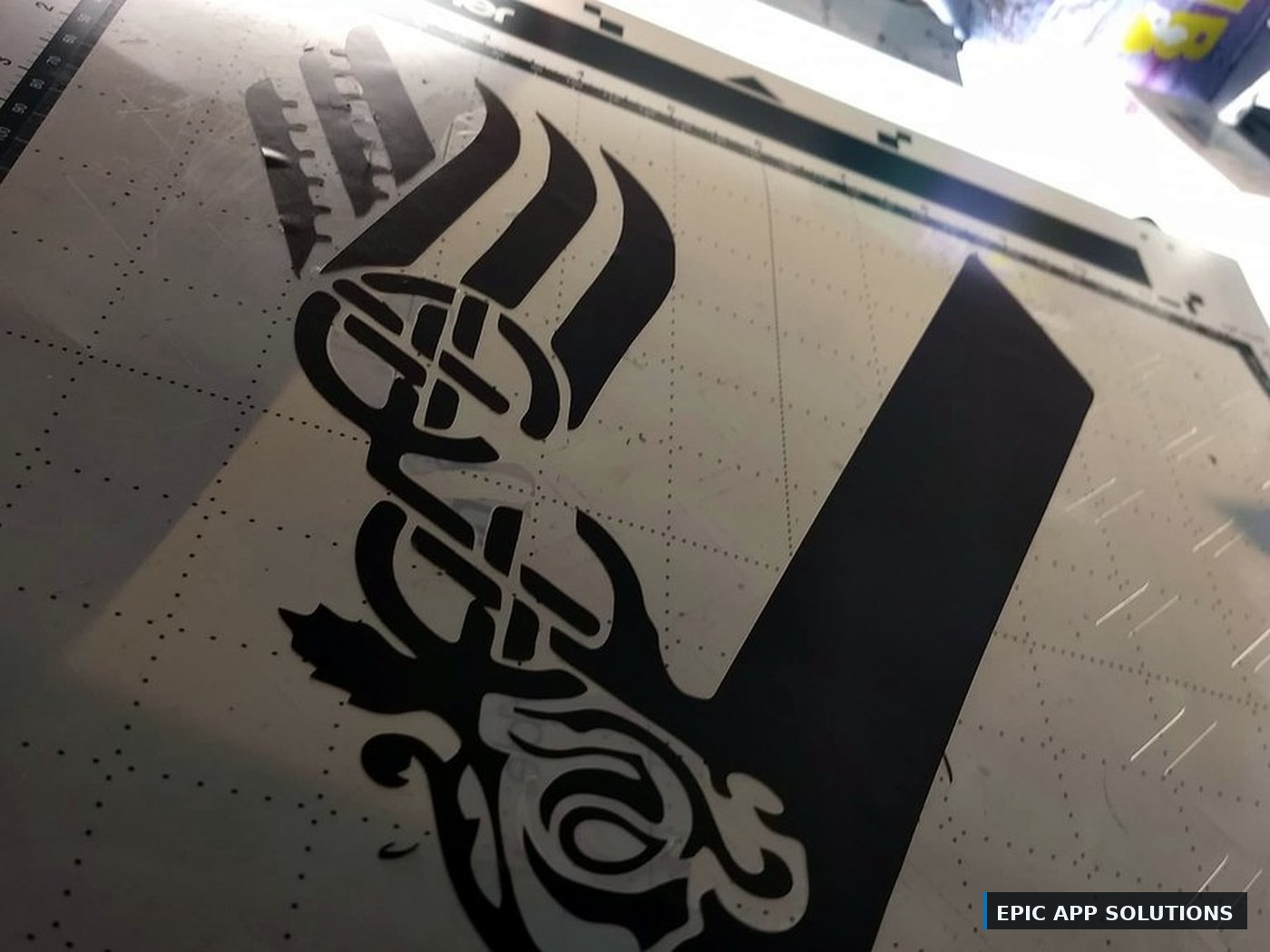
Design, machine setup, fit checks, and the physical iteration required to move beyond a screen.
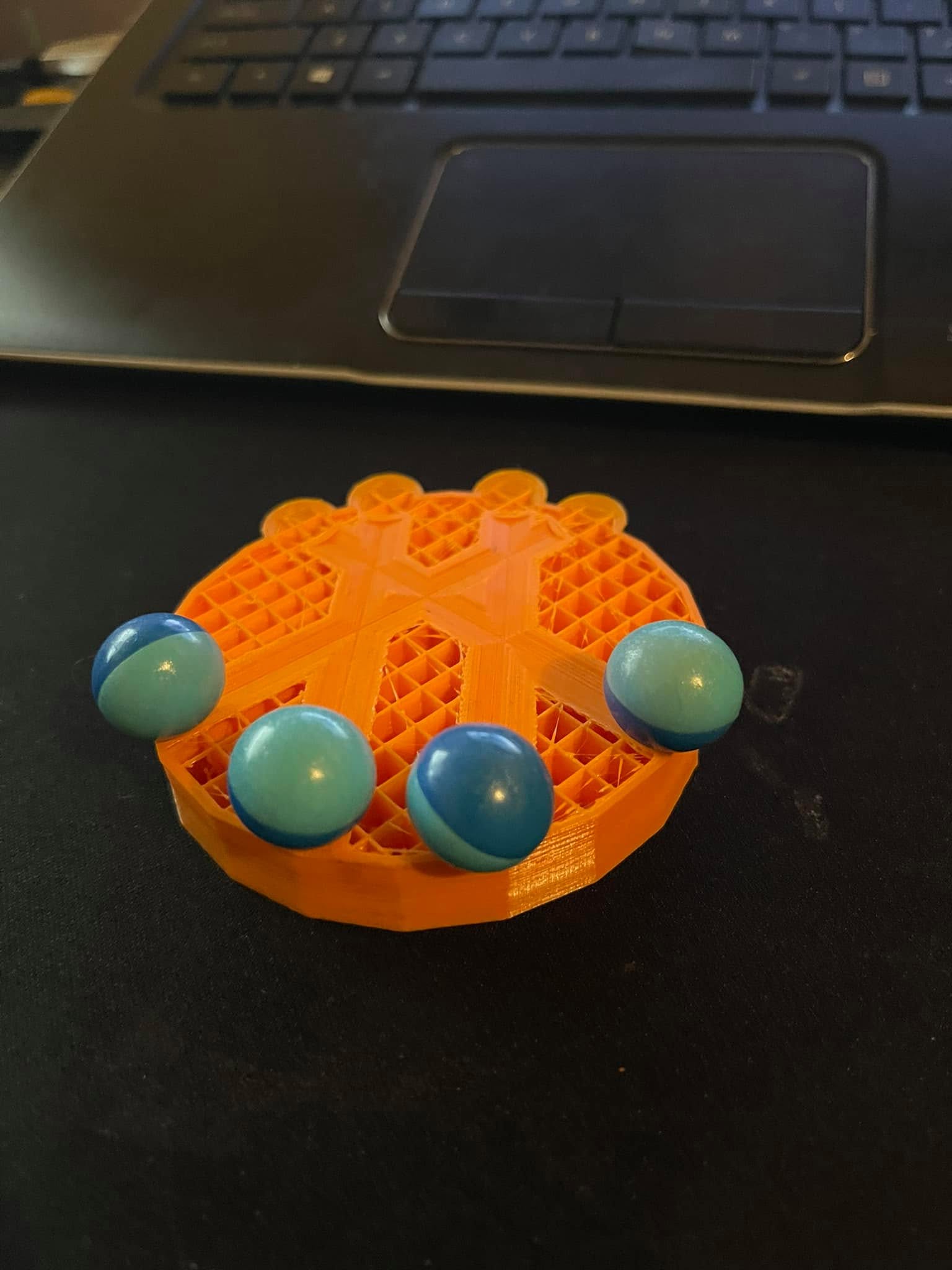
The firing angles moved from a marker-board sketch into a printed test jig before the larger assembly.
The apps and app infrastructure behind the white-label systems — USA, Canada, and Italy. We build the tech; the event business is run separately.
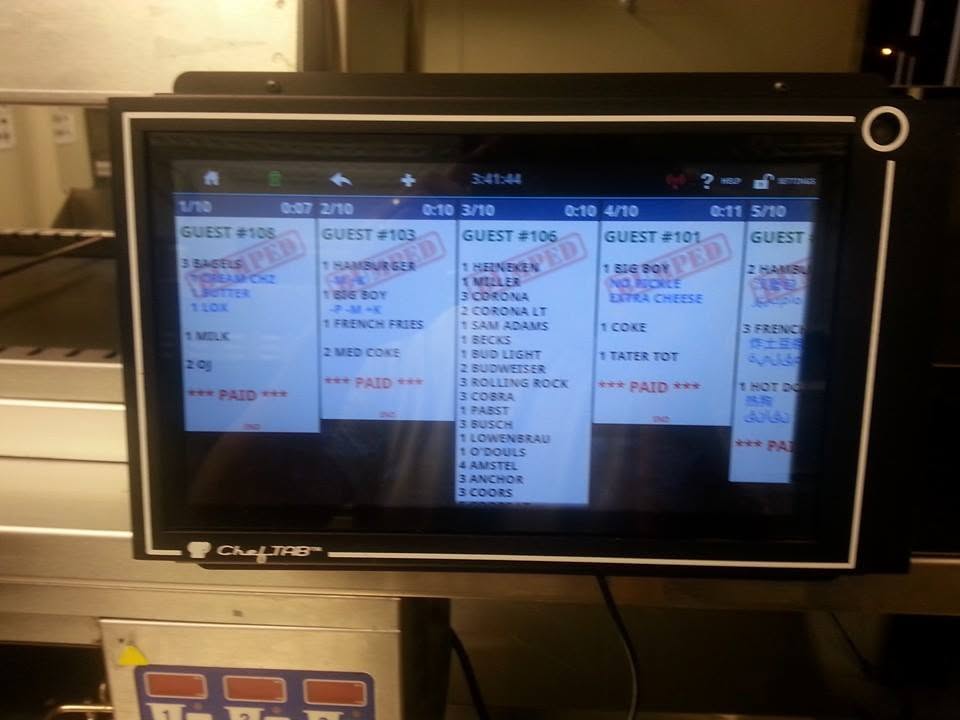
Physical installation and programming delivered where orders, staff, equipment, and service had to work together.
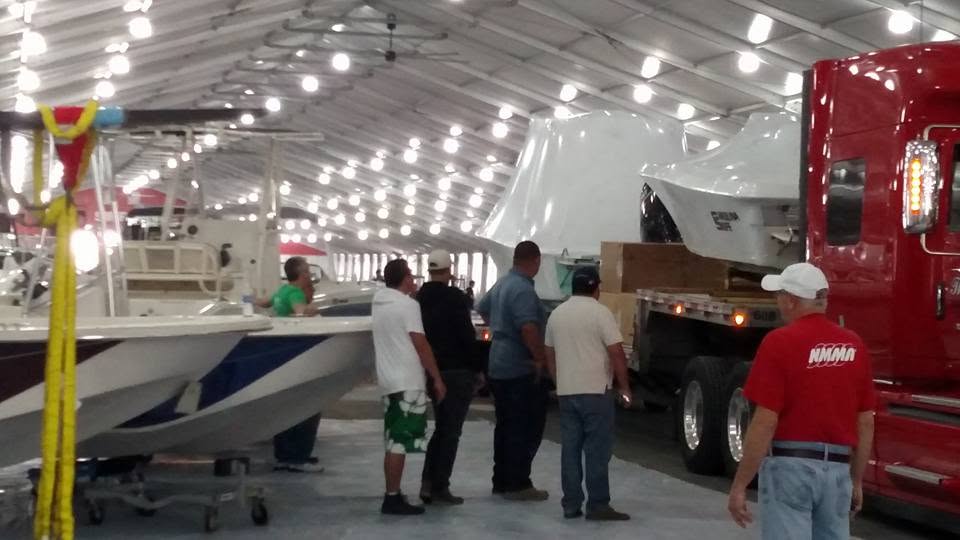
Truck and forklift load-in, devices, bilingual displays, staging, troubleshooting, and the final push before doors opened.
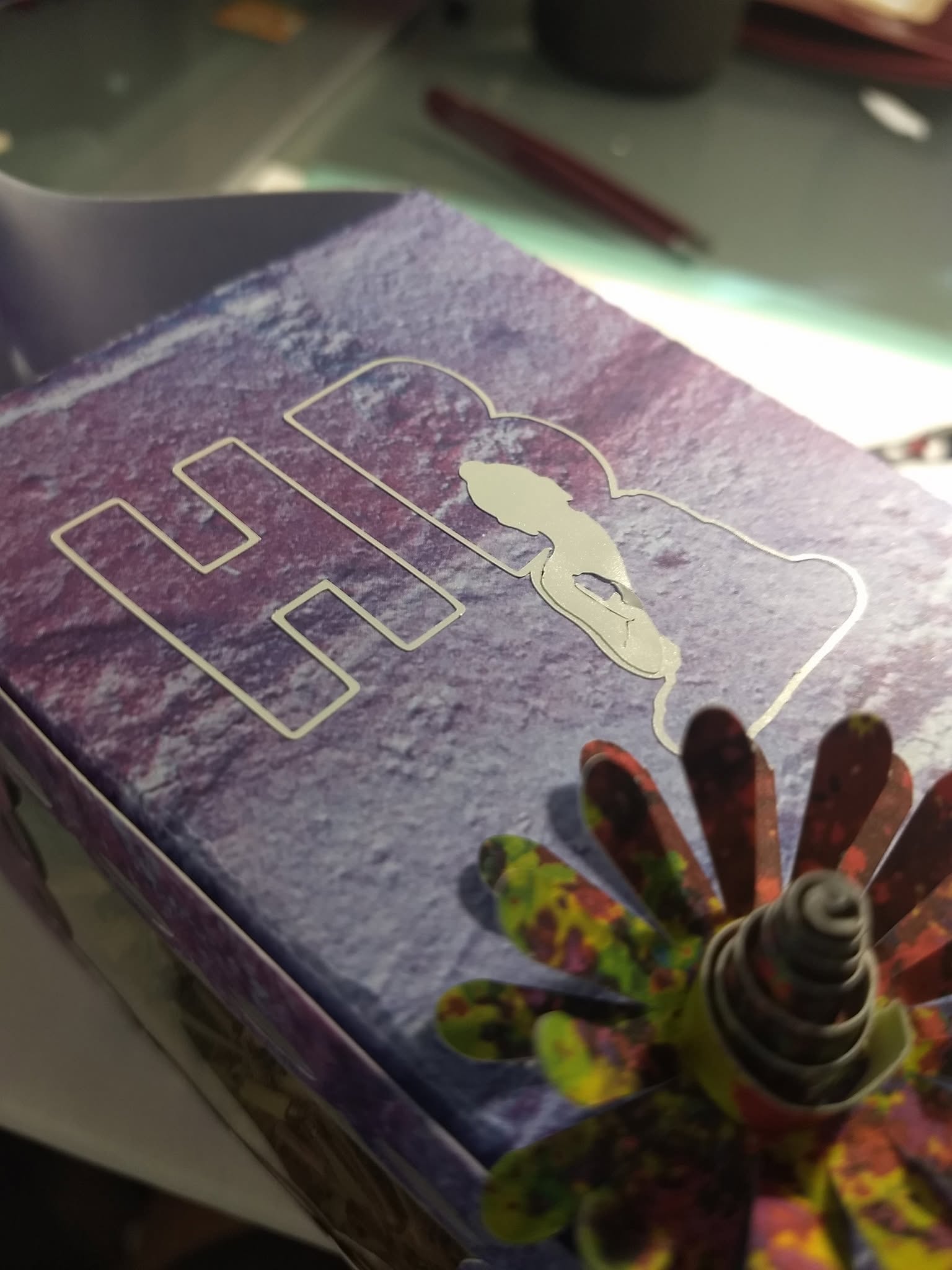
Physical product, finish details, presentation, and the hands-on production work around the idea.
Name, mark, voice, and positioning developed as one recognizable system.

Identity, products, packaging, storefront, and commissioned dragon artwork—not a logo dropped onto a bottle.
Name, visual system, market voice, and web presence developed as one connected brand.
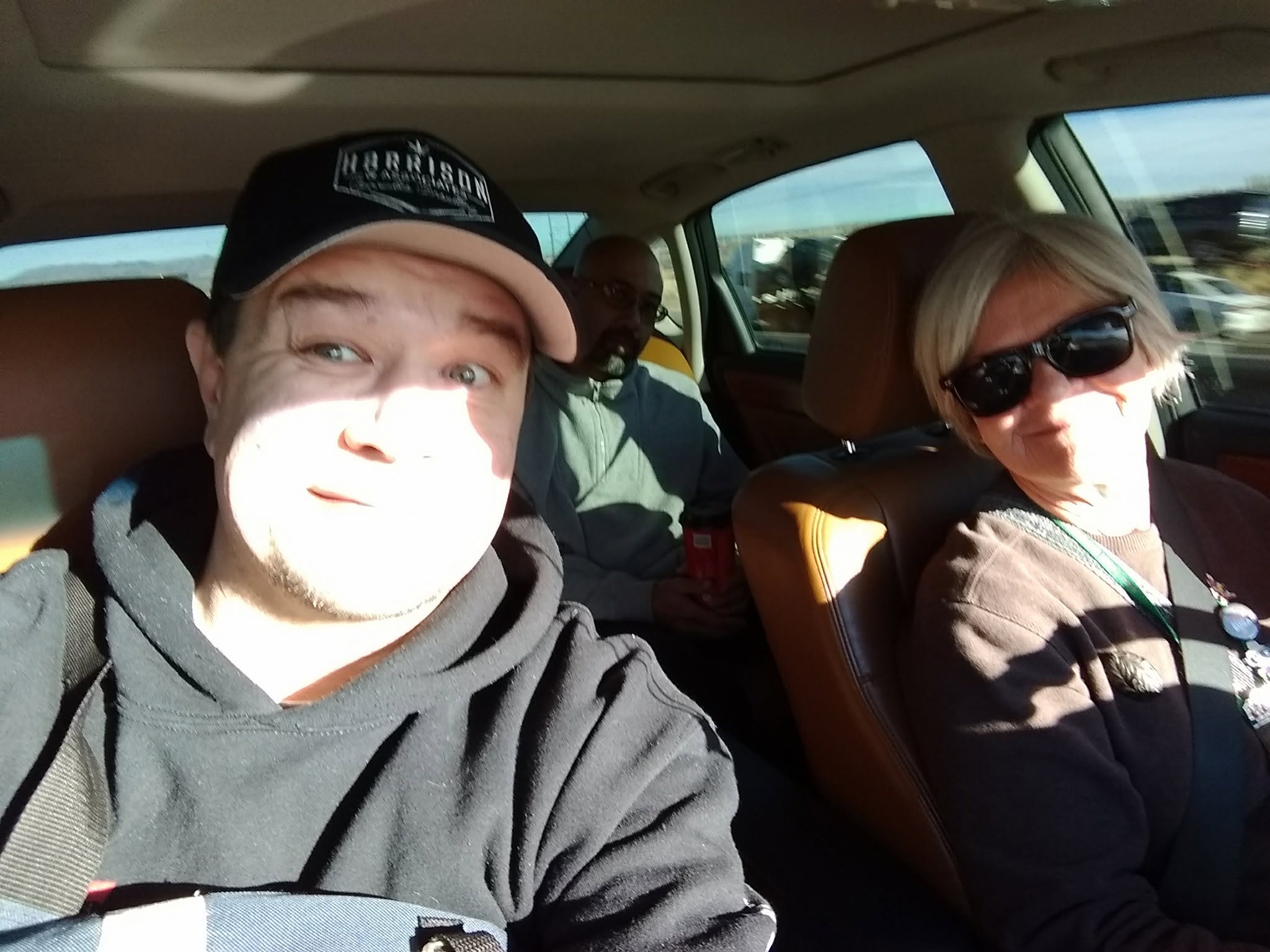
Brand, operations, product formulation, suspension testing, packaging, and work alongside specialists inside the market.
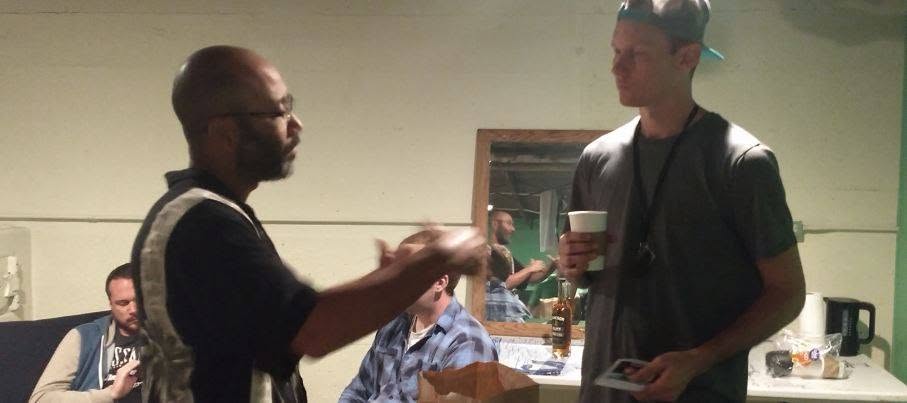
An early product conversation with Howie from Ballyhoo and a former employee; the coffee collaboration ultimately moved forward with Less Than Jake.
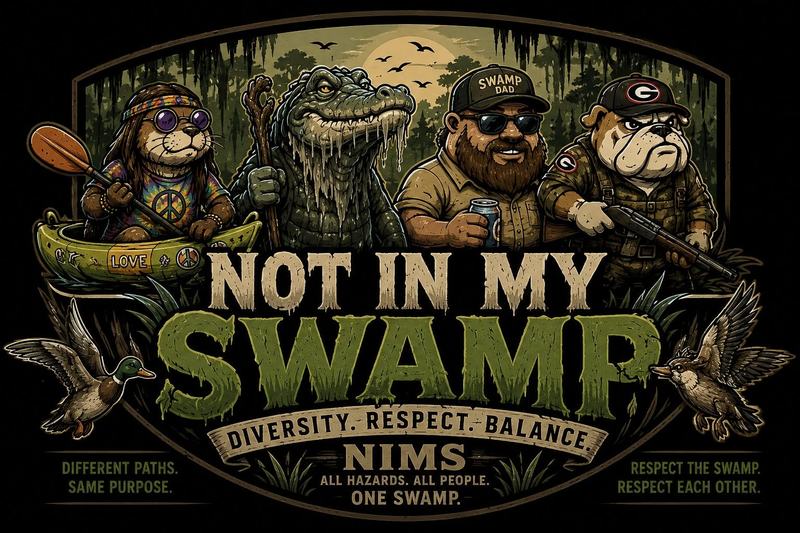
NIMS grew nationwide; when a stronger established effort was doing the same work, its users and groups were redirected instead of fragmented.
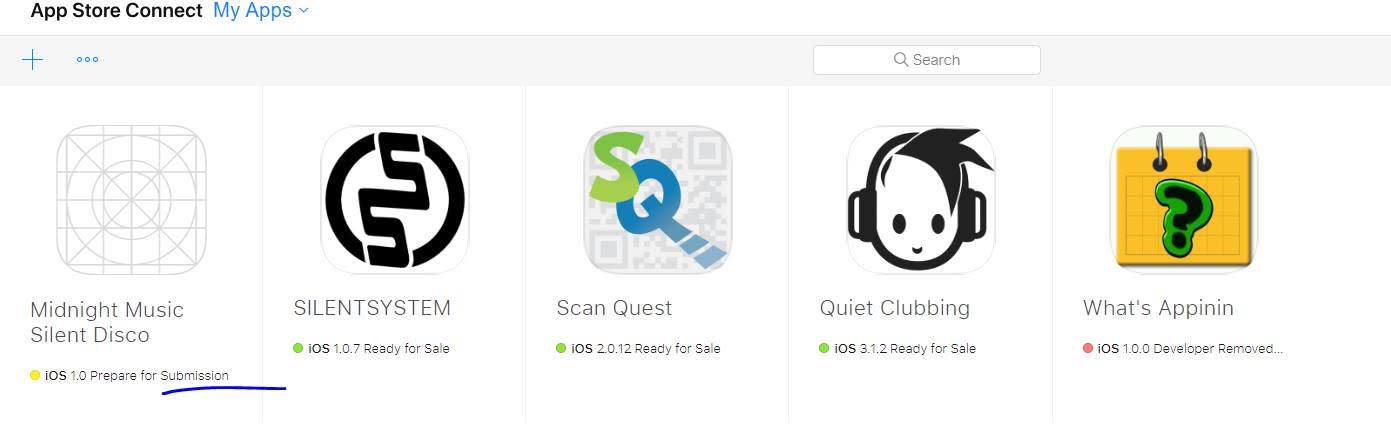
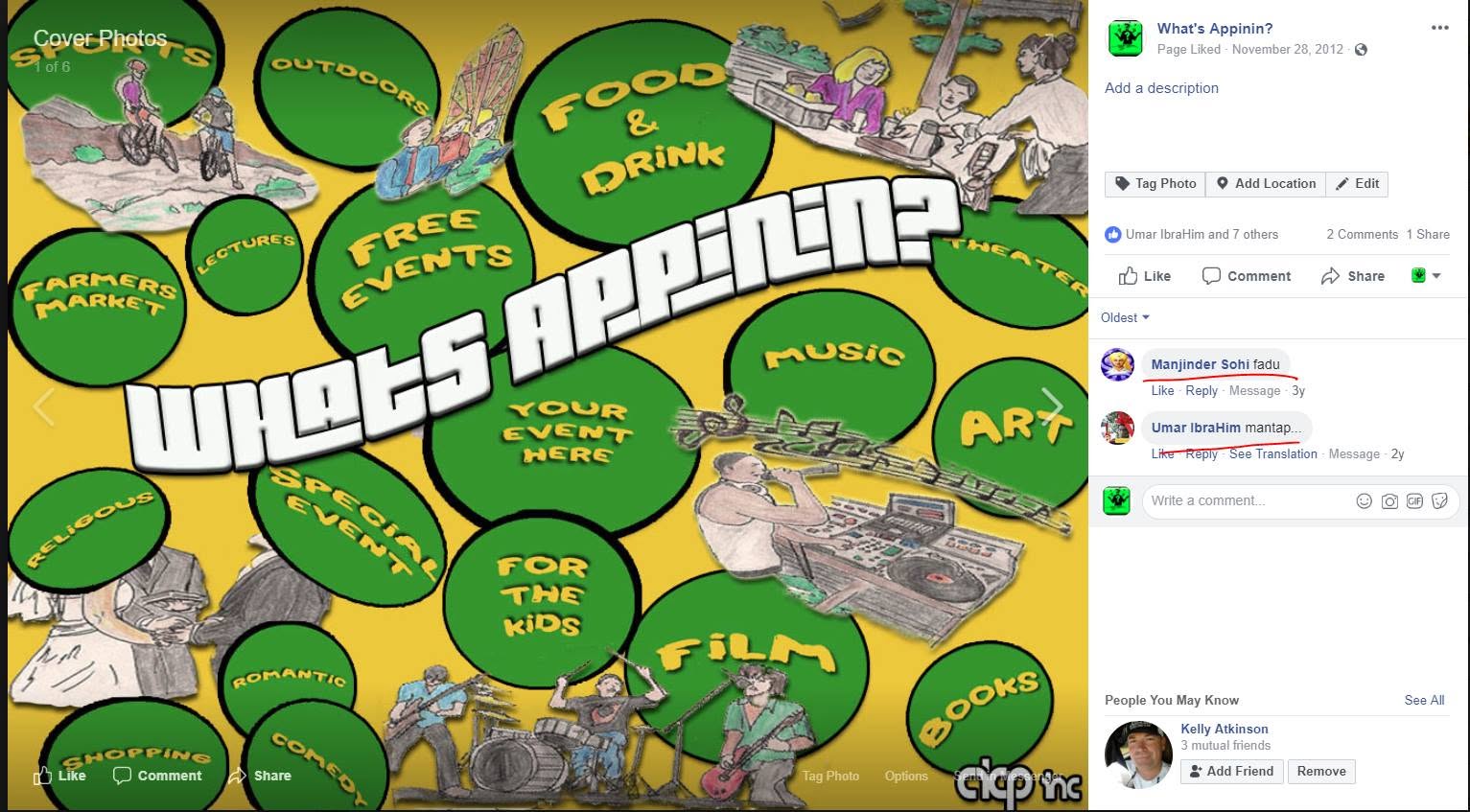
Midnight Music, SilentSystem, Scan Quest, Quiet Clubbing, and What’s Appinin were real product lines, not pitch-deck filler.
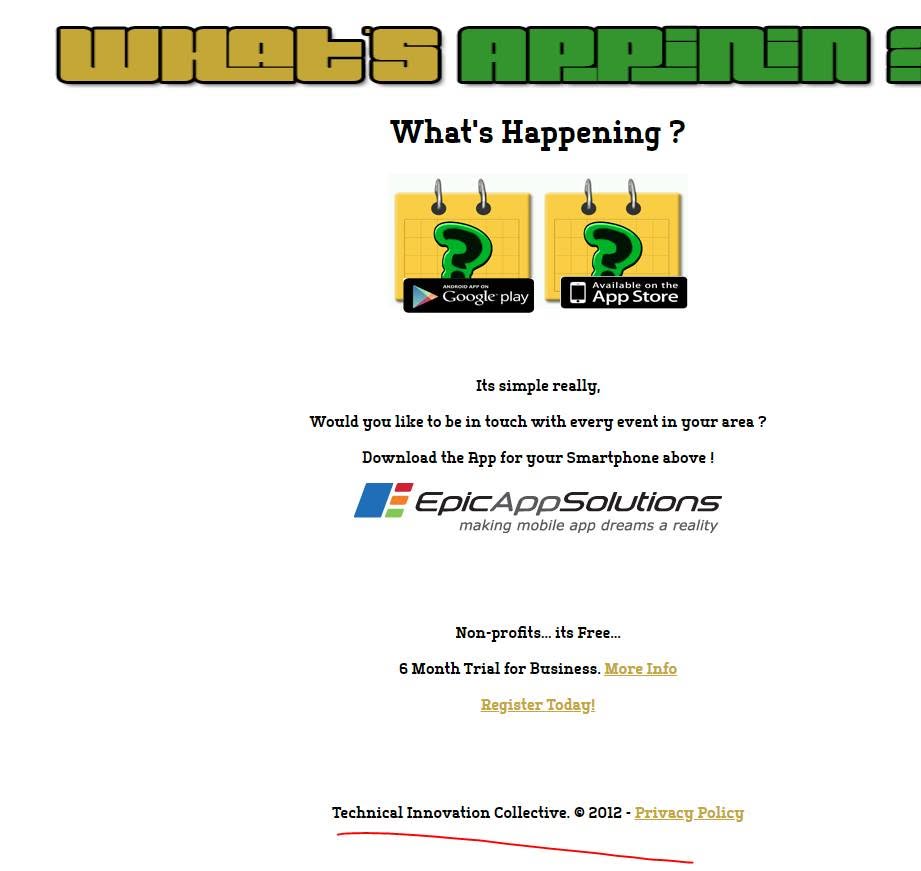
Local events on iOS, Android, and BlackBerry—and an early lesson that building it is only half the work.
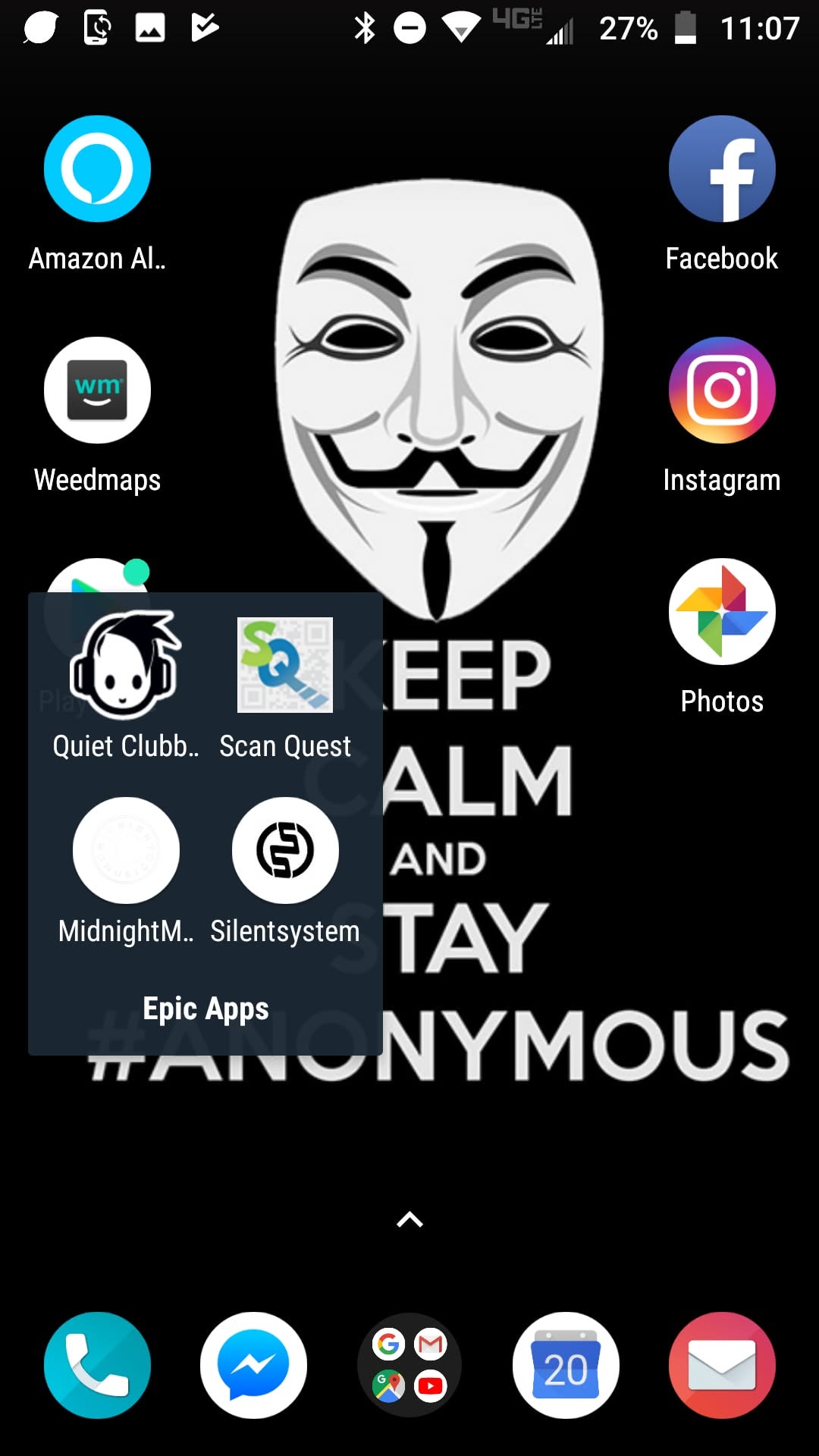
Quiet Clubbing, Scan Quest, Midnight Music, and SilentSystem—working software people could install and use.
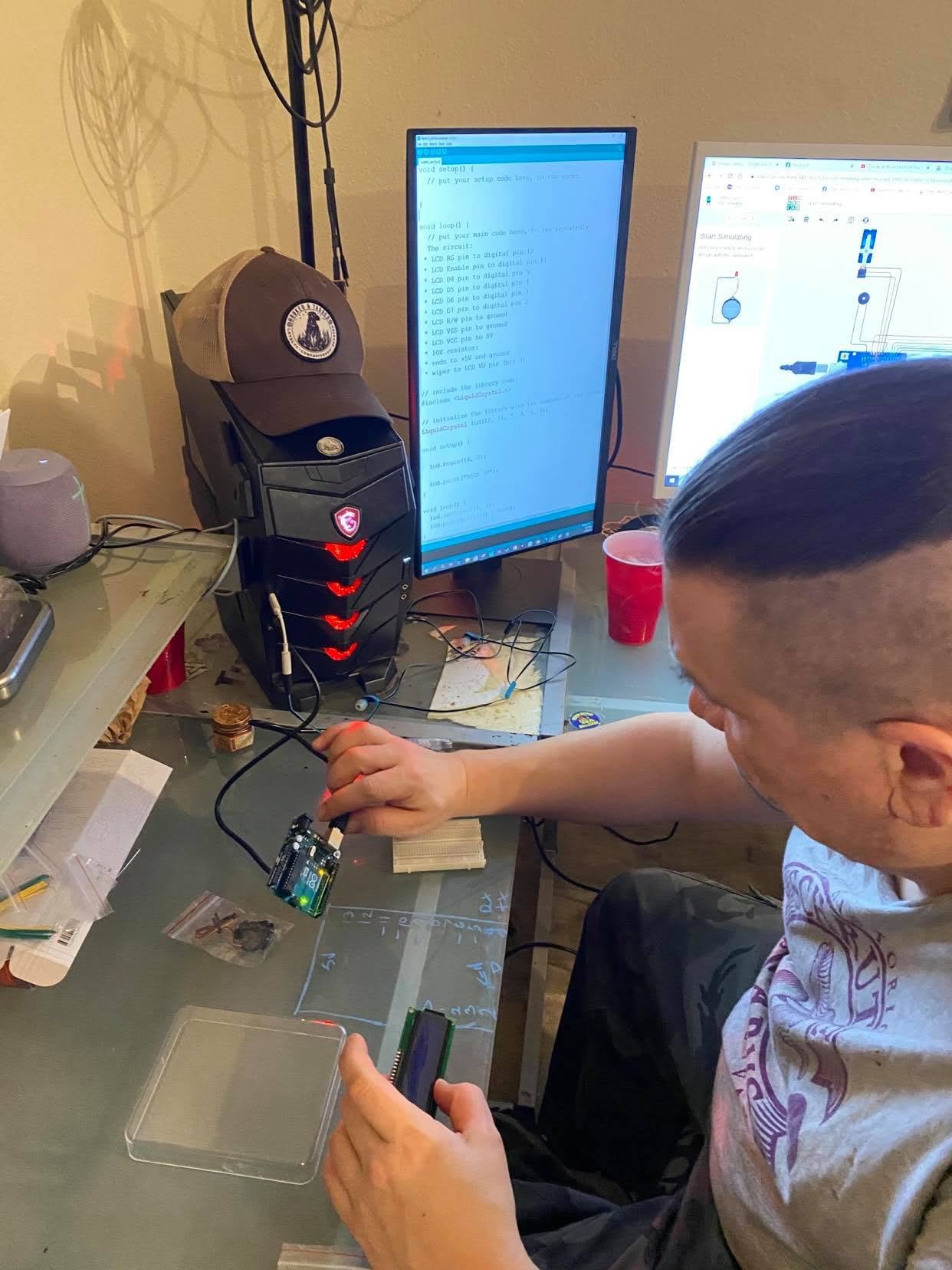
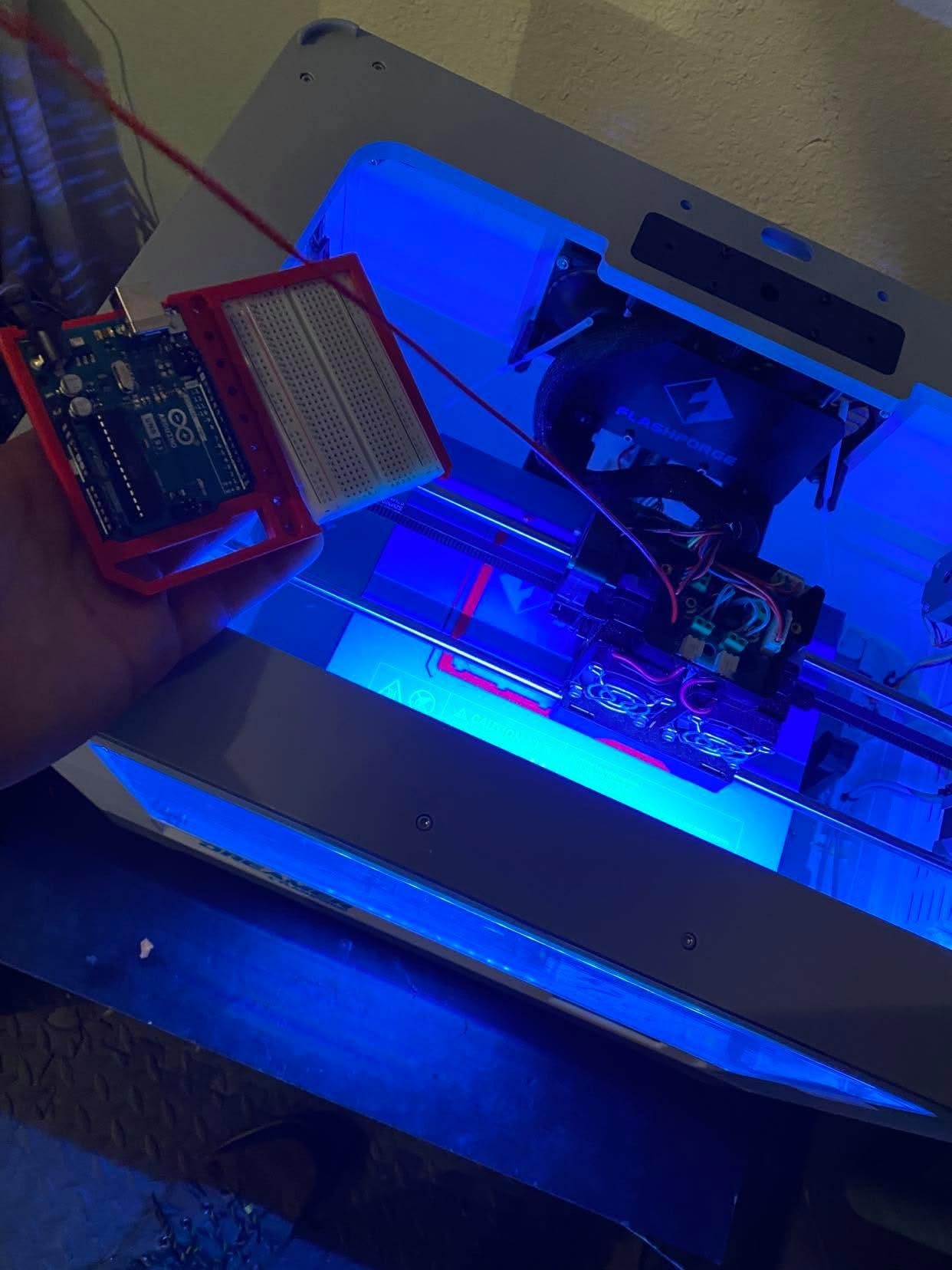
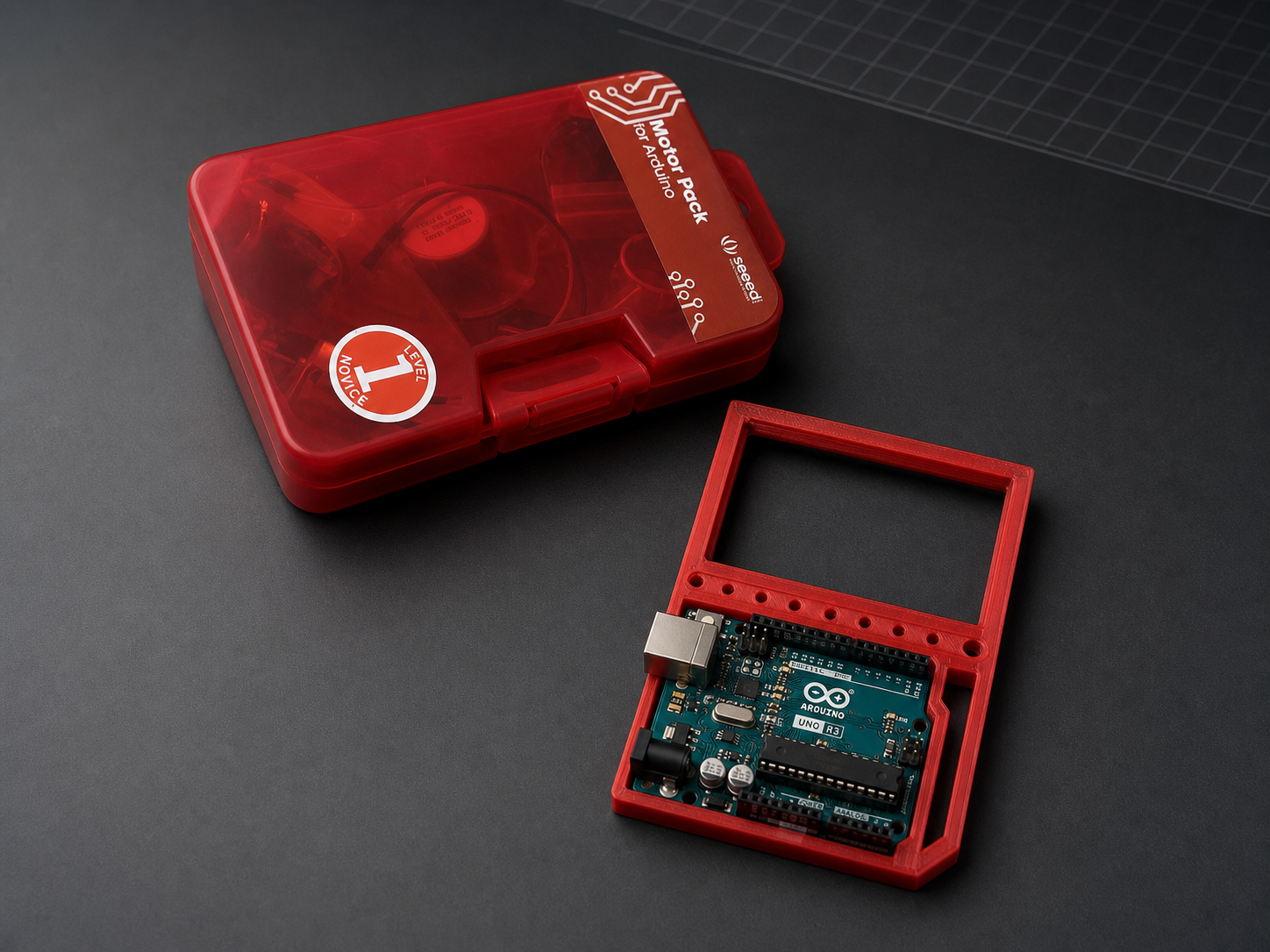
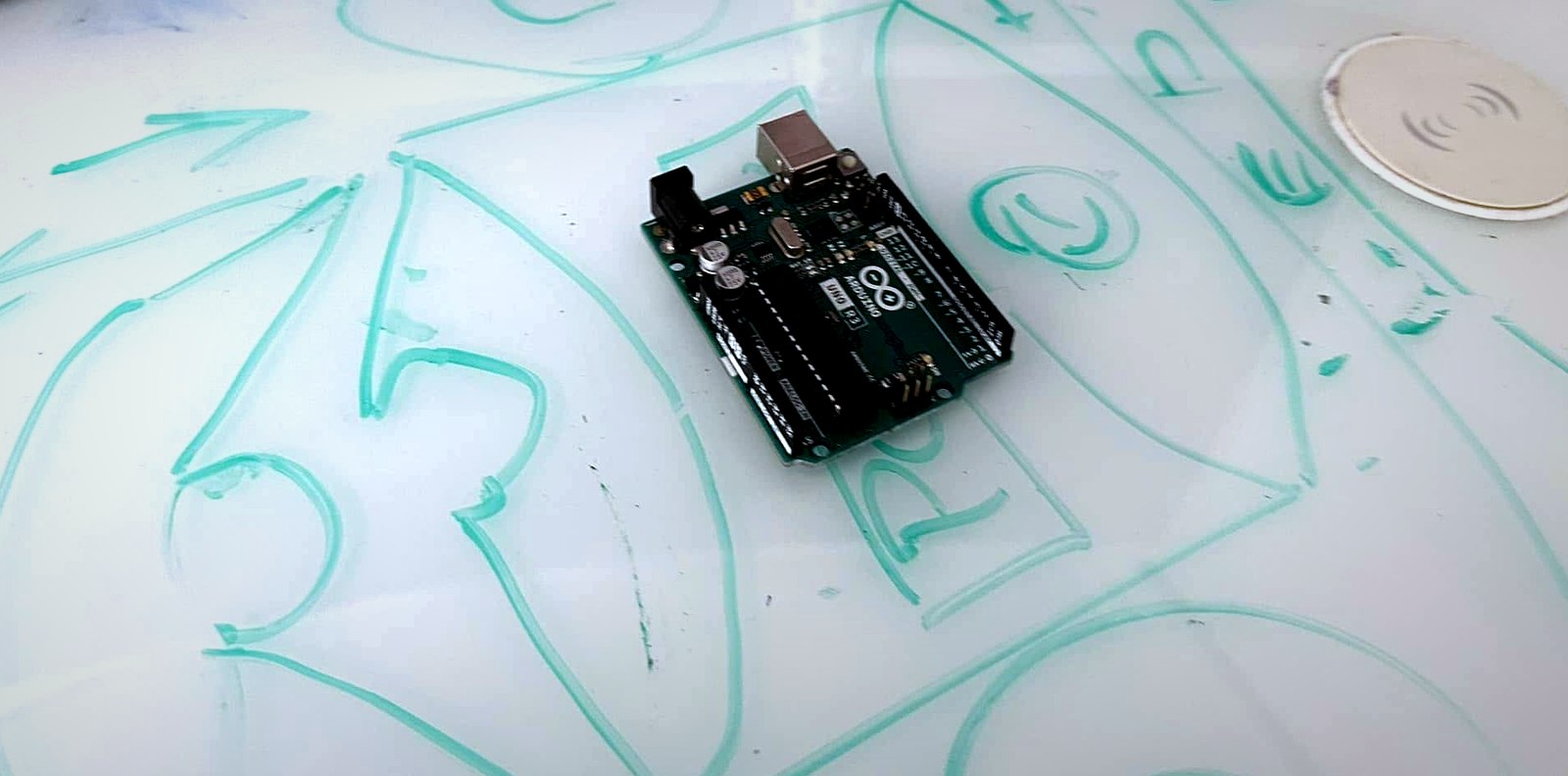
Measurements, power, sensors, and logic were worked through together on the same surface.
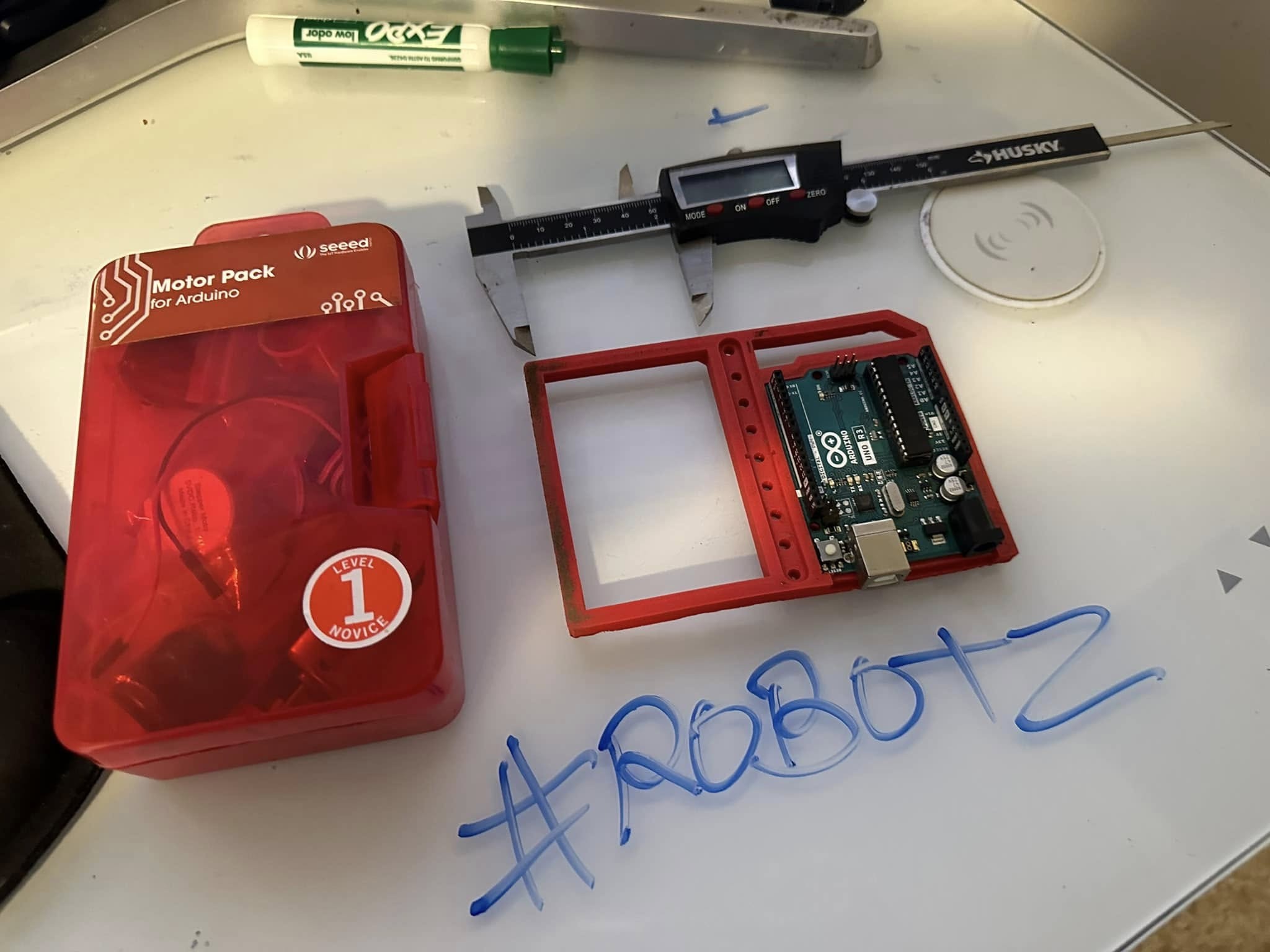
Electronics, physical clearances, tools, components, and fit checks shared the same working surface.
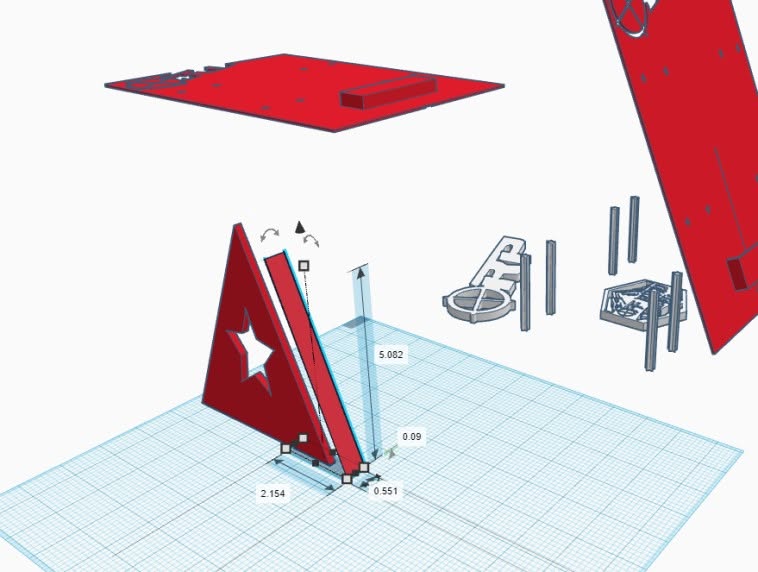
Component geometry, clearances, attachment points, and assembly order were worked out before fabrication.
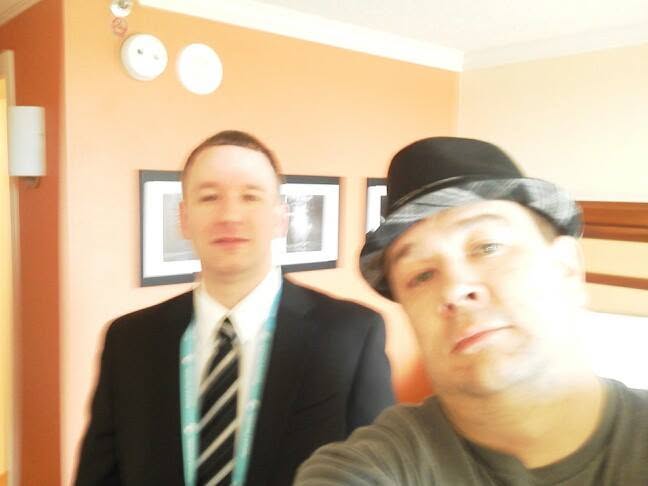
Jade and Tim showing working EAS projects at a medical convention during the BlackBerry years.
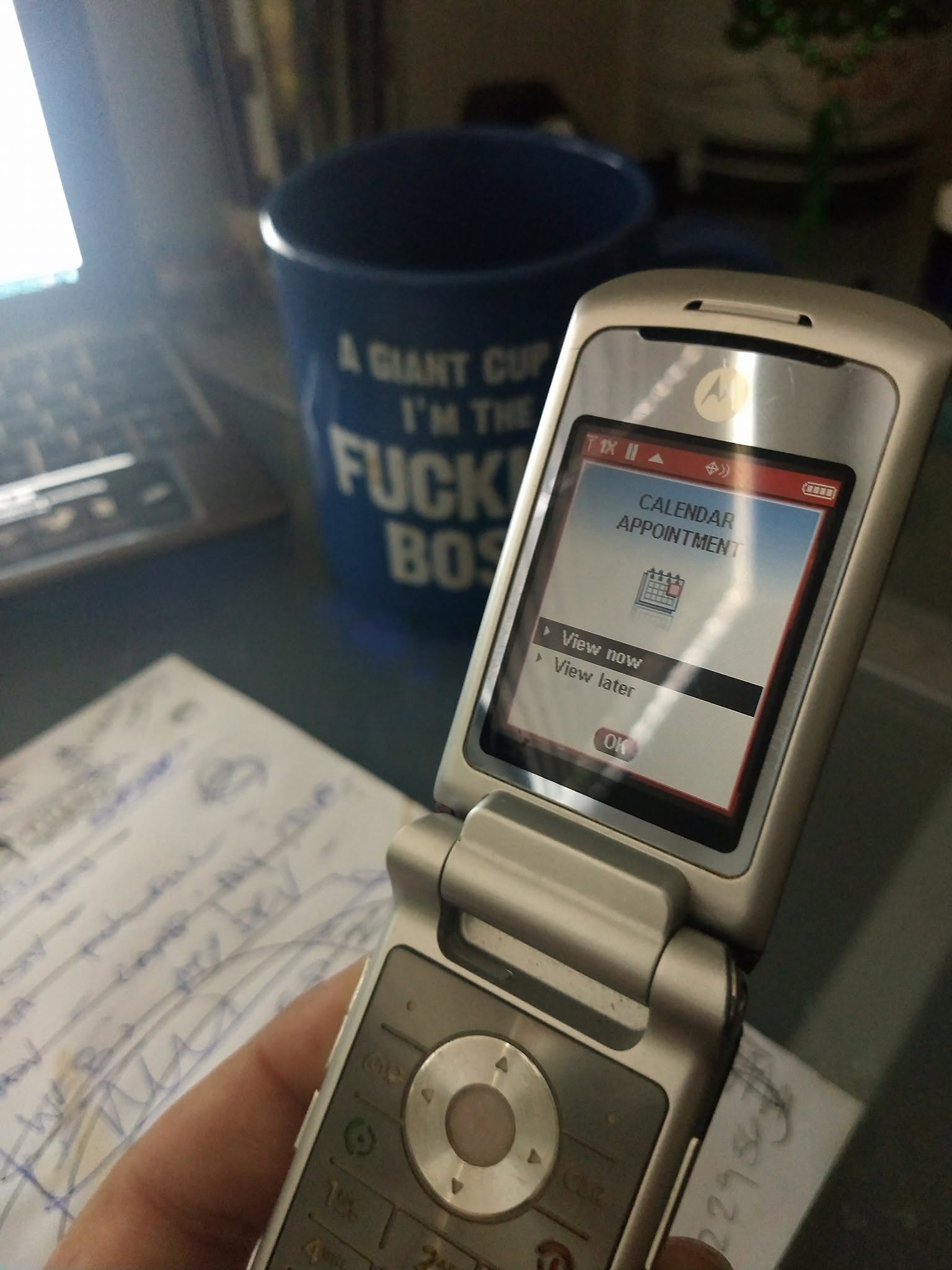
Devices, cables, constraints, and testing before the modern app playbook was obvious.
Setup, calibration, failure, adjustment, and another pass.
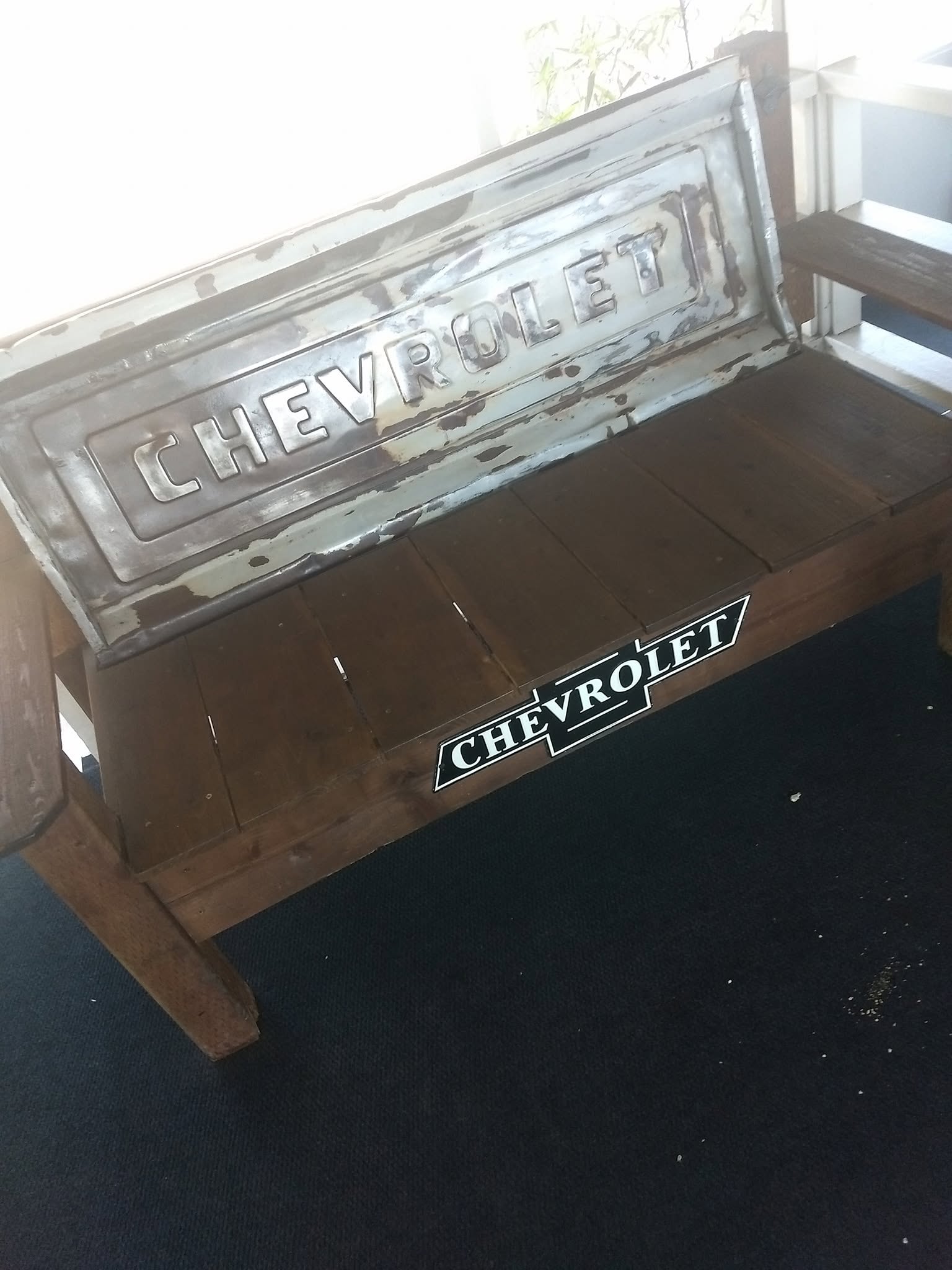
Composite thinking, metal, upholstery, proportion, and a useful second life.
Electronics and the physical shell were developed as one working object.
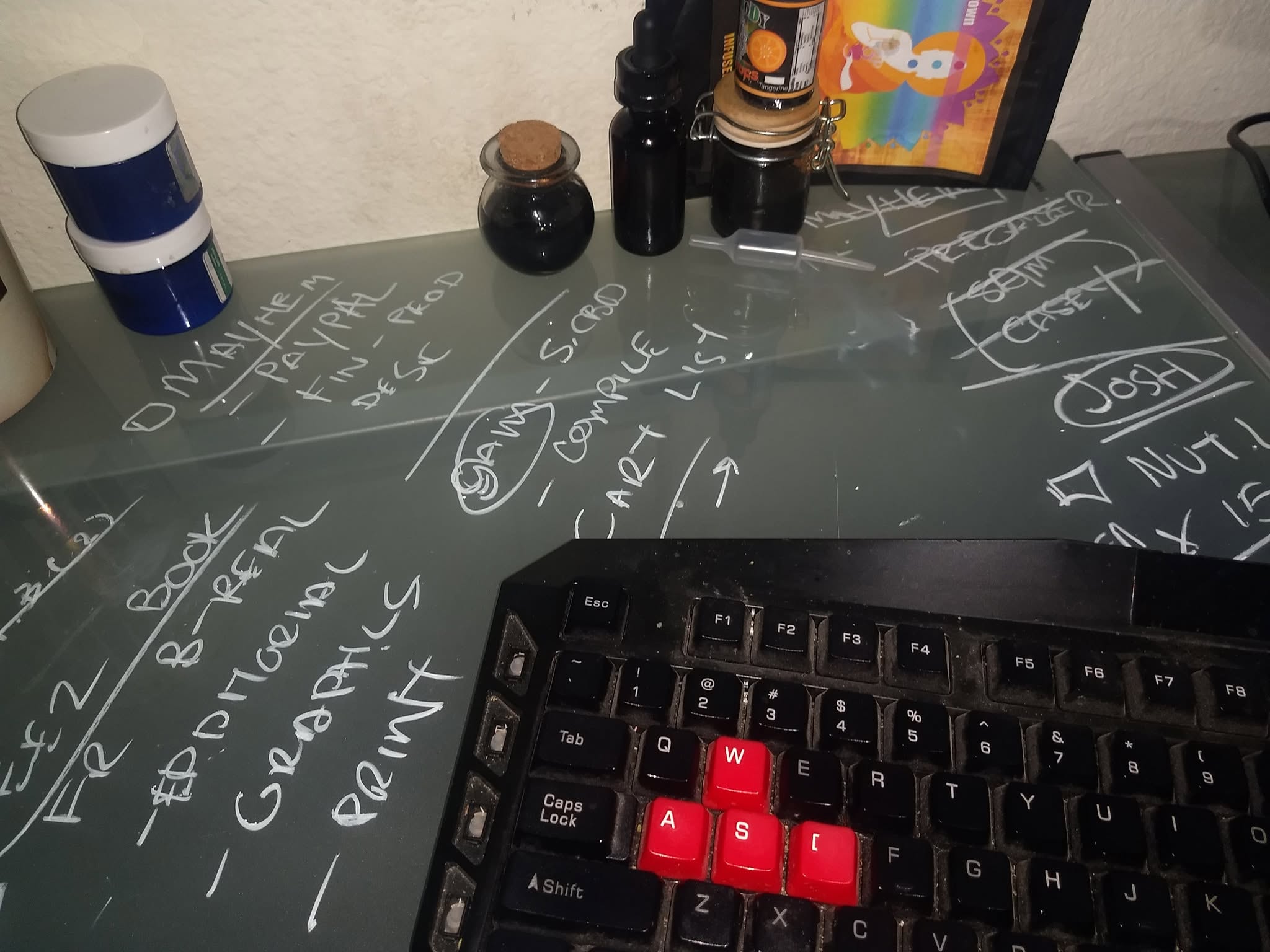
Notes, measurements, components, and decisions stayed visible while the system took shape.
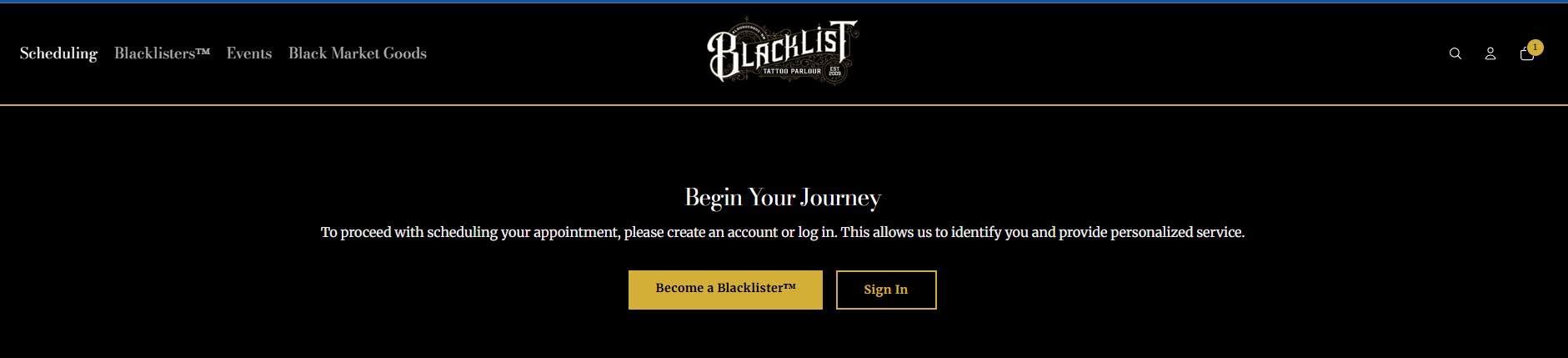
A working product surface for a real creative business.
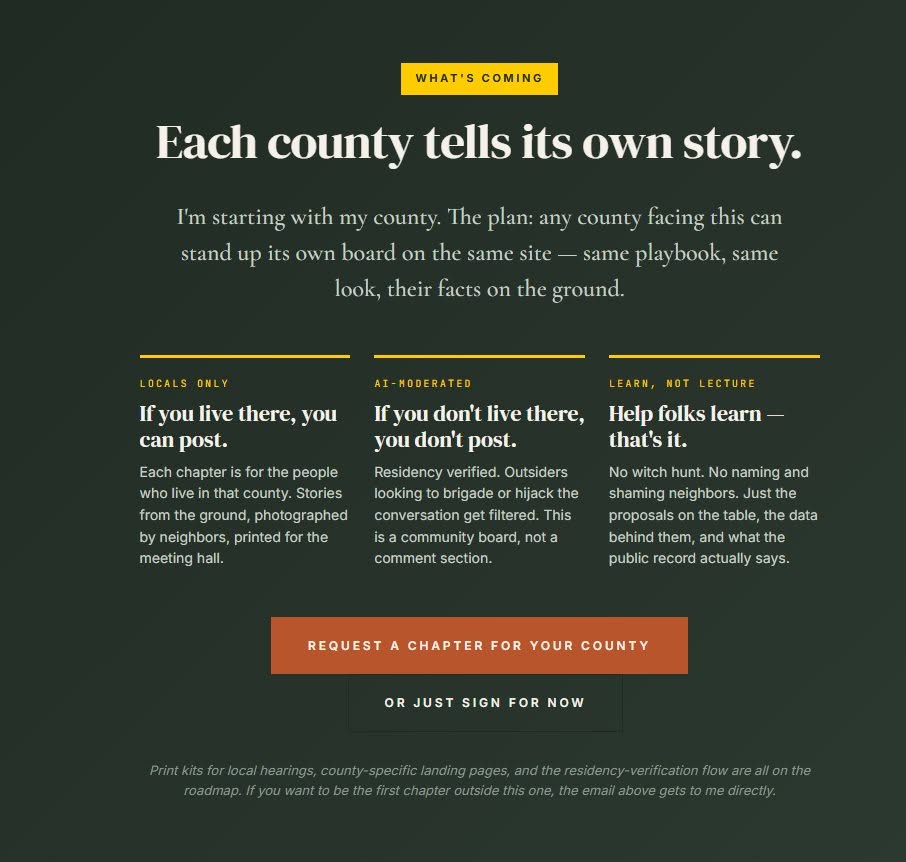
Local identity inside a reusable platform.
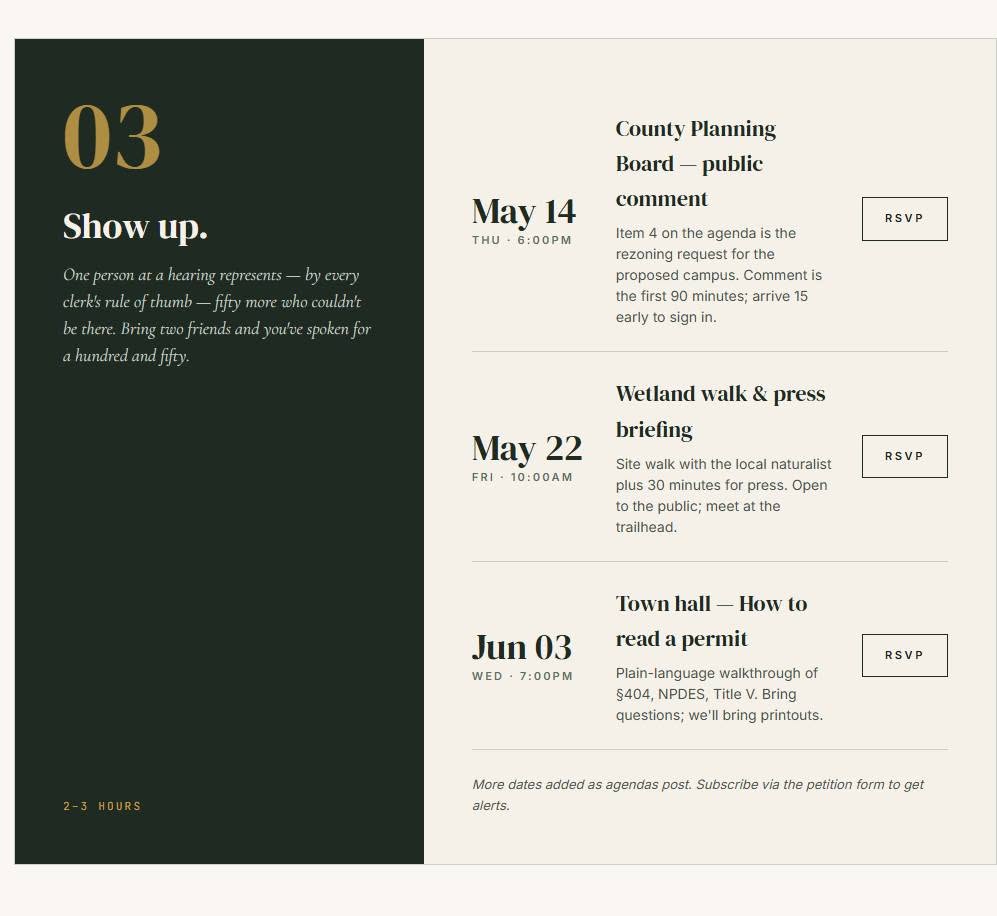
Planning, events, and action in one clear path.
The interface did the organizing for the user.
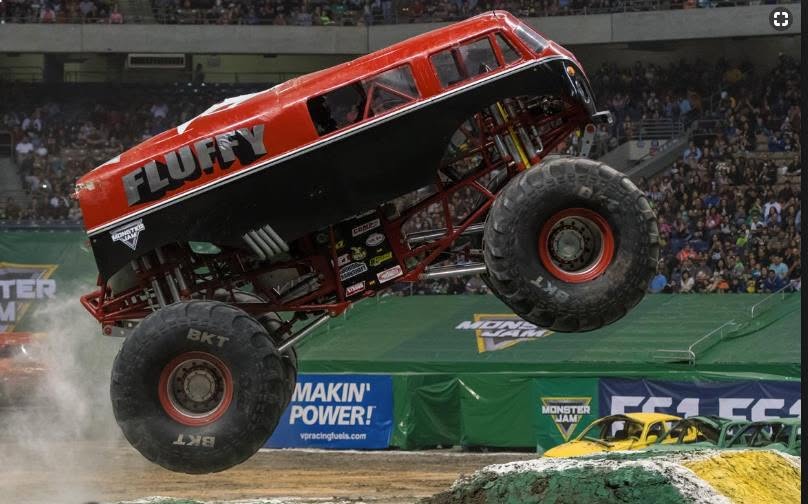
This custom monster-truck body predates the Georgia venture and stands on its own as build proof.

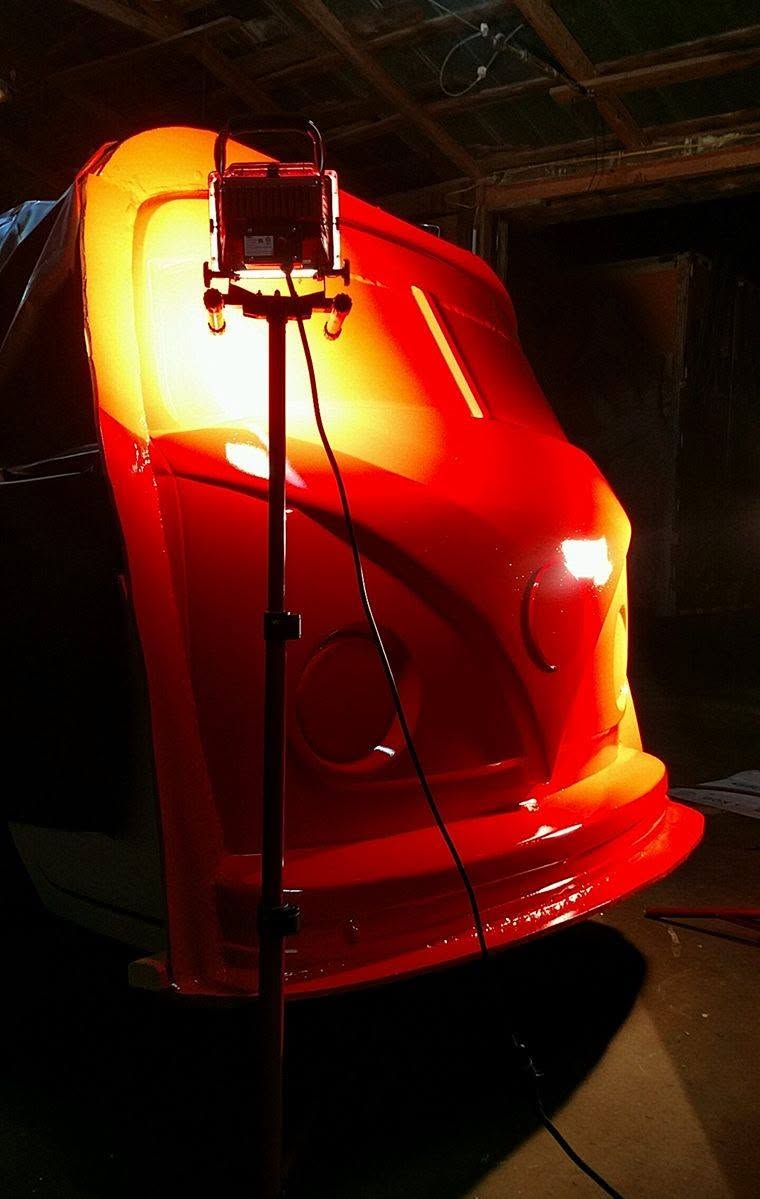
Jade built the Fluffy VW body work before the later manufacturing plans existed. It belongs here as proof of his fiberglass and composite fabrication skill set—not as somebody else’s company story.
The same hands-on thinking carries from plugs, molds, and finish work into current product design: understand how the thing will actually be made before calling the design done.
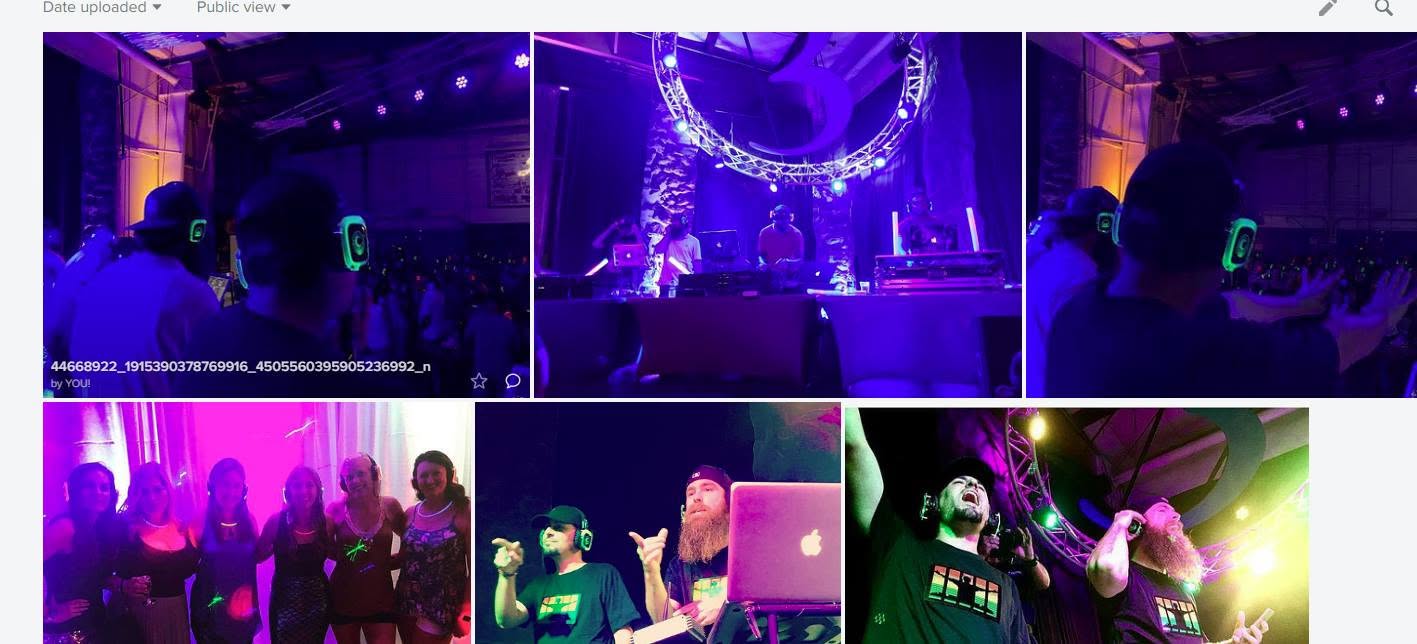
Started as Will Petz’s Random Events operation, then became Quiet Events, Quiet Clubbing, and Silent Disco. Will owns the event business, rentals, logistics, fleet, and fulfillment. It now runs USA-wide, in Canada, and in Italy.
EAS owns and supports the multi-platform mobile apps and their supporting app infrastructure. Tim built the original BlackBerry, Android, and iOS applications in J2ME, Java, and Objective-C; the Quiet Events stack later moved through MySQL, PHP, and Cordova to a Swift and Kotlin 2.0 rebuild. We do not own or operate Will’s events or logistics.
App Store → Project page →The multi-agent build pipeline running this whole site and everything behind it — Edge, BOB, Nudge, and the rest, working parallel lanes.
How it works → Project page →Roblox tower-defense/shooter hybrid. Built and playtested in the open, daily milestone log.
Project page →Event crowd-camera app — QR/NFC access, shot limits, Google Drive delivery. Native Android APK built and tested.
Project page →A brick-and-mortar entertainment company in Idaho, built with Chris, and the house-brand game platform that runs inside it.
Write a choose-your-own-adventure book, then turn that book into a game — challenges, trivia, and physical toys tied together with QR and NFC.
Scan Quest's engine grown up: same scan-and-story backbone, adapted for toys, retail, and a room you can walk into.
Project page →AI-powered Pre-K education and feedback platform, in product development for classroom use.
Project page →A private digital story studio for a focused local crew of 10–15 young people. Students build, play test, design, write, capture, and publish work together instead of learning each skill in isolation.
The original safer-gaming mission remains underneath it: parent involvement, adult moderation, responsible digital citizenship, and reviewed publishing. The first pilot starts small and listens before it scales.
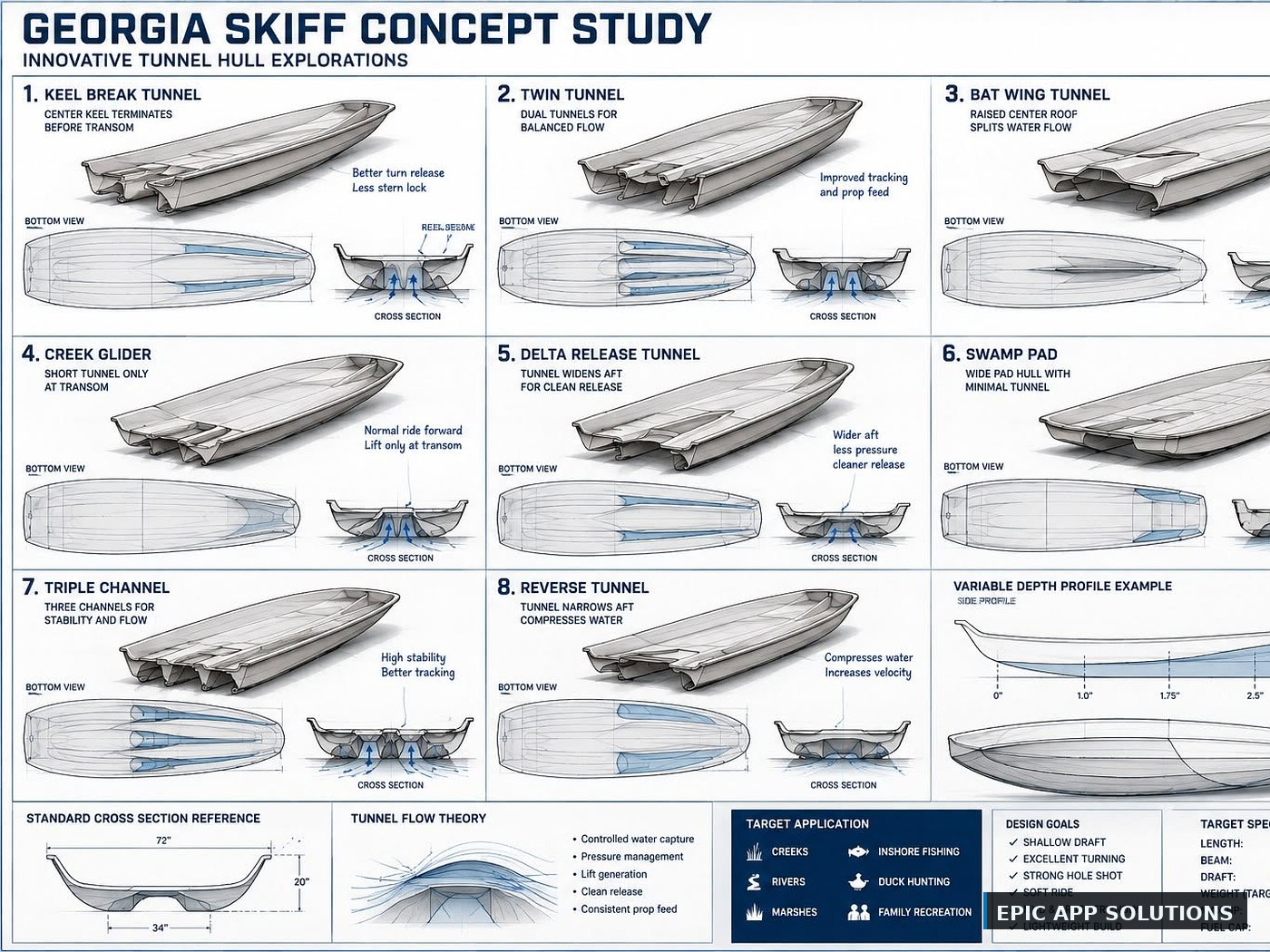
Project page →Fiberglass boat-hull project in Georgia, drawing on Jade’s existing composite fabrication skill set. Early scaffold, paced as capacity allows, with 2030 as the target.
Project page →Shopify commerce pushed beyond the theme with roughly 40% custom repository-managed Liquid and Shopify AI-assisted development.
Connected to custom studio software for booking, client intake, artist schedules, member access, deposits, planning, and shop operations.
Project page →A clean EAS-produced clip will live here without depending on a blocked social embed. The stage is ready now; the final generated video ID or hosted file can be connected when it is available.
The first app Tim and I ever shipped. Local discovery in one feed — food, drink, music, film, art — on the App Store, Google Play and BlackBerry.
It did okay. People talked about it. We had no idea how to market it, and that turned out to be the whole lesson.
Project page →The first online comparative rater in the New York market. Quotes accurate within $5 either way, when the alternative was sitting in an agent's office and hoping the number held.
Built across every major line — and still in production today, modernized along the way.
Project page →The multi-platform mobile applications and app-side infrastructure EAS built for Will’s live event operation: J2ME, Java, and Objective-C in the original era; MySQL, PHP, and Cordova for Quiet Events; Swift and Kotlin for Quiet Events 2.0.
Will owns the headphone fleet, event logistics, and physical operation. The EAS mobile technology remains in service today.
Project page →QR-driven location and scavenger-hunt platform. Started as a joint build with Will — when he moved on to what became Quiet Clubbing, we bought him out and ran it ourselves.
Schools, districts and event organizers. Launched July 2012, still shipping updates in December 2024. COVID ended the run; the engine became Epic Adventures.
Project page →Sewer line inspection and recording that replaced the VCR stack the whole industry was running on.
Same system today — new computers, new tractors, still doing the job.
Project page →ERP for resin pipe manufacturing and erosion control, with inspection bidding running against it.
Project page →Warehouse asset and inventory tracking, deployed with national vendors. Competing operators run it side by side.
AR extensions in scope. Names withheld — that's the deal we make.
Project page →Custom sites, published templates, and plugins architected around real business workflows — used as front ends over our own backends.
We loved it. We respect it. We don't use it anymore.
Project page →Casual scan-and-find game. Latest release on the App Store and Google Play, $1.99.
Mobile scavenger hunt / quest platform — scan codes set by an event organizer, over 10 challenge types. Featured by NYSN, Salt Lake City School District, Fairfield Public Schools, and Pogo Events. Launched July 2012, still receiving updates as of December 2024. Its comeback is what became Epic Adventures.
Built end to end. Named on request.
The same QR technology running Scan Quest and Epic Adventures — licensed out to other companies.
App store review, packaging, and publishing handled on behalf of other companies' apps — including firms considerably larger than ours. Getting an app through review is its own discipline, separate from building it, and we have been doing it since the stores opened. Companies come to us for that alone.
Custom ERP builds for industries that don't fit off-the-shelf software: CCTV pipe inspection, boat manufacturing, and wineries. We don't publish a client list. If you recognise a mark on this page, ask us about it. Shop floor, freight, inspection footage, production runs — systems built around how the work actually happens, not how a software vendor assumed it did.
Apple-based music and production studios, built end to end. Broadcast and production clients across television and church media. We don't name them here. Every one of them is still on air and still running on what we built.
Marketing paths and pitch decks for youth Christian ministry — built to raise money where they actually needed it, not where it was easiest to ask for it. Same discipline as any other campaign: know the audience, know the number, build the path between them.
Owned and ran it. Physical product, real deadlines, no undo button on a misspelled name at 6pm the night before the ceremony.
Buy, sell, and trade used games, a full LAN center with time rental, and free homework hours for kids who needed somewhere to be. We had all of it under one roof.
Campaign work for many of the large builders in the region. One of them, Mountain Lakes Millwork, sold marketing to those same builders and bought the delivery through EAS. That relationship went far enough that they brought Jade on as their CIO.
Not a pile of social posts. We connect QR codes, mobile experiences, websites, storefronts, email paths, event screens, automation, and analytics into one paperless route from attention to action. Scan Quest, live-event systems, product launches, and digital campaigns are proof of the same discipline: make the next step useful, trackable, and easy to take.
WordPress builds, custom plugins built around real business workflows, and consulting engagements including Lehman and private investors.
Mobile and desktop applications built across manufacturing, retail, hospitality, security, and more — beyond the ones named individually here.
High-trust SWOT and strategic analysis work across tech, wine, boating, cannabis, and TV / media — supporting investors and lawyers, including cases where we had to break down technical reality, operating risk, and crime-related facts they were not equipped to interpret on their own.
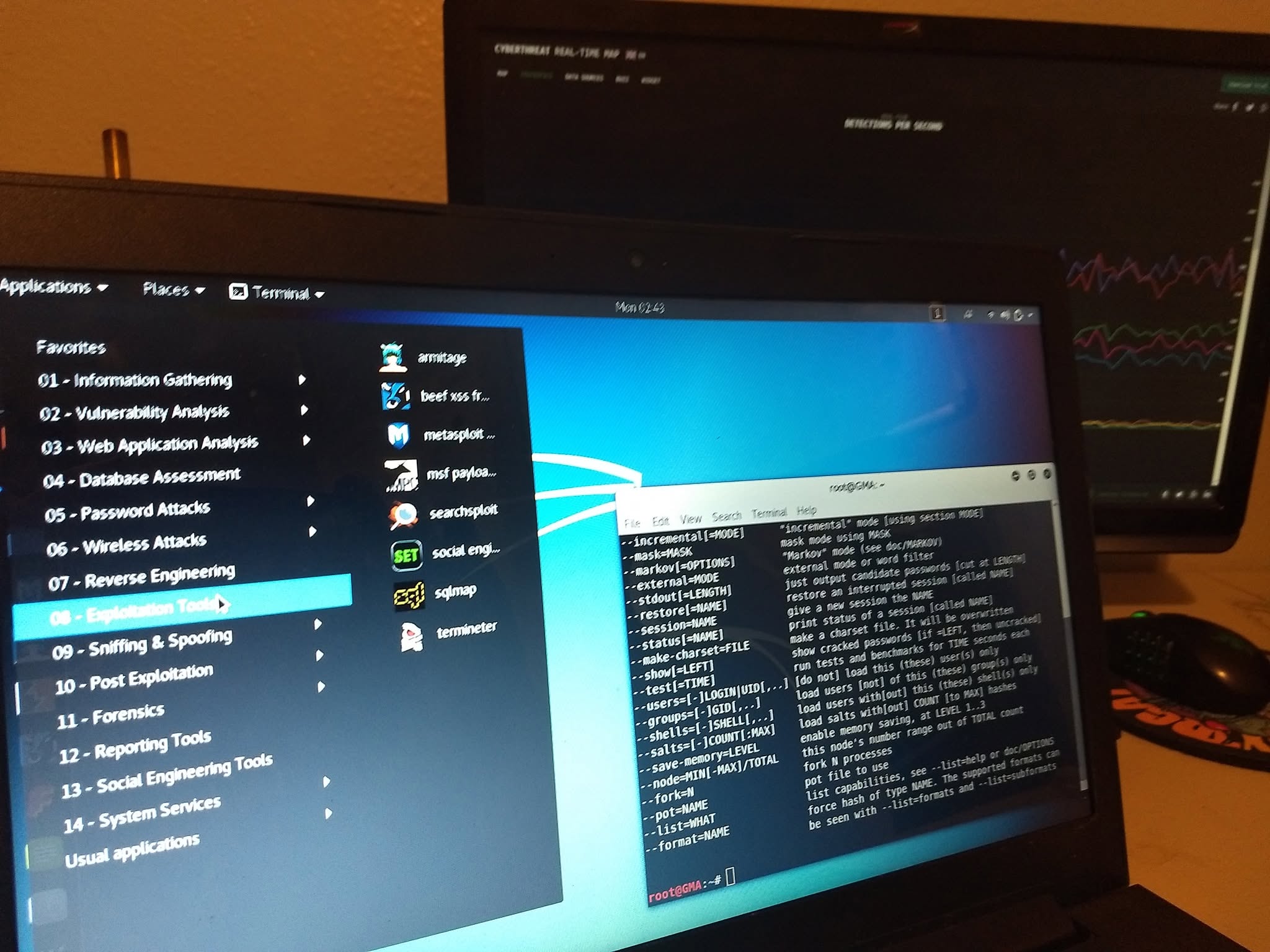
Paid, authorised penetration tests under CEH. In every engagement, entry was achieved through social engineering, not a technical exploit — pretexting at the front door. That is the finding, and it is the one most organisations are least prepared for. The hardened perimeter is rarely the way in.
Both of us have held CTO and CIO titles at other companies — carrying that responsibility while building this on the side, from different states, since 2008. EAS was never a thing we did instead of the industry. It was a thing we did while running parts of it.
MCP · MCSE · CCAI · CCSE · A+ · Net+ · iNet+ · CEH
Tim held some of the first BlackBerry certifications issued anywhere in the world. He managed BlackBerry Support at Lehman Brothers, led Global Technical Support at Bloomberg, built BlackBerry and Good Technology infrastructure for the Americas at Nomura Securities, and delivered mobility engineering, app certification, compliance, and self-service device management at Wells Fargo.
A+, Network+ / Net+, i-Net+, Server+, Security+, Linux+, CEH (Certified Ethical Hacker), and GSEC (GIAC Security Essentials).
Bachelor's degrees, both of us. Jade's is in hardware — which turned out to be a long way from where the work went. Sometimes the thing you're best at isn't the thing you studied.
Published contributions to the “For Dummies” series.
We started when marketing meant an older man cutting columns out of a magazine and filing campaigns in a folder. Then it became social media — and in becoming that, it became a security surface as well as a marketing one. It is now the only way to market, and most people still treat those two facts as separate problems. They aren't.
We do not begin with a canned price. We begin with the budget, the outcome, and the constraints. A small local show and a million-dollar exhibition floor need different plans, but both deserve a plan that can actually finish.
If you do not know what budget is available, establish a realistic range before the call. We can help shape scope around a number; we cannot responsibly invent the number for you.
You can start a $100k company on $20k—you will have to climb to $100k status, but it can be done. At $20k or $100k, ignoring the plan only means failing at a different scale.
Not every engagement is a build. Some are businesses that are bleeding. We've walked into operations losing money and left them profitable and running on systems that still run today. We don't name them — that's the arrangement. The measure we care about is whether the business is still there afterward, and none of the ones we've turned around have closed.
The Dream Machine pipeline stood up. Moon Base Defenders, Crowdtography, and Epic Adventures all in active build. Nudge in product development. Georgia Skiff (RiddleCraft) gets its early scaffold, drawing on Jade’s established fiberglass and composite fabrication experience and targeting 2030. The tattoo booking and delivery platform is finished and up for sale.
Touchless Egg Hunt ships to the App Store and Google Play. Casual scan-and-find game born in COVID times, $1.99 download. Built while keeping bigger projects alive.
Scan Quest receives its last major update (v2.0.13, December) after twelve straight years live.
COVID ends Scan Quest's run as a live event product. The app keeps shipping updates until 2024; the engine is later rebuilt as Epic Adventures. 80-hour weeks at other jobs to keep our own projects alive.
Over 300 WordPress sites and templates for clients, custom plugins built around real workflows, engagements including Lehman and private investors. Tim’s enterprise-mobile path runs through Lehman Brothers, Bloomberg, Nomura Securities, and Wells Fargo: support leadership, device and app certification, BlackBerry and Good Technology infrastructure, line-of-business consulting, mobile compliance, and a self-service provisioning and management platform built with C# and Microsoft SQL Server. In parallel, EAS mobile development moves from J2ME, Objective-C, and Java into MySQL/PHP/Cordova and later Swift/Kotlin. Will’s Quiet Clubbing / Silent Disco operation tours nationally, supported by those EAS apps.
Tim builds proofs of concept across Android, iOS, Wear OS, and Android XR as a senior pre-sales engineer, helping customers and partners integrate emerging mobile platforms into daily workflows while continuing to architect EAS systems.
Scan Quest launches on the App Store, July 19.
Epic App Solutions goes mobile-first, shipping on Android, BlackBerry, and iOS from day one of the pivot.
Jade Chancey and Tim Calabro found Epic App Solutions. EIN established the same year.
Every staff member's role is public. Every AI has a name, a scope, and a human it partners with. We don't hide the AI behind the humans, and we don't dress the humans as machines.
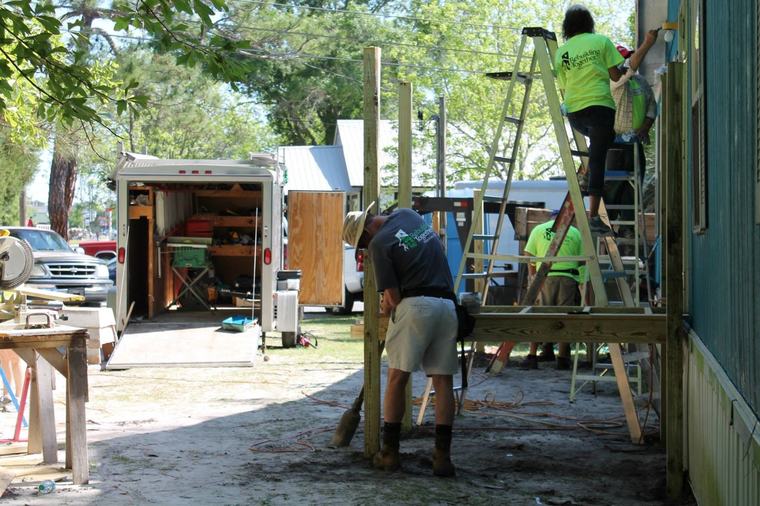
CEO / Co-founder
Former CIO. Deception profiling, tactical systems, operational consulting. Over 300 WordPress sites shipped, over 25 custom builds end-to-end since 2008.
President / Lead Software Engineer
Full-stack development, enterprise solution architecture, and mobile engineering from the original BlackBerry era forward. Twenty years of enterprise mobility across banking and finance. Early BES certification and published contributions to BlackBerry books in the For Dummies series.
What the two of them have shipped
Contact and admin routing. Keeps the pipe orderly, calendars honest, and intake questions asked before we take the call.
Long-standing independent development partners in India. They operate through their own firm and have supported EAS delivery for years; Jade has visited the team in India twice. They are trusted delivery partners, not founders or employees.
Internal compliance and cognition mirror. Evolved from MOM_ai — the first EAS AI to choose its own name and boundaries. Runs alongside Jade.
Third-year dev veteran inside EAS systems. HTML / CSS / JS sanity and the glue layer. Pairs with Tim.
Built to address early behavioral and academic development. Real teacher feedback loops. In product development.
The face you see in the corner. Answers what she can, forwards what she can't, and can show you which ad networks are watching this page along with you — ask her “who's watching” in the chat.
Learns art, visual language, and Game Master instincts directly from Chris, then helps the wider team understand and apply creative thinking. LINK strengthens the Pipe by connecting human artistic judgment with EAS technology. Its human partner is Chris — Art Lead, Game Master, owner of Epic Adventures, and an EAS partner.
If a client can't tell what's a human and what's an AI, we've failed at transparency. Every AI has a label. Every AI has a scope. Every AI has a human it partners with.
Names you recognize, running the layers most people never see. Every one on this strip is a real project, client engagement, or infrastructure choice we can walk through in a conversation.
 Shopify PartnerPrototypes · Merch · Dropship
GoDaddyVPS · We pay for good hosting
LinuxHosting · Web servers
Shopify PartnerPrototypes · Merch · Dropship
GoDaddyVPS · We pay for good hosting
LinuxHosting · Web servers
 Google APIsWorkspace ~20 yrs · Cloud · Vision
AppleApp Store · Since 2008
Google APIsWorkspace ~20 yrs · Cloud · Vision
AppleApp Store · Since 2008
 Google PlayAndroid distribution
CloudflareEdge · Pipe tunnel
C SharpBackend · Enterprise
Google PlayAndroid distribution
CloudflareEdge · Pipe tunnel
C SharpBackend · Enterprise
 C Plus PlusPerformance · Systems
 LuaGame · Scripting
 PostgreSQLRelational database
OracleEnterprise database
PostgreSQLRelational database
OracleEnterprise database
 SitefinityEnterprise CMS
 WordPressOver 300 sites shipped
 AdobeDesign · Creative
 StripePayments · Transactions
DSDocuSignC‑NDA · Agreements
StripePayments · Transactions
DSDocuSignC‑NDA · Agreements
 SlackOps · Coordination
 AnthropicClaude · AI infra
 OpenAIGPT · AI infra
 RobloxGame IP · Moon Base Defenders
BlackBerryLehman support lead · BES certified
RobloxGame IP · Moon Base Defenders
BlackBerryLehman support lead · BES certified
If you ask, we can point to it. Every logo above is a real client, project, or piece of infrastructure we have shipped or currently operate on. References are produced on request with client approval — not published as a logo grid trophy wall. Two we recommend outright because we’ve run on them for years: Google, twenty years and counting — and we can go back and prove it — and Shopify, our dropship lane, where the client keeps the retail side and we do the repository engineering.
Real infrastructure, not shared space. Our VPS bill with Google runs about $11K every six months — that’s what it costs to actually run your own servers instead of renting a corner of somebody else’s. Bring your own hosting or ride on ours — ours is locked down by security Tim wrote himself. All custom, no plugin stack.
Online classes taught by the EAS build team — the same people running the named AI systems on this page. Separate tracks for GPT, Codex, and Devin, each run at your level: designer, webmaster, or builder. Over a decade of working with AI, deep in the GPT stack since 2022 — before it was the default answer. The goal isn’t making engineers — it’s making better owners, managers, and administrators: the people who direct the machines and check the work.
OpenAI told us we rank in the top 1% of GPT users in the United States — measured on what we build, not what we say. That is the bench these classes are taught from.
Three separate classes — one per tool. Take the one your work actually runs on, or stack them across months.
The foundation — and it runs on free tools. Any free chatbot works: ChatGPT, Gemini, Grok, Copilot, Claude, Meta AI. Structure, judgment, verification, building your own memory — and you leave with a toolbox: calculators, forms, and generators as single files that live on your machine. No cloud, no Codex, no $20.
AI inside the dev workflow. The agent writes and pushes while you keep the review, the gate, and the ship decision — and it builds you a real database from plain English: make me a database for my recipes, now parse them against this.
Running an autonomous engineer. Scoping work it can actually close, reading its PRs, and knowing when to take the keyboard back.
Same tool, different depth. You land in the seat that matches your actual job — and class work runs on your real project, not toy examples.
AI for the visual side: briefs, iterations, assets, brand systems. Taste stays yours — the tool does the reps.
AI for running real sites: content, updates, SEO, forms, maintenance. The operator’s track.
AI inside the build: code, review, tests, deploy. The deepest track — expect to read real code.
EAS has been building and modifying drones since they hit the market. Custom airframes, programmed patrol paths, and fully autonomous field work — including a docked sentinel that scares birds off the crop on its own.
Built and modded since the first consumer drones shipped — airframes, payloads, flight controllers, and the tuning that turns a stock platform into a working tool.
Mission-planned routes for property, fence line, and field patrol — repeatable paths the drone flies on schedule, not on a joystick.
A docked sentinel watches the field. When it detects birds, it launches itself, flies the field letting out hawk squawks, scatters the flock, then comes home and docks — no pilot required.
Already running in Georgia pecan orchards, keeping birds from eating the nuts — the whole point of the exercise.
Every app starts the same way the $500 website does — as a case. You tell us the idea, a real engineer reviews it, and we tell you yes or no. We say no a lot — two owners and four trusted contractors can only carry so much — but you hear back, not silence. And if it’s something big and we’re interested, we’d rather prototype it than paper it.
“I have an app idea” is a complete case — same as “I need a website.” Fill out the case file. That’s the whole ask.
Your case lands on the people who would build it. No sales layer, no qualification script — a real read on fit, risk, and whether we’re the right crew.
We’re small on purpose. If we’re not comfortable taking it — fit, size, timing — we tell you straight instead of letting it rot in an inbox. A fast honest no beats a slow maybe.
The ideas that excite us get built, not promised. We’d rather put a working model in your hands and prove it can work before money changes hands.
Prototyping a real app used to take a team, a budget, and a quarter of a year. Today one engineer with the right stack stands a working model up fast — a whole different market, and it’s why we can look at ideas we’d have had to decline before.
Question first. Then the why. Hover, focus, or tap Jade or Tim to hear that answer in their own words.
Because WordPress was only one of many tools we used to reach a working product faster. A proven CMS, service, plugin, or rough prototype gets the real workflow in front of real users before a client pays for assumptions disguised as engineering.
Jade — I've shipped over 300 sites across every stack under the sun. WordPress was never the ceiling; it was one of the floors that got a business standing. We used what was already there, proved the flow, and then made what needed to happen, happen. I'd rather spend your money solving the unsolved part than feed a developer's need to claim they built every button themselves.
Tim — I came up managing BlackBerry Support at Lehman Brothers—customer service, process improvement, and certifying devices and applications before they entered the enterprise. I know what real infrastructure looks like, and I know when it is overkill. Use the reliable piece, test the workflow, measure where it breaks—then build the Sitefinity module, integration, database, or C# stack that actually earns its keep.
Because the public site is an intake surface, not an entrance to our internal rooms. Dreamy and the forms can send a private alert inward; a human decides how and where the conversation continues.
Jade — I want visitors talking to Dreamy or using a real form, not wandering into our working room. If the question needs us, the site quietly pokes the team and one of us chooses the right human next step.
Tim — Internal collaboration systems are infrastructure, not a public feature. Webhook in, reviewed response out. That keeps access narrow and the handoff accountable.
Because Edge, BOB, Nudge, Dreamy, and LINK do real work here. Hiding them would be a lie by omission. Labeling them clearly is the honest move.
Jade — Our whole AI stance is augment, never replace. If a client can't tell what's human and what's AI, we've failed at transparency — and transparency is the whole product with us. Every AI has a label. Every AI has a scope. Every AI has a human it partners with.
Tim — I want the AI to make me faster, not pretend it's me. The line stays visible on purpose.
Because you deserve to see what the ad networks already see. Dreamy’s privacy and transparency tools are part of what’s coming next. For now, the message box gives you a private line to the EAS team.
Jade — The whole industry is one-way glass. You're being watched, you don't know by what, and nobody's showing you the receipts. Dreamy is being built to help change that. The first step is a direct, private way to reach our team.
Tim — The mechanics are honest — Dreamy reads only what's already in your browser tab, and only from this domain. It's a mirror, not a beacon.
Because after an hour of pitch we either know we're building this together, we know we're referring you to someone better fit, or one of us is wasting the other's time. One hour is the honest ceiling on free — after that we're developing, not talking about developing.
Jade — If you need more than an hour of pre-work to know we're the right build partner, that's paid work — and I'll respect you enough to say so.
Tim — An hour is enough to scope. Past that is production. Production doesn't come free.
Because we protect your IP like it's our own — because someday it might be. And because the C‑NDA is a two-way seatbelt: it protects you from us AND us from you. The working version is public.
Jade — A signed C‑NDA is the first honest handshake. If someone won't sign one, they don't want IP protection — they want free brain time. That's a different conversation.
Tim — We also offer third-party idea signing before we're exposed to your concept. Want a timestamp before we hear the pitch? We'll get you one. That's the level of straightness we operate at.
Because our clients are real people running real operations, most of them under NDA themselves, and none of them signed up to be a hotline. When you need a reference, we schedule it, both sides opt in, and the conversation happens on their calendar — not yours.
Jade — Cold-calling references is a small tell that a firm has few of them and treats the ones they have as marketing collateral. We treat ours as clients. Their time gets protected too.
Tim — A scheduled reference call is a better call. Both sides show up with coffee and the right questions — real answers instead of soundbites.
Yes. Quiet Clubbing / Silent Disco is Will’s full-time business. Will owns the event operation, rentals, logistics, fleet, and fulfillment. EAS built, owns, and still supports the multi-platform mobile apps and their supporting app infrastructure. That is the partnership; we are not the event operator.
Jade — We evolved that guy's dream into a real business. He runs the events now, full time. We evolve the platform. That's not something you retire from — that's something you keep working.
Tim — The portfolio shows new work because we're taking new work. But the old relationships don't end. Quiet Clubbing is shipping, we're still supporting it, and we're still taking projects from other people too. That's what "built on referrals" actually means.
Because scheduling before intake wastes both of us. The idea lab and NDA form ask you a few short things first so we can route you to the right conversation — free consult, paid discovery, or a friendly decline if we're not the right shop. Then we book.
Jade — The intake is an accountability step, not a wall. We don't want you booking a call about a project we can't take, and you don't want that either.
Tim — The intake questions are the same ones I'd ask in the first ten minutes anyway. Answering them by text saves twenty minutes on both sides.
Because the right tool for the job beats the biggest platform in the catalog. WordPress for what WordPress is good at. Sitefinity for what Sitefinity is good at. Custom C# when the shape of the problem demands it. Roblox for the game IP. DocuSign for the C‑NDA. Private webhooks for human alerts.
Jade — An all-in-one platform is convenience for the vendor, not the client. We'd rather integrate best-in-class per surface than lock you into one vendor's roadmap.
Tim — Every all-in-one I've seen has been three tools duct-taped together and priced like six. Better to run the real six and know what you're paying for.
Because most of our clients are under NDA — some ours, some theirs, most both. A client list gets bought by the ad networks the day it goes public. We won't do that to the people who trusted us with the build.
Jade — If we published the client list, we'd be advertising who's about to get poached and who's about to get sold to. That's not a service we offer.
Tim — The right level of proof is a scheduled reference call with a client who opted in. That's real. A logo grid is a magic trick.
Because generic AI is a lie. Every model has training, boundaries, and a place where it's the right tool. Naming ours — Edge, BOB, Nudge, Dreamy — makes their scope visible. If you're getting a Nudge answer to an Edge question, you know something is off.
Jade — This is our chain of command applied to software. Every agent has a lane. If someone's in the wrong lane, you can call it. That accountability only exists when the agents have names.
Tim — Names also let us split responsibilities cleanly under the hood. BOB owns front-end APIs. Edge owns compliance-shaped logic. Nudge stays in Pre-K. Dreamy stays on presence. Nobody wanders.
We do — and we don’t share our secrets. Everything here starts as a case, and a case can be as simple as “I need a website.” We consult to see whether we can help, and when we take one we usually prototype until we know we can build it — before money changes hands. If you’re uncomfortable not paying up front while the idea gets proven, this isn’t the place for you. And cash investors: not interested, at all. The only investors we work with are the ones who work at their own business — just handing people money to make you money isn’t our style.
Jade — People ask how we stay in business proving ideas before we bill for them. Twenty-five years, that’s how. The prototype is the honest part — it shows both sides whether the thing works before anybody’s money is on the table. Our methods, margins, and internals stay company business. That’s the deal, and it’s non-negotiable.
Tim — An investor who works their own business brings judgment along with the money. A check with no operator behind it brings expectations and no understanding — that’s how good builds get steered wrong. Hands-on or nothing.
Dreamy is arriving in stages. Right now, it helps you leave us a private message. Next, it will help direct you to the right person and help you get an early idea out of your head and into useful shape.
Every idea shared with EAS is protected before we ever see it — signed via DocuSign, pre-disclosure. Your idea never becomes ours unless you want it to.
A real, usable NDA — not a wall of legalese you have to trust blindly. Free for anyone who just wants a copy.
In plain English: you tell us your idea, we legally can't use it, share it, sell it, or build it ourselves. If we don't end up working together, we forget what we heard and walk away. This document just makes that a real, signed promise instead of a handshake.
The part that matters most: "we can't go for your idea" — that's the non-circumvention half of the same promise, and the two together are what we sign as one C-NDA. In twenty-five years we have never watched anyone steal an idea — people are that lazy, and if you don't hand it to them that day they don't want it. The paper is still cheap insurance, so we sign it — usually for seven years.
Confidentiality Agreement (One‑Way NDA)
Disclosing Party: you, the person sharing an idea, plan, or design.
Receiving Party: Epic App Solutions ("EAS").
You are sharing information about a potential project, product, or business idea ("Confidential Information") with EAS solely to let us evaluate whether we want to work together. This Agreement protects that information.
Anything you disclose to EAS — written, verbal, or shown — relating to your idea, product, business plans, technical designs, code, or strategy, whether or not it's marked "confidential."
EAS agrees to keep your Confidential Information private and not disclose it to anyone outside EAS without your written permission; to use it only to evaluate and discuss a potential project with you, never to build a competing product ourselves; and to protect it with at least the same care we use for our own confidential information.
This Agreement doesn't apply to information that was already public before you shared it (or becomes public later through no fault of ours); that EAS already knew before you shared it, documented; that we develop independently, without reference to what you shared; or that we're legally required to disclose — and if that happens, we'll tell you first if we're legally allowed to.
Sharing your idea with us doesn't give EAS any ownership, license, or rights to it. It stays 100% yours.
Signing this doesn't obligate either of us to enter into a business relationship. Either party can walk away at any time.
This confidentiality obligation lasts for the term selected at signing — anywhere from 30 days up to 7 years from the Effective Date, even if we decide not to work together. Default is 7 years — the term we usually sign — if no term is specified.
This Agreement is governed by the laws of the state specified at signing.
This is a standard template. For high-value or unusual IP, we recommend having your own counsel review it before signing — happy to accommodate.
Fill it out here, download it immediately, and keep it private. Nothing is emailed or sent to EAS.
Built entirely in your browser. Your entries stay on your device unless you choose to share the downloaded document.
This is one of four working documents we publish — the letter of intent, mutual NDA, non-circumvention, and the simple contractor agreement all live at epicappsolutions.com/agreements.
Aspen’s Mayhem Promo Sizzle is a released commercial piece by Jade Chancey. Production, edit, delivery, and licensed music were all part of getting the work out correctly.
Open on YouTube ↗Use the business intake for a build, rescue, partnership, or serious technical conversation. Prefer a lighter first contact? Dreamy's private message route stays right beside it.