Four things people mean
when they say "app."
Installs from the browser onto the home screen — same icon, same tap. No store review, no 30% toll, updates the moment we ship them.
- Works on every phone already made
- No app-store fees, ever
- 9 times out of 10, this is what you meant
A web-app core inside a store shell — Cordova-class packaging. Store listing, real icon, lower build cost than full native.
- One codebase, a listing in the store
- Cheaper than native, present in the store
- Right when "be in the store" is the only hard requirement
Real Swift/iOS or Kotlin/Android — hardware-level, offline-capable, built for one platform's rules and reviewed against them.
- Design, build, store submission, review rounds
- Full access to the phone: sensors, radio, background work
- Pick the store your customers actually live in
iOS and Android as two real codebases — or one native engine with platform shells. Each store is its own build, review, and upkeep.
- Two platforms means two of everything — priced honestly
- Shared logic where it saves money, native where it counts
- We tell you which store earns its keep first
The store route is real. So is the bill.
A native build is engineering for one specific device family. Signed builds, store review rounds, device testing, privacy declarations, update pipeline — the work that makes an icon on a home screen behave like it was always there.
What the $25K floor covers: scoping and screens, the build itself, submission and the back-and-forth with review until it ships. What it doesn't cover is Apple's and Google's toll — store fees and the percentage they take of anything you sell through them. That bill comes from them, not us, but we'd be lying if we didn't mention it.
Straight talk: anyone quoting you a native app under five figures is wrapping a website and hoping you won't check. Check.
Do you actually need native?
Answer these four. If none apply, save the $25K. Need the phone's hardware — background GPS, Bluetooth, NFC, sensors? Need offline-first with real local storage? Need to be found inside the App Store or Google Play? Need performance a browser can't deliver?
If yes — you're a native build, and the price is the price. If no — you're a web app, and we'd rather build you the cheap one than invoice you for the wrong one. That answer costs you nothing and saves you twenty-five grand.
Reality check: the 30% store toll, the review queue, and re-submitting every update is the price of being "an app." Some products need it. Most businesses don't.
Twelve years on the store isn't a pitch line.
Scan Quest launched on the App Store in 2012 and took updates until 2024 — twelve consecutive years live, through every iOS breaking change Apple shipped. Quiet Clubbing, Midnight Music, SilentSystem, Touchless Egg Hunt — real products, real store record, real people tapping them.
And it's not just our own IP. Tim's mobility career runs Lehman Brothers, Bloomberg, Nomura, and Wells Fargo — BlackBerry Enterprise, J2ME, Objective-C through Swift and Kotlin. When we quote a native build, it's a crew that's been shipping phone software since apps were new.
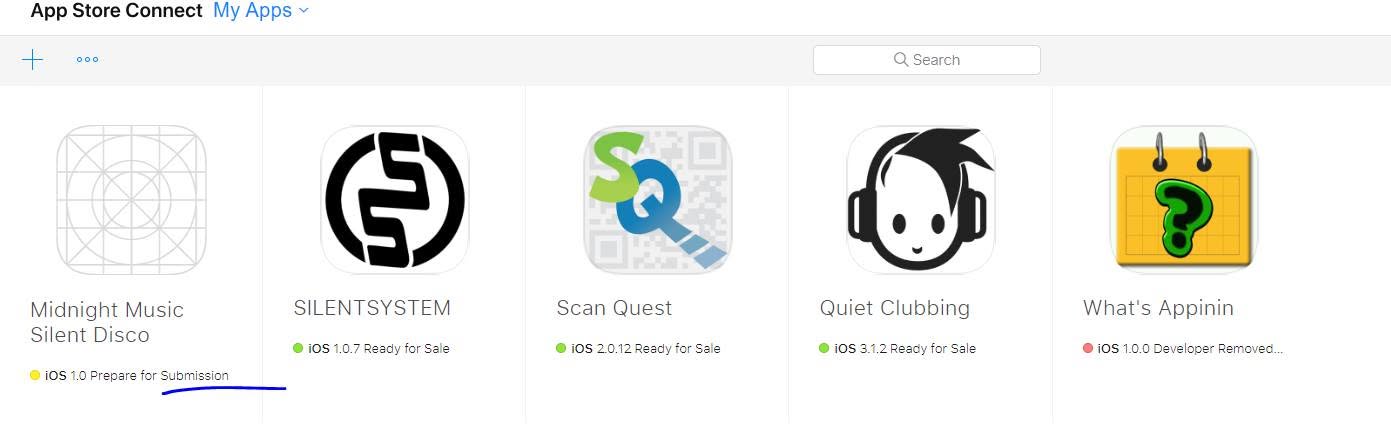 App Store Connect — the EAS portfolio, live listings
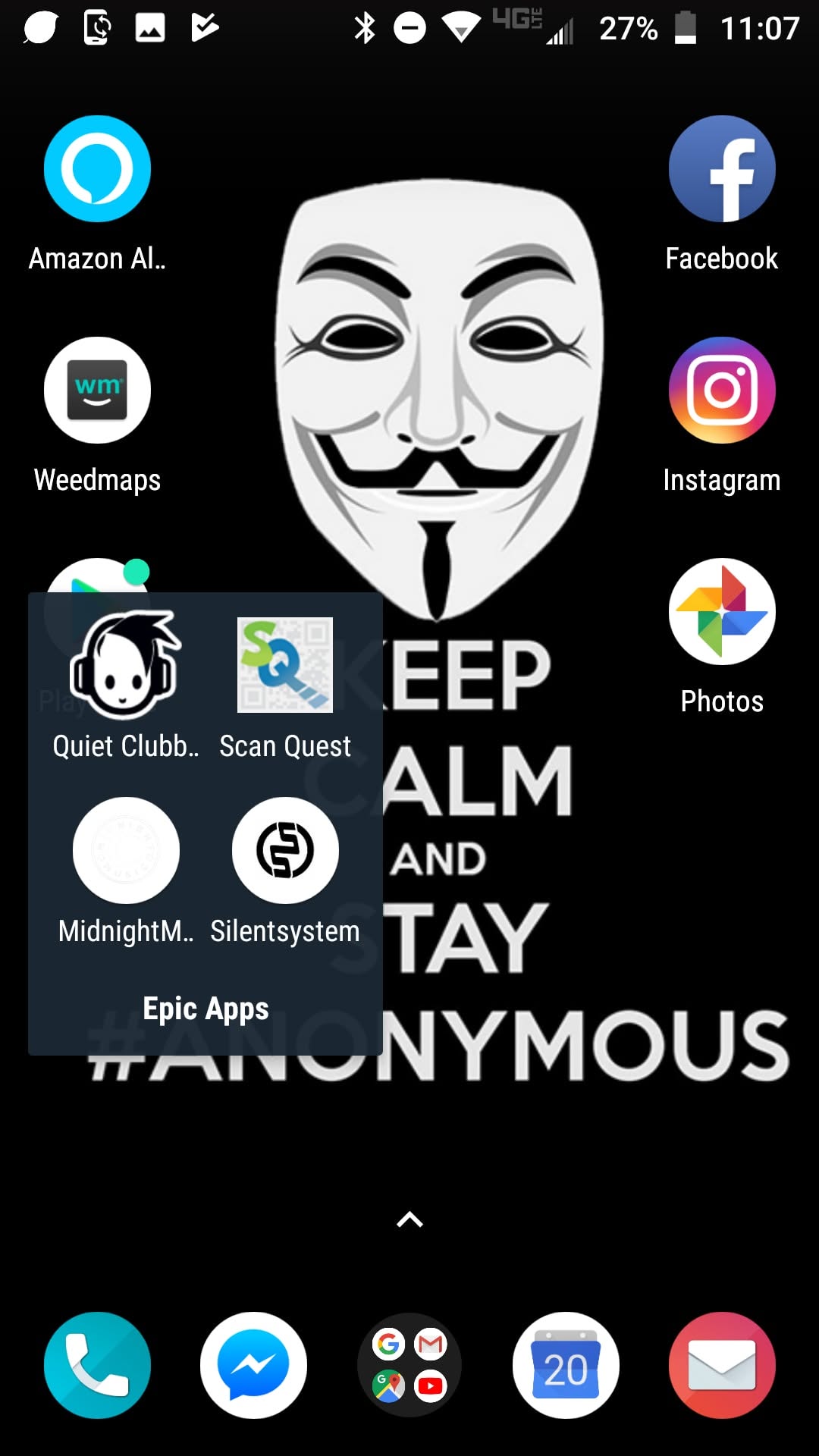 One folder on a real phone — four shipped EAS apps
Receipts, not renders: every product named on this page existed in the store and ran on real devices — some still do.
Want ticketing or loyalty? We already built it.
If you need a ticketing or loyalty application, we don't start from zero — we have them built, and we make yours. Your name, your colors, your event or your counter — QR, NFC, or plain barcode, whatever your door staff and your customers actually have in their hands.
And the scam every venue knows dies here. Every code is single-use — you'll never see a duplicate ticket again. Nobody slips out the back, hands a ticket to a friend, and walks them in free. First scan admits, second scan flags. That door is locked.
On lock means on lock: a used code is a burned code. The only way in is a ticket the system has never seen.
The app doesn't stop
at the phone.
The same web app that installs on a phone runs the TV over the counter, the tablet at the table, and the board in the drive-thru lane. A browser is the player — no proprietary signage box, no per-screen license, no subscription to show your own menu. Which means the application doesn't just replace the paper menu. It replaces the printer, the ticket rail, the clipboard, and the yelling.
Price change, 86'd item, breakfast-to-lunch flip — update once and every board in the building changes before the customer finishes reading the old price. Seasonal menus swap on a schedule, not a reprint.
Paper becomes the option, not the load-bearing part. Keep the thermal printer for the one customer who asks — stop feeding it for the ninety-nine who don't.
Tickets land at the station that needs them — grill sees grill, fry sees fry. Expo bumps with a tap or a $6 clicker. No ribbons, no paper rail, no lost ticket, no "I never got that one."
Order-confirmation at the window, weather-rated boards in the lane, a presell board at the entrance. Breakfast flips to lunch on a timer — the ladder and the printed inserts retire.
The tablet is the register, the TV is the menu, and the location board tells the route where you parked. Sold out? One tap and the menu, the site, and the order page all say it at once.
A "now serving" screen calls the numbers — counter staff stop being an intercom. Works for the counter, the window, and the curbside spot.
Order another round, call the server, pay the check, keep the kids busy. A $150 Android in a locking mount does the job — no proprietary table hardware.
Any touchscreen running the same app — menu, mods, payment, ticket. The kiosk doesn't call in sick, doesn't mis-key the mod, and upsells every single time.
The glass is a commodity.
The app is the product.
Say the hardware numbers out loud: a menu board is a $90 TV and a $30 stick. A table tablet is a $150 Android in a locking mount. The sun-facing wall and the drive-thru lane get commercial 24/7 panels, because physics is real — but none of it is proprietary, and every screen swaps like a lightbulb. You buy the application once. Every screen it ever touches is just a browser with a different size of glass.
Say "app." We'll ask which kind.
Web app that installs from the browser. Wrapped build with a store listing. True native — one platform from $25K, or both stores priced honestly. Whatever it is, it starts the same way: a case file telling us what it needs to do.
Tell us the job the application has to do. We'll tell you which of the four options it really is — and if the honest answer is "you don't need native," we'll say that too.